
Commercial Roofing in Hurricane Light Industrial and Business Areas, Hurricane, UT
Hurricane Light Industrial and Business Areas Overview
A small warehouse bay with a roll-up door and a handful of rooftop vents has a roof that looks simple and still hides the three details that cause most of its trouble. Hurricane's December 2024 Future Land Use General Plan map separately maps Light Industrial/Business, General Commercial, Industrial/Heavy Manufacturing, Downtown and Airport categories, and this target uses only the Light Industrial/Business polygons. The city defines that category to include general business operations, employment centers and small-scale warehousing or assembly with automobile and truck access.
That definition points to buildings that mix office, work and storage, with trucks coming and going. A visit starts with the truck route, the shifts and the roof plan. July's NOAA mean daily high, 101.9 degrees, makes first light the working hour.
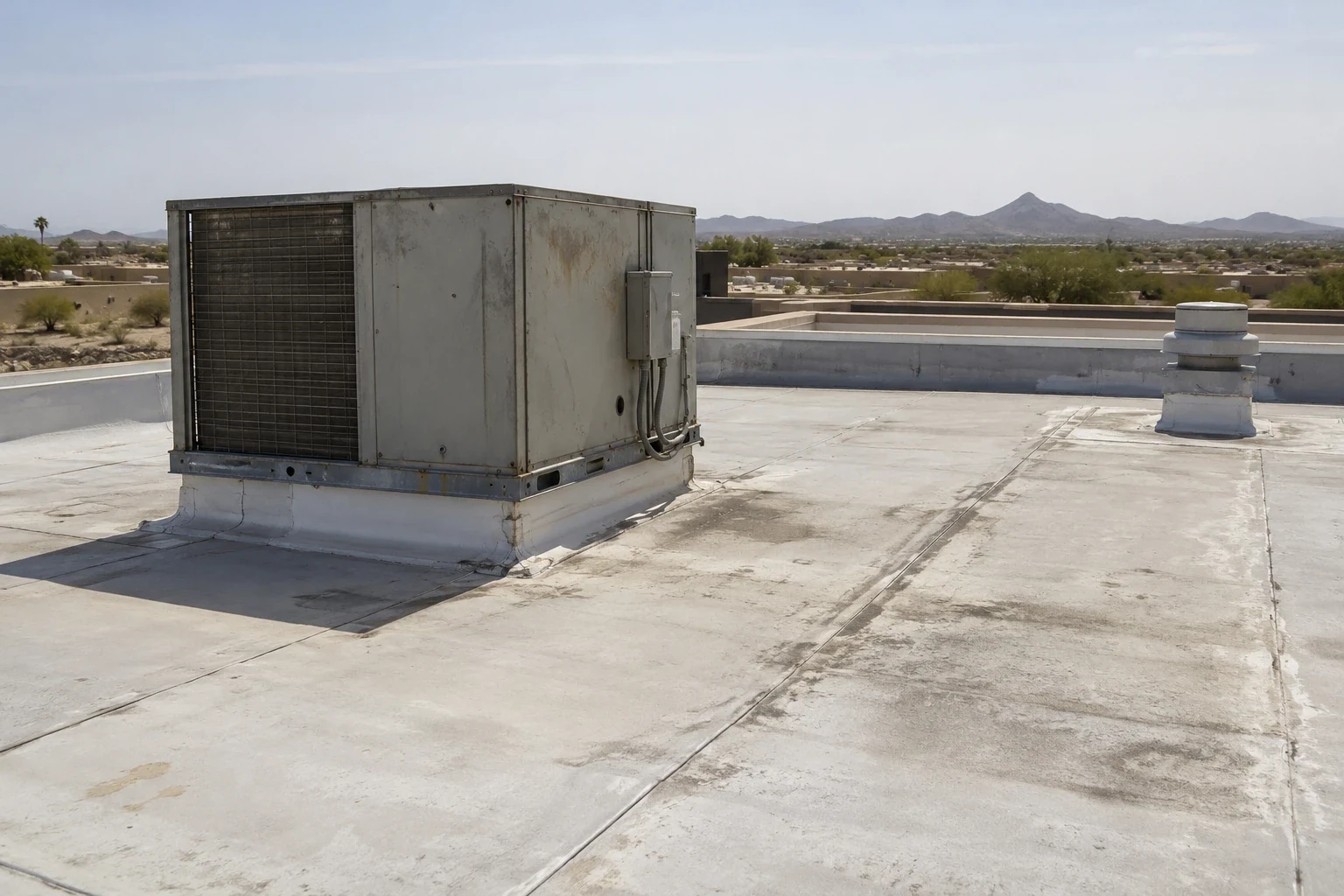
What does a light industrial and business category cover?
Uses lighter than heavy manufacturing and heavier than retail. The 2020 plan names BMP and M-1 zoning as the most appropriate designations for the category, which separates it from airport and general-commercial areas. In plain terms, it is the home of small shops, assembly rooms, storage bays and business offices, and one building may hold several of them.
That variety means roofs vary a great deal from bay to bay, even within one building where a tenant has changed a wall. A small assembly shop may have exhaust and makeup air. A storage bay may have a few vents and little else. An office wing may carry rooftop heating and cooling. The land-use map says where the city expects these uses and nothing about how any roof is built or how old it is, so the system, the layers, the equipment and the drains are confirmed on site and the asset manager gets a record built from observation.
The roof plan notes which bays are rented and which are owner-occupied, because the person who calls about a stain is not always the person who pays for the repair.
How do trucks, shifts and heat shape the day?
Trucks first. Light industrial buildings have truck access by definition, and delivery trucks, service vans and trailers share the lot with the roof crew's lift. We ask about dock and bay schedules, shift changes and the busiest days, then place the lift and the staging where they do not block truck turns or fire lanes.
The St. George station is a low-elevation regional reference and not a reading at any Hurricane roof, but it says summer starts should be early, and early hours suit tenants who run an overnight or morning shift. We confirm the real hours first. Adhesives and welds have temperature limits, so delicate work leads and cleanup follows. The manager's decision is which days to authorize.
Small-scale warehousing and assembly add a protection question below the deck. Stock, tools and work in progress sit a few feet from the roof on many small buildings, and a drip can reach them before anyone sees it. We ask what is stored or built under each roof section, start above the most sensitive items and cover the contents when the roof opens. A tarp over a pallet costs little, and the record notes which sections were protected. Tell us as well which door the crew should use, where a lift may stand without crossing a truck turn and who holds the roof key on each shift, because a small building can lose half a morning to a locked hatch.
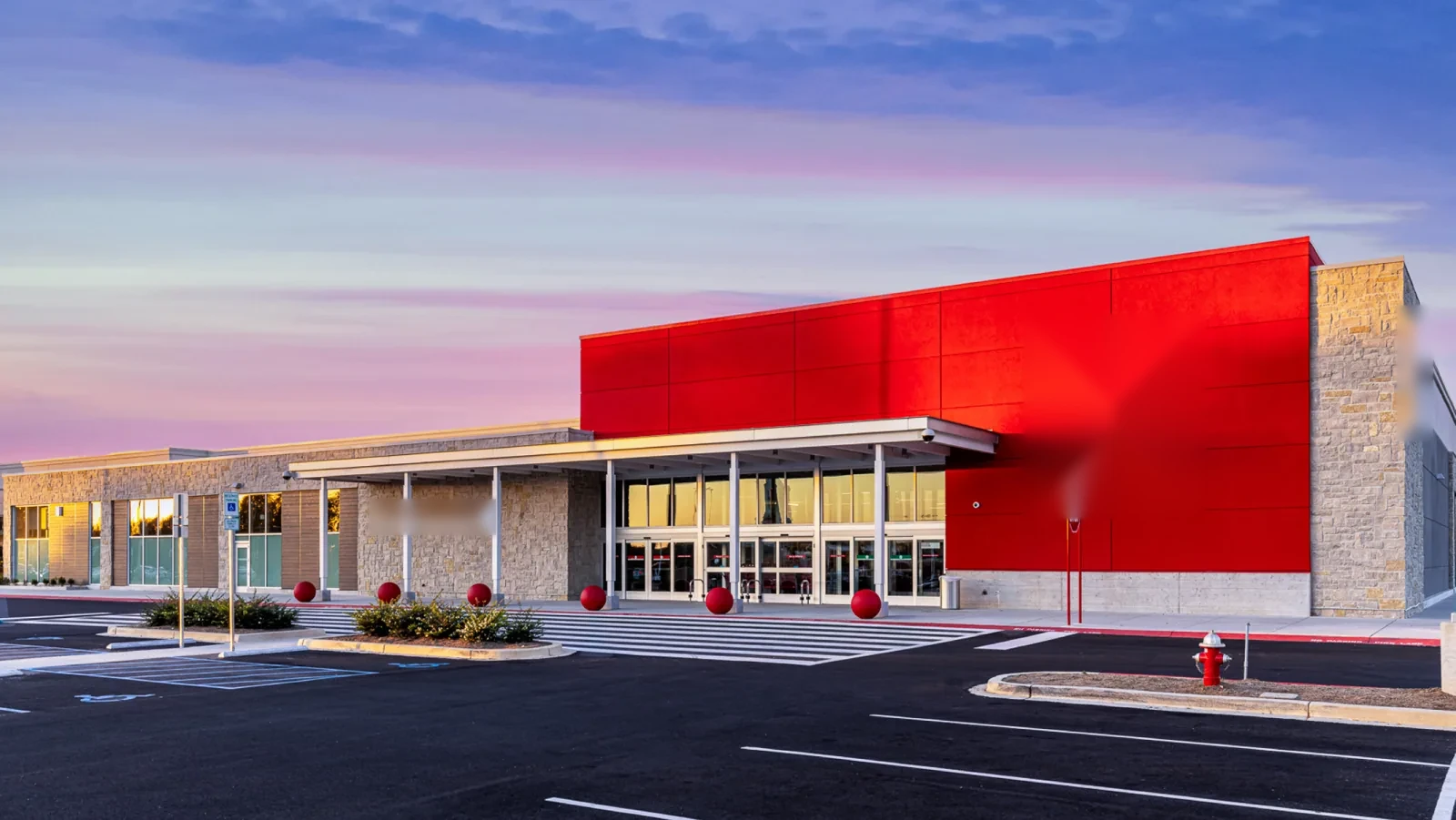
Which roof details fail first on a small industrial building?
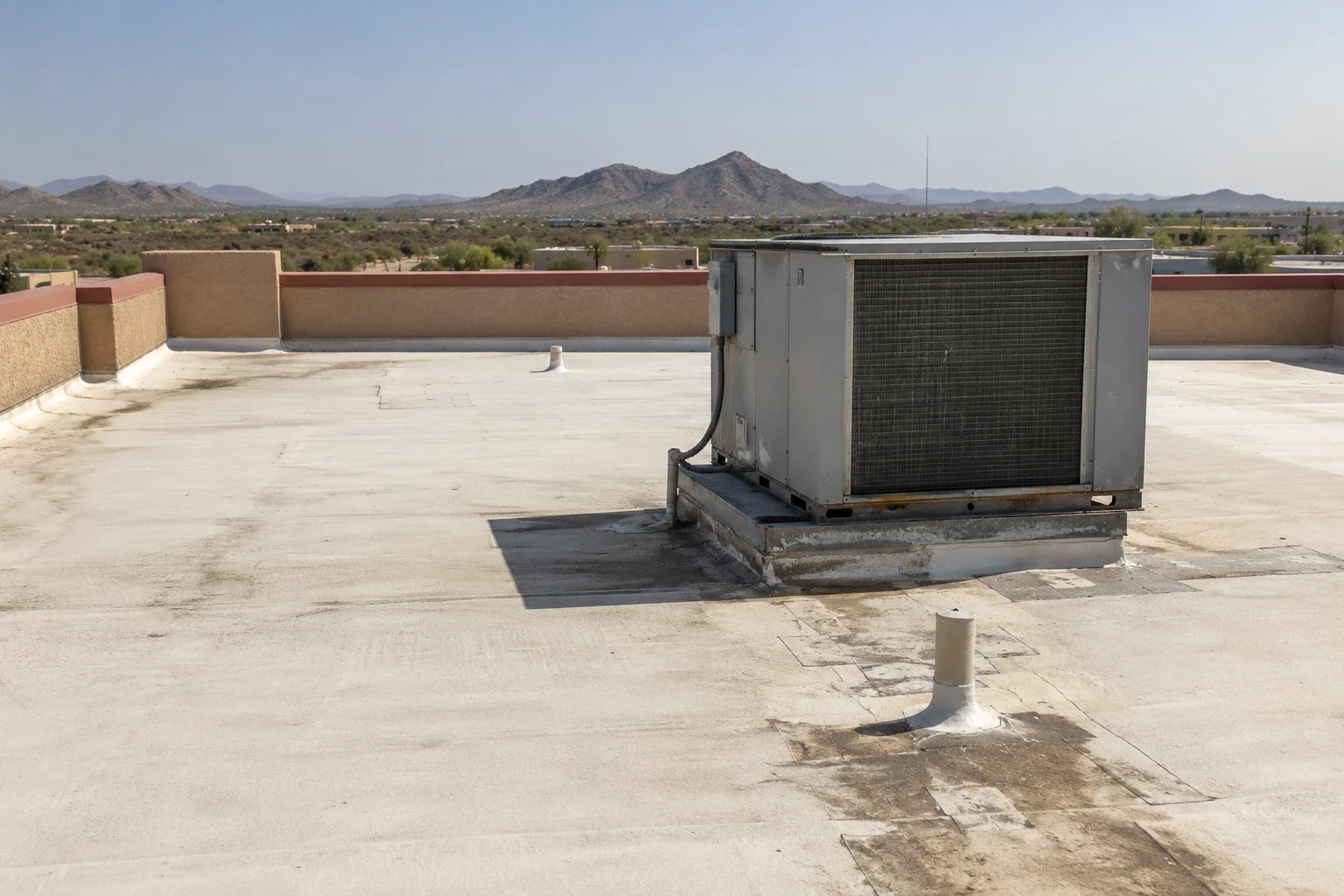
On a small building the details are most of the roof: vent and exhaust boots, rooftop unit curbs, skylights and hatches, drains and scuppers, and the edge metal. Sealant dries in desert sun and splits, flashing shrinks from walls and service traffic wears a path to the units.
- Vent and exhaust boots, with the surface near each outlet
- Rooftop unit curbs and conduit supports
- Skylights, hatches and other openings
- Drains, scuppers and the overflow path
- Edge metal, coping and wall flashings
Where an assembly shop sends heat or vapor through the roof, the membrane near the outlet is compared with clean membrane elsewhere. A skylight and penetration flashing repair rebuilds the failed detail, and work on equipment curbs and supports restores pads and flashing.
What does a replaced ceiling tile tell us?
That a leak was recorded as a maintenance task. People work under these roofs every day, and a manager who sees a stain on a tile will often replace the tile and say nothing, so the roof gets another season of water. We ask for the dates of replaced tiles and the maintenance log, which are leak records that were never called leak records. A short list of dates, rooms and weather often points to the right detail on the roof.
At the St. George station a year brings 9.31 inches of precipitation, February is the wettest month and snowfall runs near 1.2 inches. A low-elevation station's snowfall is not applied to another community without a local check. Stains are traced upslope and doubtful spots tested with a meter; on a roof big enough to justify it, an infrared moisture survey maps the wet insulation, and a few readings and a core do the job on a small one.
Photographs of any stained tile, taken before it is replaced, are the cheapest evidence a roof file can hold, and a manager who keeps them can show an owner when the problem began.
How far should a repair go, and when does a roof need more?
As far as the damage and the wet material go, which on a small roof can be close to the edges and brings the repair-or-replace question up sooner. When repairs recur, a repair program, a coating restoration and a replacement are priced from the same findings.
The code step is brief and firm, and it comes before the price, not after it. A repair alone may need no permit, a recover or tear-off usually does, and the city says which side of that line a scope falls on. The City of Hurricane confirms the permit-date edition of the amended 2024 International Building Code, and the statewide energy path that begins on July 1, 2026 can add insulation to a reroof and change the price.
What should the owner decide next?
Whether to hold, restore or replace, and when. Small industrial buildings often have a single owner who decides quickly, and the record helps by making the tradeoffs plain: condition, moisture findings, cost drivers and open questions.
Buildings along the State Street and SR-9 corridor or in St. George Industrial Park can be added to the same file. Hand over the address, the roof papers, the access rules and the truck hours, and the first visit tackles one defined repair or capital decision.
Where the building has a roll-up door facing the roof ladder, the plan marks the swing of the door and the lift so neither blocks the other.
Commercial Roofing Questions
Does the category tell you what is on the roof?
No. It describes land use only. The system, age and equipment are read at the building.
Can the shop stay open during repairs?
Usually. We keep lifts off truck turns, work in sections and close each opening before the shift ends.
Why start early in summer?
Surface heat builds through the morning. Cooler hours allow careful seam and flashing work.
What if an exhaust outlet has damaged the roof?
We compare the membrane near it with clean membrane, repair the damage and discuss moving or protecting the outlet.
Does the permit date matter on a small industrial reroof?
It picks the code edition. The city names it before we price.