
Commercial Roofing on State Street and SR-9 Corridor, Hurricane, UT
State Street and SR-9 Corridor Overview
On a road built for through traffic, the first thing a roofing crew has to work out is how to get a truck off the highway and onto the lot without stopping anyone. Utah Route 9 follows State Street through Hurricane and continues north toward La Verkin, and this corridor target covers the stretch outside the Downtown Master Plan boundary. The downtown plan describes SR-9 within the downtown stretch as two lanes each way plus left-turn lanes at cross streets, which says what kind of road it is. Outside downtown the cross-section can differ, and each driveway is checked on site.
At a corridor building the walk begins with the way in, the operating day and the roof plan, and moves on to drains, curbs, seams and flashings. July's NOAA mean daily high of 101.9 degrees makes dawn the working hour.
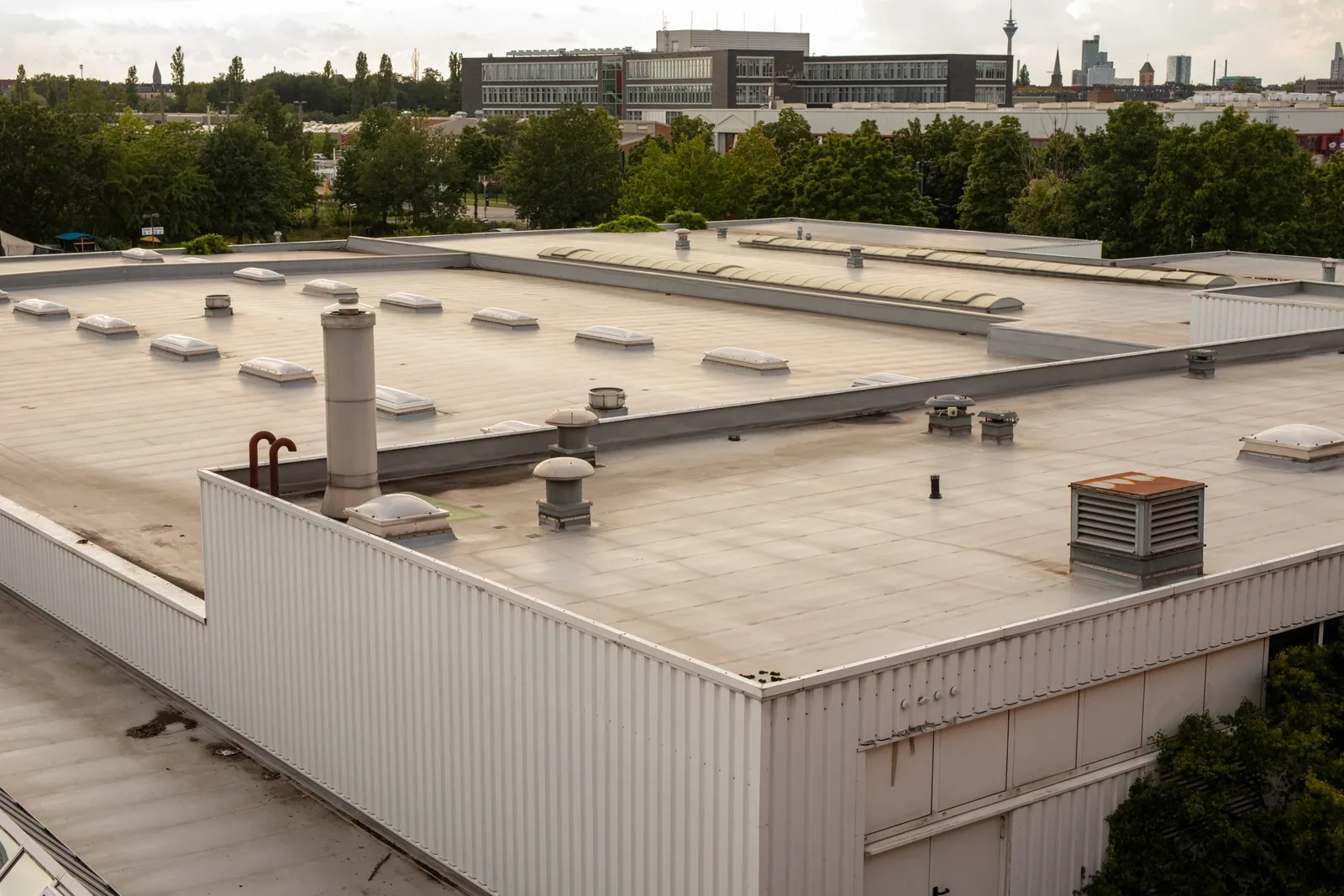
How do driveways and turn lanes set the day?
A building on a multi-lane state route has driveways that open onto fast traffic. A delivery truck turning in or a lift truck backing out is a hazard to everyone nearby. We study the driveway, the sight lines and the room on the lot, then plan arrivals and departures for quiet hours. Where a left turn into the property is awkward, we ask whether a rear or side entrance exists and use it.
Early hours also suit the weather, since adhesives and welds behave better before the surface heats, and they are the quiet hours on the road. Heat-sensitive seams and flashings are done first, and the afternoon goes to cleanup.
Work near the right-of-way line needs a plain agreement. A scissor lift that drifts onto the shoulder, a dumpster set at the curb or a flagger who steps into a travel lane each turns a roofing job into a traffic problem, and the city, not the roofer, decides what the right-of-way allows. We put the staging sketch in front of the owner and, where any piece might touch public ground, in front of the city before the day. If a lane closure is the only workable option, it is short, timed to the lightest traffic and covered by the city's own rules. Which days to authorize is the manager's call, and we put two or three options on the table.
What can we say about buildings along a through-route?
Very little from the road. A corridor like this can carry shops, offices, service buildings, storage and more, and the facts we hold about State Street and SR-9 tell us about the road and its direction, not about the buildings. We assume no uses, ages or roof types, and each property is confirmed on site: the system, the layers, the equipment and the drains.
What the corridor does tell us is how a crew reaches the property. SR-9 continues north toward La Verkin, so crews may arrive from either side, which matters for scheduling and for an owner with property in a neighboring town. The city lists the State Street center-median landscaping among the areas its Parks Department maintains, so the median is not a staging area, and every piece of equipment stays on the owner's lot. Highway frontage also means sun from the full width of the sky and wind with nothing to break it, so the street-side coping, the sign mounts and the parapet caps get a firmer fastening check than a roof tucked behind other buildings, and the record notes how each was secured.

Which roof details do we check first on a highway frontage?
Sign mounts, for one. Frontage signs bolted through a parapet or into the deck are penetrations nobody listed on the roof plan, and their sealant faces sun and swing all year. We find each one, photograph it and test the seal by hand. A loose mount is tightened and resealed, and one with a split flashing is rebuilt. If the sign belongs to a tenant, the record says so, and the owner can route the repair to the right party.
- Drain bowls, scuppers, gutters and the path to the outlet
- Curbs, vent boots, conduit supports and sign mounts
- Parapet caps, coping joints and wall flashings
- Seams, laps and earlier patches
- Edge metal on the street side
In a dry climate debris collects in drains and low spots between storms, and the first heavy rain finds every blockage together. A drain and scupper check before the wet months costs little.
What moisture evidence do we use, and what do we not assume?
We use the roof's own evidence and treat the station's figures as background. The St. George normals give 9.31 inches of annual precipitation and a snowfall near 1.2 inches, but that station is low and Hurricane is another community, so no number is applied to a roof without a local check. The owner's own observations come first: when the stains showed up and what weather preceded them.
Stains are traced upslope, doubtful areas are tested with a meter and a large roof can get an infrared moisture survey. A commercial roof inspection yields a record that separates what was seen from what was tested and names the gaps. When the entry point stays unproven, we say so and name the test that would prove it. That is the difference between a guess and a repair scope.
Photographs are tied to roof zones so the owner can find any item later without a guide.
How far should a repair extend?
To sound, dry material. Each defect has its own limit: a patch for a puncture, the end of good bond for a seam, the corner where flashing holds for a curb, and the wet edge when insulation is saturated. A hot membrane can resist a clean bond, so adhesion is tested before a large repair begins.
If repairs keep coming back, a coating restoration and a replacement are priced together. Code comes first: the city names the edition tied to the permit date, and the energy path that starts statewide on July 1, 2026 can alter cost and permit scope alike.
What should the owner decide next?
The choice is hold, restore or replace, and the timing. A building on a main route usually enjoys steady use and a long hold, which favors durable work, and the record lays out condition, moisture findings and cost for each path, so the choice rests on evidence.
Buildings in downtown Hurricane or in La Verkin to the north can join the same file. Give us the address, the roof papers and a description of the driveway, and the first visit will be aimed at one defined repair or capital question.
A short note on the driveway width, the sight lines and the turn restrictions goes into the record, so any later crew finds the same answers.
Commercial Roofing Questions
How do you get trucks onto a lot on a highway?
We study the driveway and sight lines, plan arrivals for quiet hours and use a side or rear entrance where one exists.
Can we stage in the median?
No. Equipment stays on the owner's lot, and any right-of-way use is settled with the city first.
Does the corridor tell you the roof type?
No. The road facts describe the road. We read each building's system, age and equipment at the building.
Do St. George weather numbers apply here?
Only as a regional scheduling reference. We judge each roof directly and ask the owner what they have seen.
What sets the code edition on a corridor reroof?
The permit date. The city names the edition and the energy pathway before we price.