
Holcim Elevate Roofing Systems in St. George, UT
Holcim Elevate Roofing Systems Overview
A label on an older roof in St. George, UT may say Firestone, and the manufacturer behind it now operates as Holcim Elevate. That change in name matters on the roof deck because records, warranties and product literature are filed under whichever name was current on the day of installation. With July highs averaging 101.9°F and August highs 99.9°F at the St. George station, a membrane that has been in service for decades has had a great deal of sun. The asset manager's first task is matching the label to the system and the system to its condition.
Holcim Elevate, formerly Firestone Building Products, makes commercial roofing that includes single-ply membranes in EPDM, TPO and PVC, polyiso insulation and metal roofing products. We install, repair and maintain these system types. First we match the label on the roof to the system underneath it and note how far it has aged.
Why does the old name still appear?
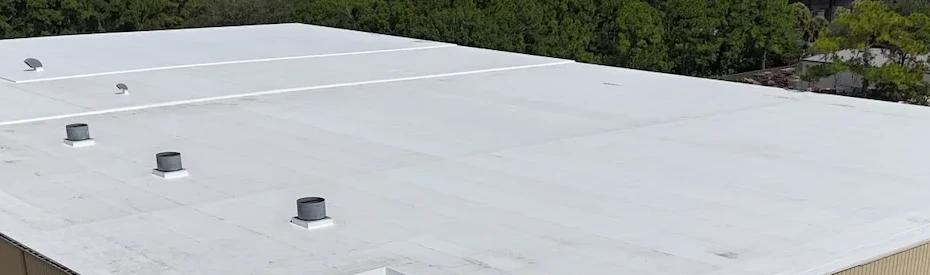
Firestone UltraPly and other legacy names are printed on membranes, on edge flashings and in specification binders. A roof installed years ago may show only the earlier brand, and a new owner may not know the company has changed. We treat both names as the same family of products when identifying a system, and we record the name found on the roof beside the name now in use.
Records can be hard to trace. When a warranty references the older name, the owner may need to contact the current company to confirm terms. We help assemble the roof history so that question can be asked clearly, and we keep a copy of every letter in the file: installation date, system type, thickness where known and repair history. The manufacturer decides what a warranty covers. Our warranty file keeps the inquiry and the answer with the roof plan.
How do we judge an older single-ply roof?
We read the surface first: chalking, shrinkage at edges, cracking at flashings, open laps and exposed reinforcement. Then we probe seams and check fasteners along mechanically attached lines. In an older EPDM roof, we look for seam-edge lift and for brittle patches. In an older TPO or PVC roof, we look for surface wear, weld failure and stiffness. A thermoplastic that has lost flexibility cracks at flashings first.
Edges and corners deserve a longer look than the field. Wind lifts the perimeter before it lifts the middle, and thermal movement works hardest where the membrane turns up a wall. We check the termination bars, the counterflashing and the sealant, and we pull on a few to see whether they hold. A termination that rattles is cheaper to resecure today than to replace after it tears.
Moisture follows the surface. An infrared moisture survey maps wet insulation, and cores confirm it. If the field is sound and the insulation dry, targeted repairs may carry the roof further. If the field has failed in several places or the insulation is wet, replacement belongs in the next capital plan. Building stock in the city largely dates from 1980 forward, according to its consolidated plan, so roofs of many ages are in service, and age alone does not settle the call.
How do heat and light surfaces interact?
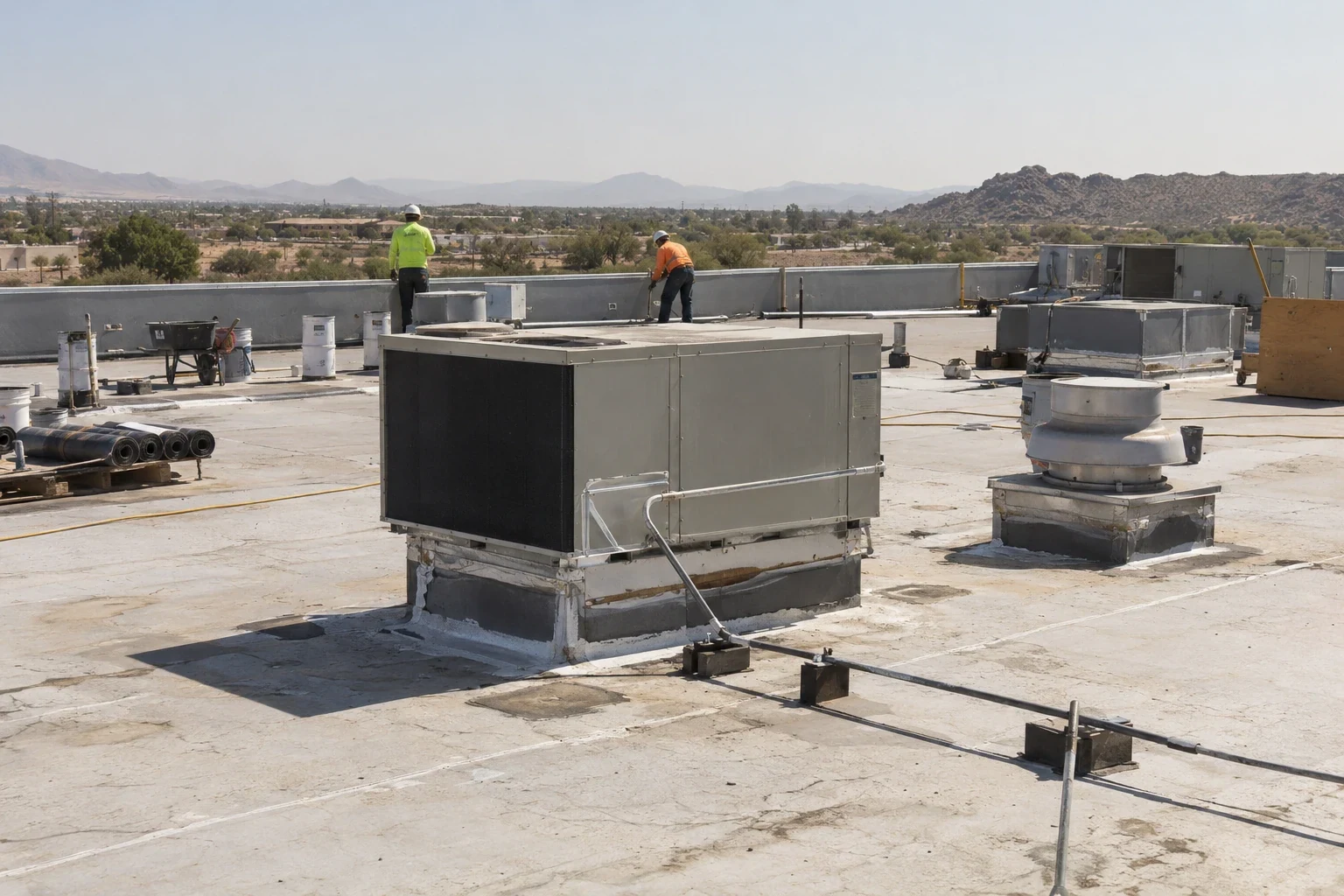
A reflective single-ply runs cooler than a dark one in sun, which reduces thermal swing and cooling load. It also collects dirt and, over time, loses some reflectance. A dark membrane absorbs more heat, yet it hides dirt and can be more forgiving at some details. Neither surface promises a long life; the condition on the roof matters more than the color.
Annual precipitation is 9.31 inches, and February's 1.38 inches contrasts with June's 0.16. Dry spells let dust build on a membrane and in drains, and the first storm moves it. That is why a drain that was clear in May can be packed by the first fall storm, and why a visit just before the wetter months is worth its short cost. We recommend a cleaning and drain check ahead of the wetter months. Where owners are considering a cool roof installation, the energy code and the existing assembly both enter the decision, and we lay out the choices with the reasons for each.
What does a repair need to match?
The patch must match the membrane type, the attachment method and the surface condition. A TPO patch does not belong on EPDM, and the reverse is also true. Adhesives that bond one substrate can attack another. We test compatibility on a small area when records are missing, and we avoid coatings or primers that could interfere with future repairs.
Repairs happen in the morning where possible. The crew checks substrate temperature, keeps materials within their working range and stops when conditions pass it. We photograph the repair before and after, mark it on the roof plan and note the weather. A commercial roof repair done this way produces a record that shows what was installed and when, which later helps with warranty and claim questions.
For metal roofing products, the repair list differs. Standing seam and other metal panels move with heat, and the clips, seams and sealants at penetrations carry the work. We check panel fasteners, trim and sealant lines, and we look for oil canning, corrosion at cut edges and loose trim. On a standing seam metal roof, we read what the panels show and match the repair to the profile found.

How do code and local buildings enter the plan?
Utah's construction code runs on the 2024 International Building Code with amendments, while the energy listing cites the 2024 IECC with ASHRAE 90.1-2022 and statewide enforcement from July 1, 2026. A replacement may need insulation levels and documentation that a repair does not. The City of St. George confirms which edition governs on the permit date, and we compare that edition with the assembly the manufacturer requires.
In the armory plan, Fort Pierce Industrial Park is largely M-1, which covers warehousing, light manufacturing, fabrication and services. Tech Ridge describes a mix of office, retail and residential. Roof systems across these areas vary, and a nearby GAF roof, a Sika Sarnafil roof or a Holcim Elevate roof may sit on the same street. We identify each one from the roof itself.
Commercial Roofing Questions
Is Holcim Elevate the same company as Firestone Building Products?
Holcim Elevate is the current name for what was Firestone Building Products. Older roofs may carry the Firestone name. We record both on the roof plan, so a later reader who finds either one can connect it to the same family of products.
Can I use old warranty papers filed under Firestone?
Keep them. Confirm with the manufacturer what the current terms and contacts are, and ask for the answer in writing. We add the papers and the reply to the roof file so the question is never asked twice.
How do you tell EPDM from TPO on a roof?
By seam and surface. EPDM is rubber with adhesive or tape seams, while TPO has welded seams and a smoother thermoplastic surface. A small test sample settles doubtful cases.
Should an older roof be coated?
Only if the membrane is sound and the insulation dry. We repair first, test and then compare coating to recover and replacement.
What does a cool roof change?
It lowers surface temperature in sun and can reduce cooling load. It does not repair a failed membrane. We assess the existing roof before recommending it, and we record the reflectance question separately from the repair question so the owner can decide on each.