
Standing Seam Metal Roofing in St. George, UT
Standing Seam Metal Roofing Overview
A standing seam panel can run dozens of feet from eave to ridge, and in St. George it spends July and August in air that averages close to 102 and 100 degrees at the NOAA station. The metal grows and shrinks with every cycle, and the roof is designed to let it. Our first question on a standing seam visit is whether the movement path is still open, because a clip that has seized or a trim piece fastened through the panel turns a daily expansion into a torn seam.
We walk the seams, clips, eaves, ridge, valleys and penetrations in that order, then give the asset manager a short list of open questions and the decision that follows. A commercial roof inspection sets the field record the repair scope is built on.
What keeps a standing seam closed?
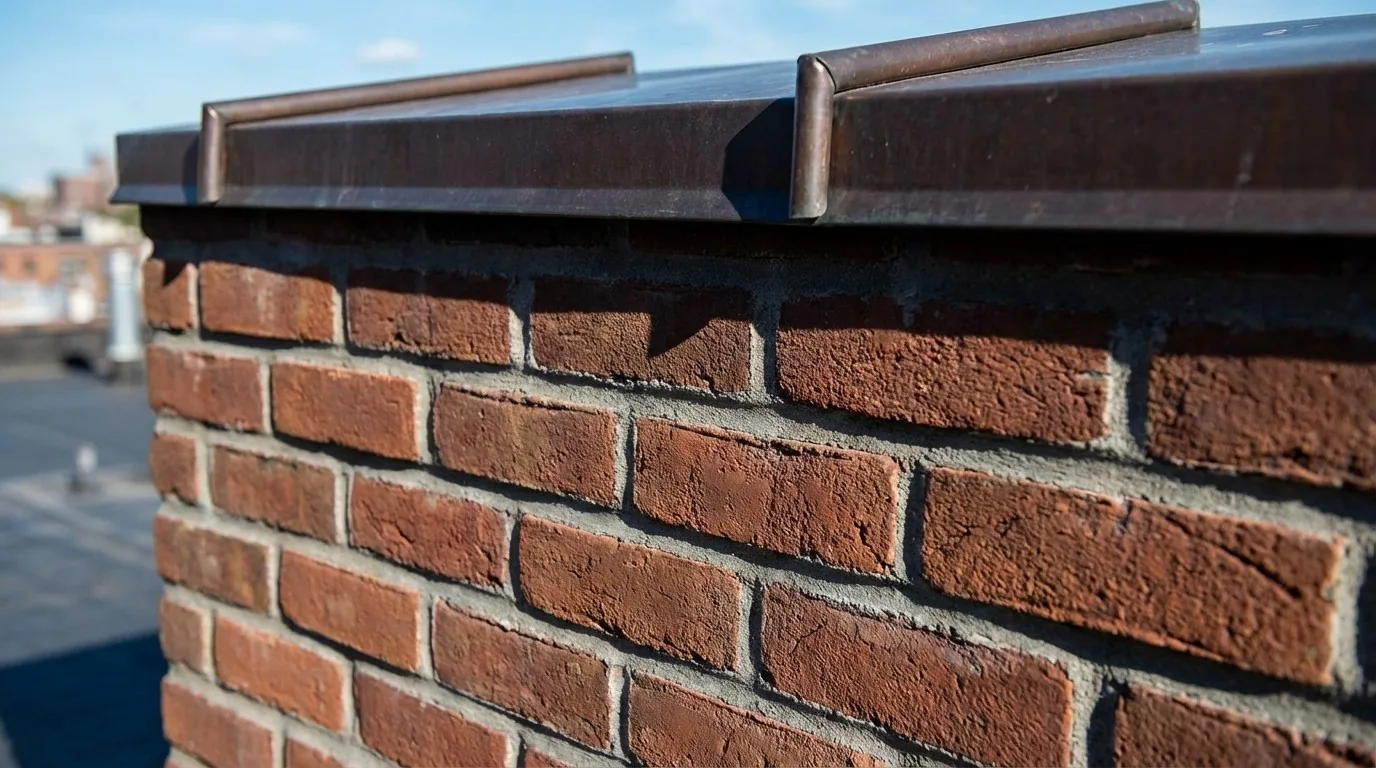
Raised, interlocking seams join the panels, and concealed clips hold each panel to the deck while letting it slide. Depending on the system the seam is snapped together or crimped closed with a seaming tool. We identify the profile and the clip type before touching anything, because the right repair for a snap-together panel will damage a mechanically seamed one.
On the roof we sight along each seam for straightness and full engagement, check the panel ends and look for rust at cut edges. A bead of sealant laid along the field is not a seam repair; it hides an opening for a short while and then gives way when the panel moves. Where a seam has opened, we find out why before we close it.
Where does the metal need room to move?
Panel length, clip layout and the fixed points at the ridge or eave decide how the movement travels. Distress shows up as a pulled seam, a buckled panel, a line of stressed fasteners or a flashing that has crept out of position. We follow the panel back to its fixed point and check the neighboring clips before deciding how much length to repair.
Curbs and pipes interrupt the panel run. A rooftop unit mounted on a curb has to be flashed so the panel can slide beneath the metal skirt without binding, and a penetration fixed through a panel is a leak waiting for the next heat cycle. Each curb and support gets its own line and photograph on the roof plan. The repair restores the movement path; it never pins a moving panel in place.
What does a ceiling stain tell you about a metal roof?
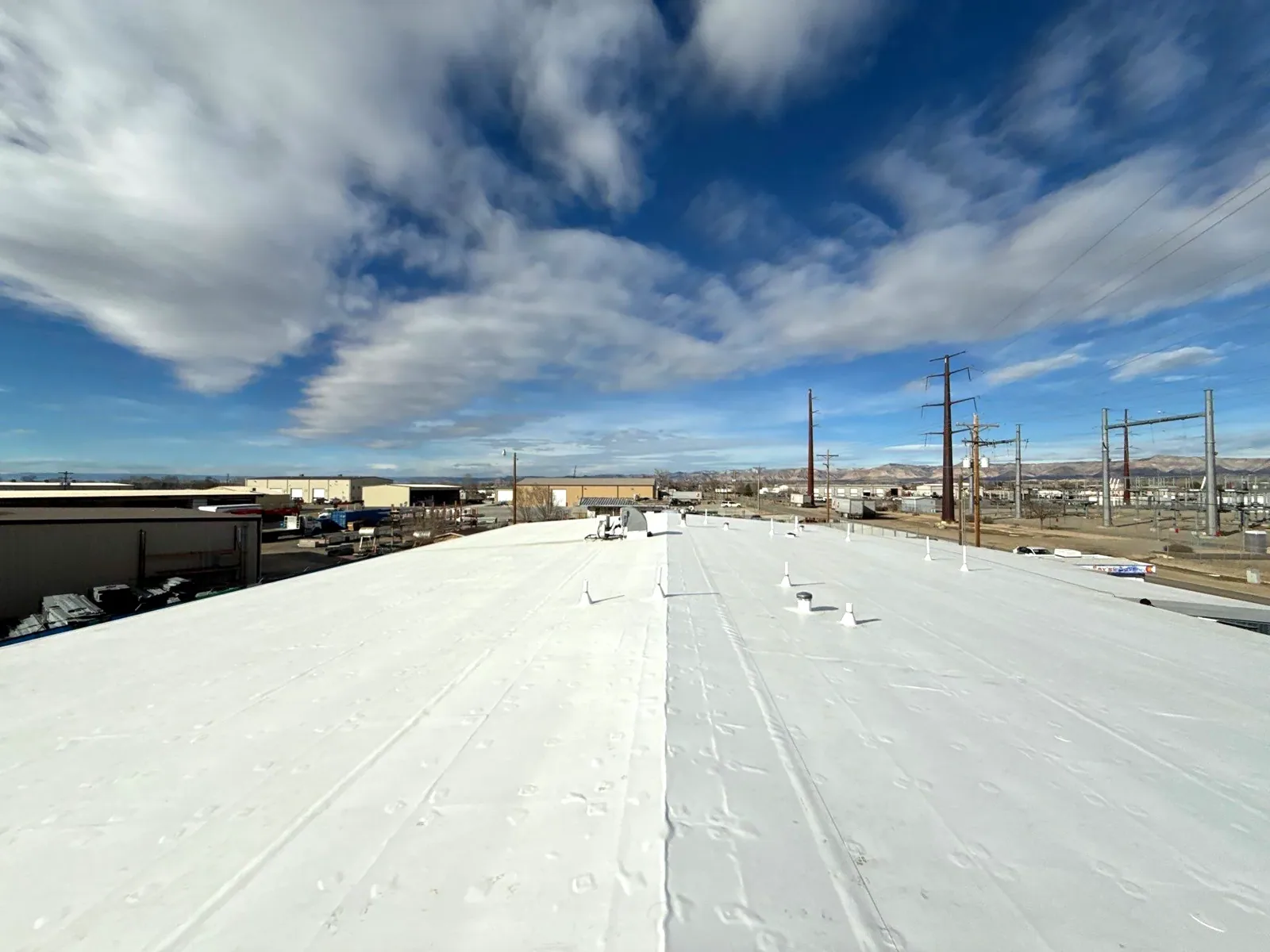
It tells you where water left the ceiling. On a metal roof the opening can be several feet uphill: at a panel end, a fastener on a trim piece, a valley, a skylight curb or a seam that was never fully closed. We trace from the stain up the slope and check each detail along the way. Water also tracks along the underside of a panel before it drops, so corrosion at a lap can sit far from the wet spot.
Rain is limited here, 9.31 inches a year at the station, with February the wettest at 1.38 inches. A leak may stay quiet for months and then show during a winter storm that drives water against one vulnerable seam. A summer visit therefore looks at the places a winter storm will test, and the seam failure repair scope names the panel type and the length to be repaired.
Where do the edges and low-slope joins fail?
Eaves, rakes and the line where metal meets a low-slope membrane see the most movement and the most water. Gutters and drip edges need slope and sealed joints, and a flat section that joins the metal needs a proper transition, not a field-made bridge between two unrelated systems. Edge metal and gutter work fixes the perimeter piece by piece and keeps the water path continuous.
Where the roof meets a TPO section, we plan a curb or wall detail that suits both materials. The same sheet metal flashing that sheds water on the metal roof has to be tied into the membrane without trapping water behind it, and the order of the laps decides whether it works. A building in Fort Pierce Industrial Park, which is mapped largely M-1, may pair a metal main roof with a low-slope office section, which makes that join the first detail we check.
Ridges and hips get the same treatment. A ridge cap fastened through the panel or left unsealed at its ends collects blowing dust and lets wind-driven rain past the closure. We check the closures, the cap overlaps and the sealant, and we reset what has crept.
Repair the panels or replace the assembly?
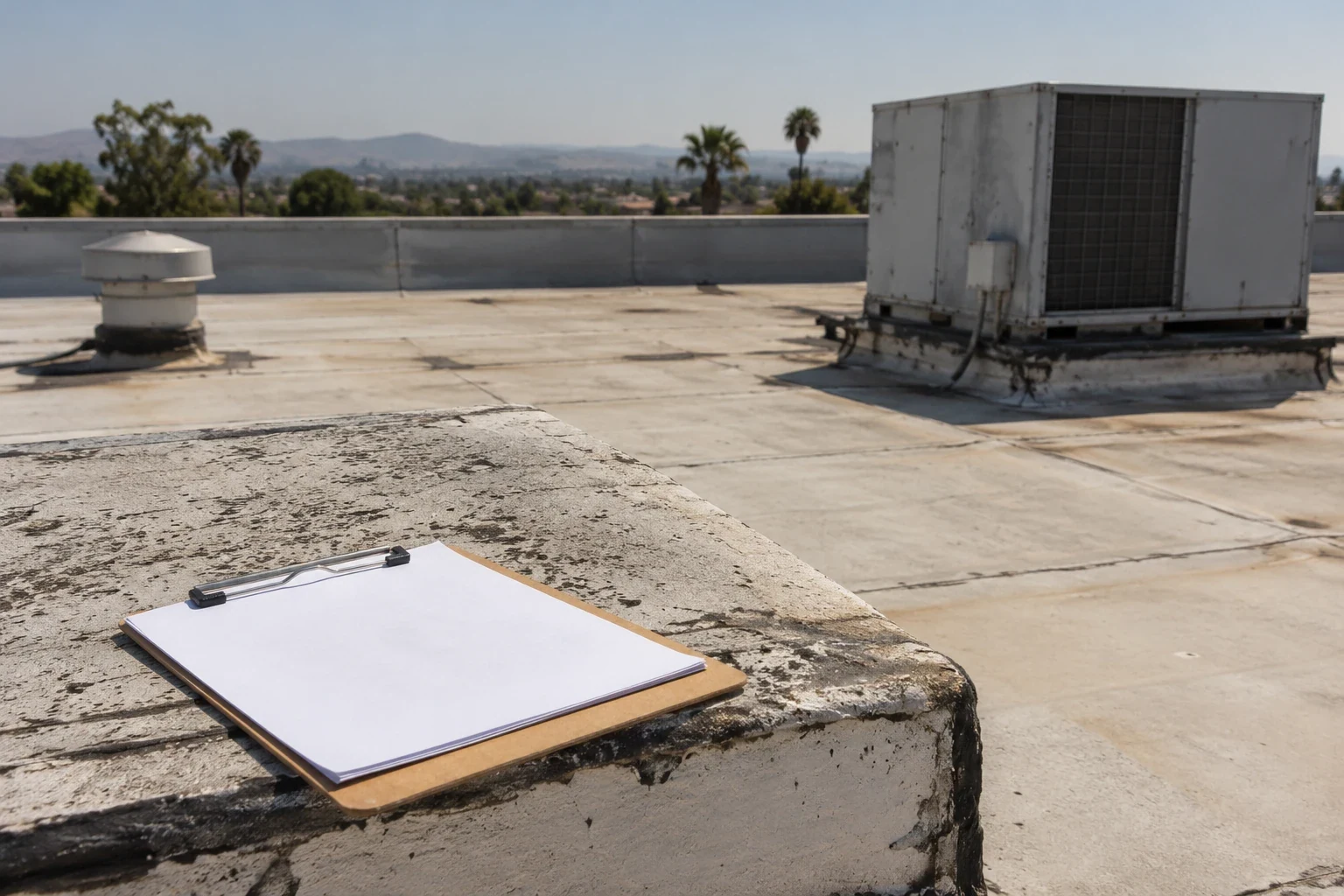
A local seam or flashing failure can be repaired when the surrounding panels, clips and substrate are serviceable. Wider corrosion, repeated movement distress, loose attachment or a poor earlier retrofit can push the decision toward replacing a section or the whole roof. We compare the damaged area with the roof plan and tie the recommendation to what the owner needs the roof to do.
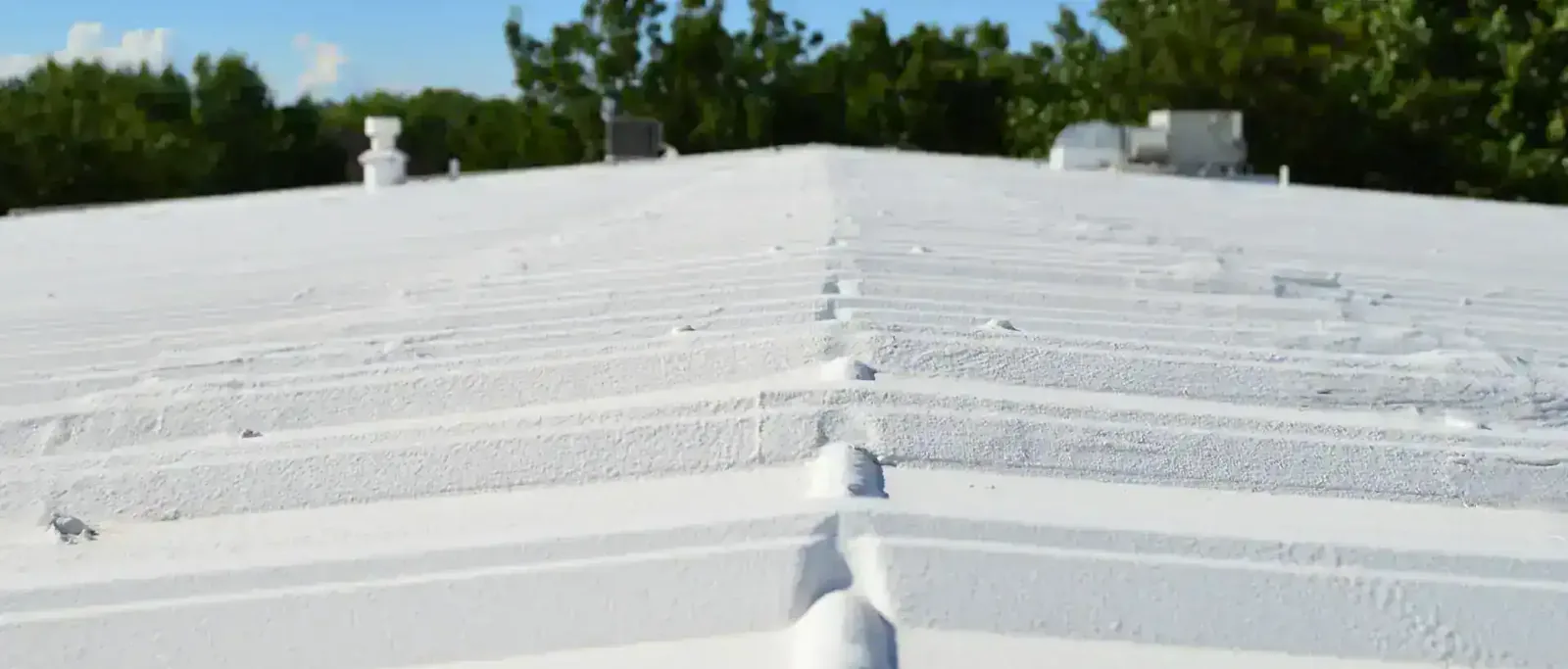
A coating is not a fix for a loose clip or a failed curb flashing. If the question is covering an older exposed-fastener roof, metal roof retrofit options sit apart from standing seam replacement, because the attachment is different. Insulation, perimeter changes, penetrations, lift access and occupied work zones drive cost and duration, and a replacement plan carries them into the proposal.
How do access and staging shape the job?
Panels are long, and long panels need space. Delivery trucks, lift placement and the roof edges decide how material reaches the work area, so we confirm the entrance, staging limits, overhead obstructions and fall protection with the property team before the panel order is set. On a building along the St. George Boulevard or Bluff Street corridors, the street frontage is often the tightest part of the job.
On an occupied building, work zones and the loudest steps are scheduled around the people inside. Metal work may need access below the panel run as well as above it. Closeout records the repaired runs and changed details on the roof plan, and a maintenance visit tracks seams, penetrations and drainage afterward. Send the roof plan, panel records if you have them, the access rules and the hours the crew can reach the roof. We will inspect the standing seam assembly and sort what needs repair now from what belongs in the capital plan.
Safe footing on metal is its own question, so ladder tie-offs, walkway planks and fall-protection points are agreed before anyone steps on a panel.
Commercial Roofing Questions
Can a standing seam be repaired without replacing whole panel runs?
Yes, when the failure is local and adjoining seams, clips and panels are serviceable. We identify the profile, then define the length and detail that need repair.
Why does a metal roof leak near a curb?
The curb interrupts the panel and its movement. A failed flashing or a pinned panel lets water travel beneath the metal. We rebuild the curb detail to fit the profile.
Does a standing seam roof need a coating?
A coating does not cure a loose clip or a failed flashing. We check the panel, corrosion and attachment first, and treat coating as a separate scope.
How does summer heat change the work?
Panels get too hot to handle and sealants skin early. We start at first light and keep detail work in the cooler hours.
What records help plan a repair?
Panel profile, earlier repair notes, the roof plan, access rules and photographs of the leak area. We verify them on the roof.