
Grocery Store Roofing in St. George, UT
Grocery Store Roofing Overview
A grocery store's refrigeration works hardest on the days the roof is hottest. With July afternoons averaging 101.9 degrees at the St. George station, condensers on a supermarket roof run long hours beside a membrane that is baking, and every line, pad and curb up there ages faster than the sheet around it. A leak over a produce case or a stockroom is a food-safety problem before it is a roofing problem.
For a store in St. George, UT, the roof walk therefore starts at the equipment and the exhaust and moves toward the drains, with the manager's list of rooms that cannot take water beside it.
What is on a supermarket roof besides the membrane?
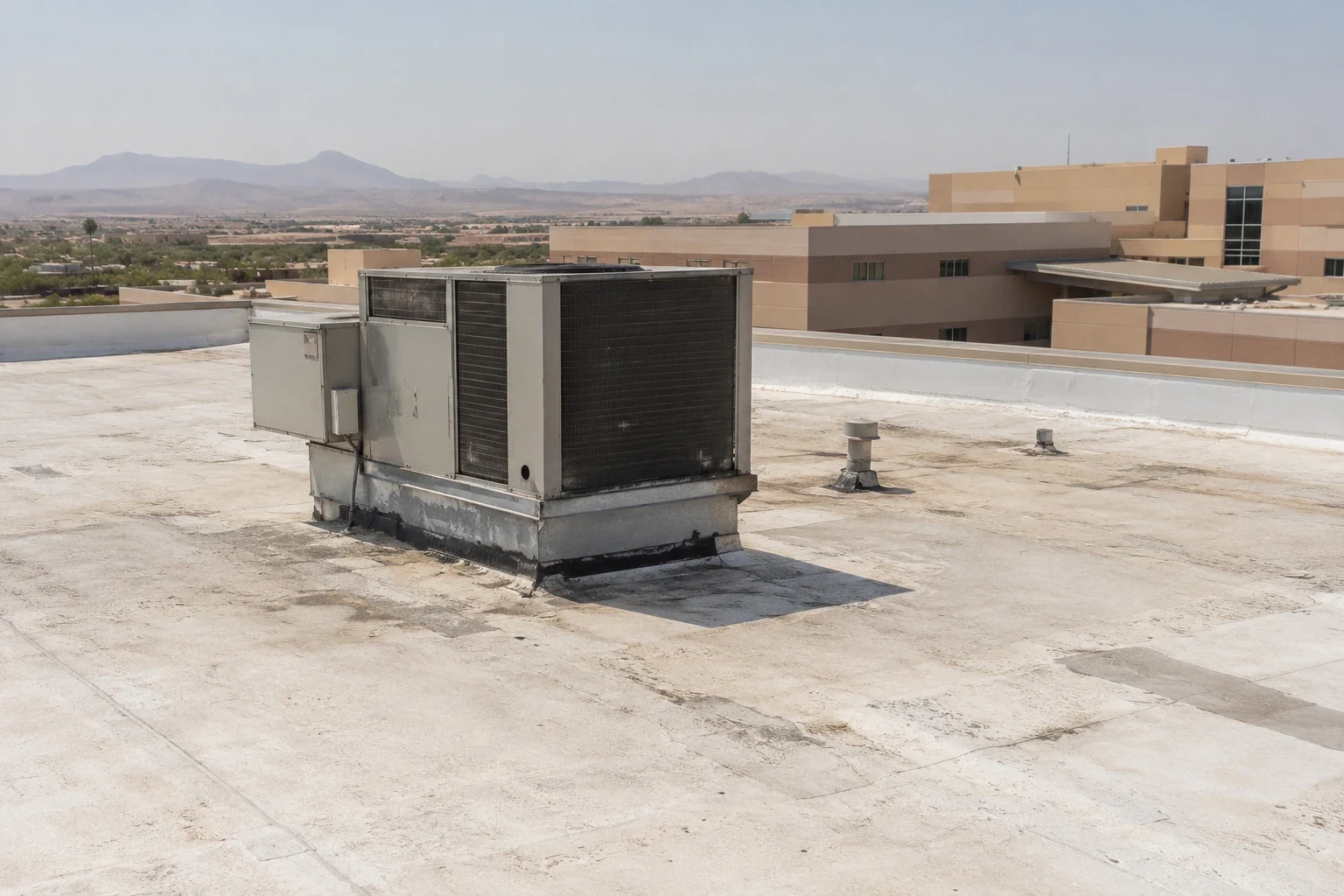
Condensers, a rack of refrigeration equipment, makeup air units, deli and bakery exhaust and the usual heating and cooling units all share the roof. Condensers vibrate, and that vibration works at sealant around supports and at flashing on the lines that run to the units. Heat from the equipment ages the nearby membrane faster, and the surface beneath a condenser often shows chalking or cracking before the rest of the roof.
We check support legs, pitch pockets, line penetrations and curb flashing, and we probe the seams within reach of each unit. Where lines cross the roof on the surface, supports should lift them clear of the membrane. If a leak has been reported, we follow the water back along the line to the opening instead of stopping at the nearest stain.
Roof access is usually through a hatch in a back room or a fixed ladder at the dock end. We note who holds the key and what is stored beneath the hatch. A blocked hatch costs a morning, and an open one is a security question the manager should settle before the crew arrives.
How is food protected while the roof is open?
Before cutting begins, we agree with the store manager on which areas below need to be covered, which cases need protection and which doors are the safe route for materials. Dust, debris and odors have to stay off the sales floor and out of the stockroom. We avoid open torches and strong solvents near intakes and choose low-odor adhesives or mechanically fastened systems where the intakes sit close to the work.
Exhaust from a deli or fryer leaves grease on the roof, and grease attacks some membranes and adhesives. Before any patch, we clean the surface around exhaust fans so the repair can bond, and we recommend a grease containment tray at the discharge. At the end of each shift the open area is closed and swept.
Cleaning belongs in the plan. Roof debris, fasteners and scraps are swept into a covered bin and never dropped near the loading area. A magnet sweep covers the dock apron and the lot at the end of each shift, because a stray screw under a pallet jack is a hazard for the store's own staff.
Is that ceiling drip a leak or condensation?
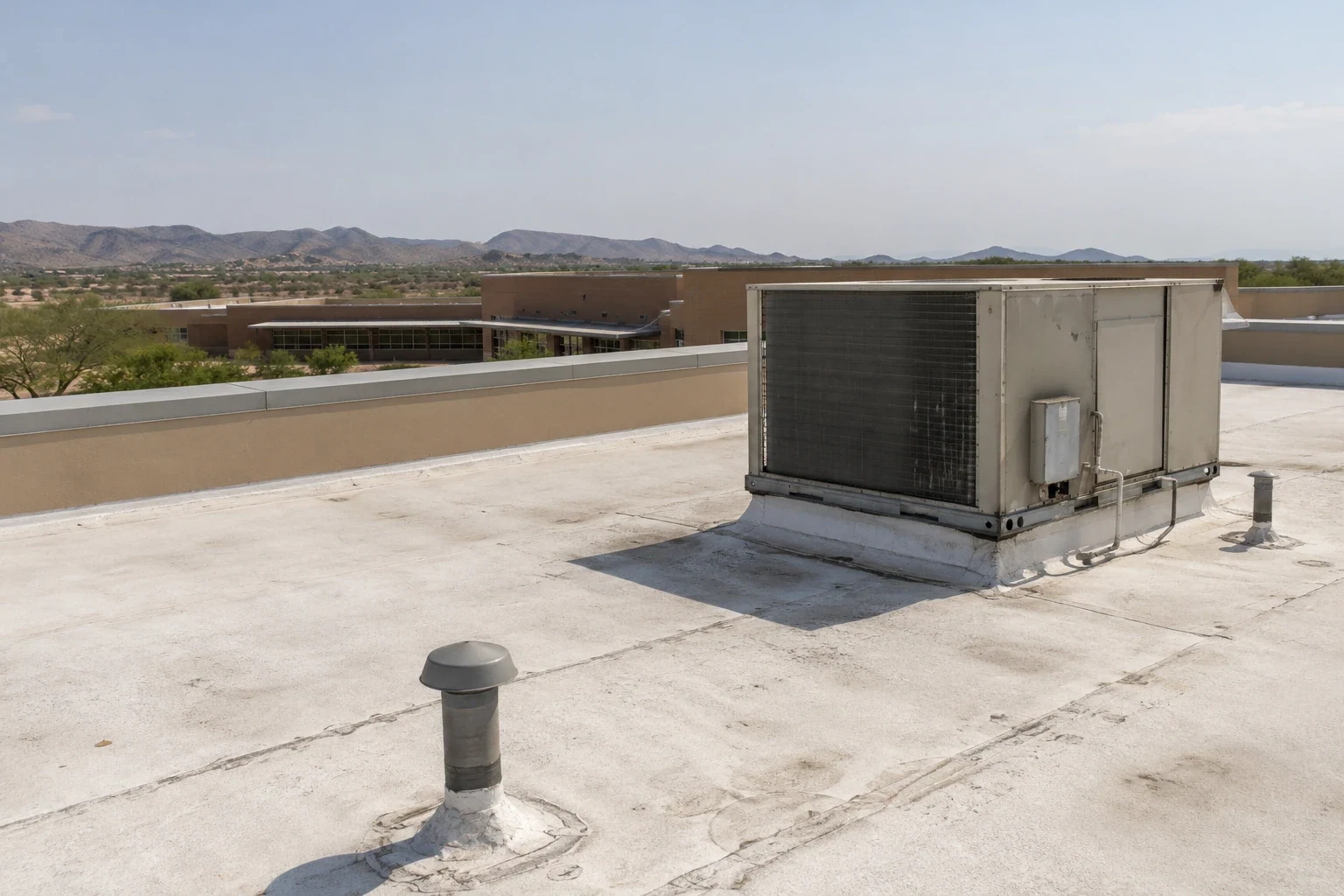
Cold lines and cold cases can sweat, and a drip below the roof does not always come from the roof. A leak follows rain. Condensation follows humidity and equipment cycles. We compare the date of the drip with the weather, then check the roof above for open flashing, cracked sealant and ponded areas. If the roof is dry and sound, the report says so and the search moves to the refrigeration lines and the ceiling space.
When insulation has taken on water, a moisture survey maps it. The repair then follows the wet boundary and not just the visible stain. This also protects the owner from paying for a roof repair that would not have stopped the drip.
What happens when the first storm of the season arrives?
Precipitation at the station comes to about 9.3 inches a year, with February the wettest month and June the driest. After a long dry stretch, drains and scuppers are packed with grit. A store has loading docks, canopies and awnings that each shed water in their own way, and a blocked downspout at a rear dock can leave water on a delivery apron.
We clear strainers, check the dock canopy drains and compare low areas with the leak history before the wet month arrives. Small corrections, such as a reset drain ring or a small cricket behind a unit, can be done during a repair visit.
Can the roof be worked on without disturbing the sales floor?
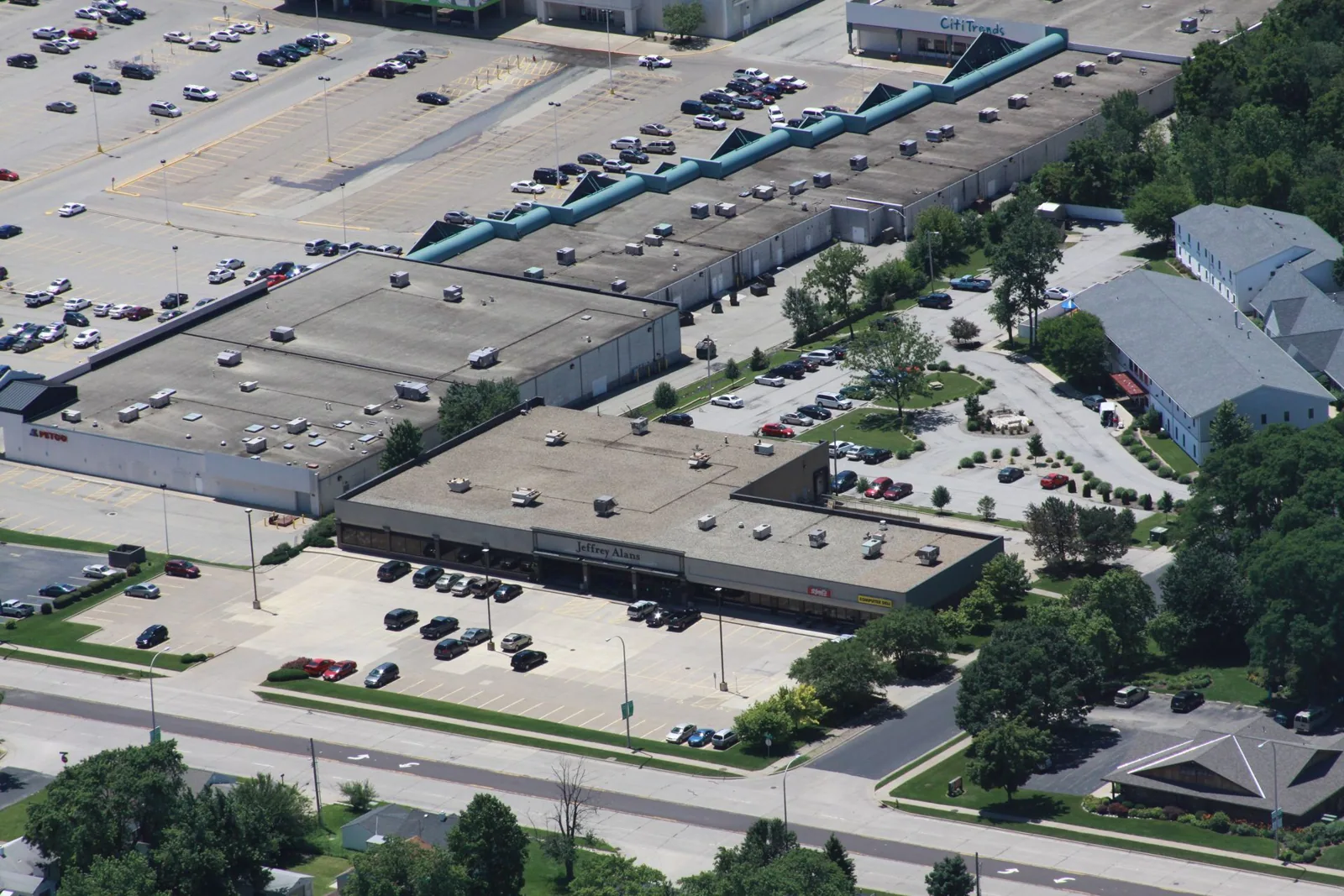
Mostly. We start before opening hours or after closing, in sections that can be dried in before the crew leaves. Materials stage away from the entrance and fire lanes. Safety zones are marked at doors below the work so customers and staff do not walk under a hoist line.
Stores that run long hours get a contact at each shift. Temporary dry-in material is on site before any cutting begins, and a standby crew is available when the forecast shows rain in a section that is open. Early starts also avoid the worst surface heat, which helps adhesives bond.
Stores near I-15 and along River Road take deliveries from trucks that arrive on the county's regional road network, so the crew's hoist stays on the opposite side of the building from the receiving door. The delivery lane stays open, and a spotter watches the crossing between the lane and the crew's walkway.
Store managers get a short written notice naming the roof area, the noise window and the person to call. Anything that looks wrong from inside, such as a new drip or a smell, is reported to that contact, who can pause the work.
Repair, restore or replace, and which rules apply?
A recurring leak near the same condenser often calls for more than another patch. We price each path on its drivers: insulation that must come out, units to be disconnected and reset, and refrigeration contractors who must work alongside the roofers. A repair, a recover and a replacement each get a written line.
A grocery reroof raises the energy question early, since the 2024 energy standards become mandatory statewide in July 2026 and the state has adopted the 2024 building code. Scope and permit date decide the pathway. Along St. George Boulevard or in Lively Downtown, we confirm the city's requirements first. A big-box retail roof and a restaurant roof raise related questions.
Records matter on a food-service roof. The file we leave has dated photos by roof section, repair spots located from fixed points, the materials used and the moisture readings beside each. Warranty notice steps, where they apply, are written down, and deferred items stay listed with a location and a revisit date for whoever manages the store next.
Commercial Roofing Questions
Is a drip near a condenser always a roof leak?
No. Condensation on cold lines can drip too. We compare the drip date with the weather and check the roof for open flashing first.
Does refrigeration need to be shut down?
Only if a unit must be lifted or disconnected. We schedule the refrigeration contractor with our crew to keep food loss low.
How is food kept safe during roof work?
By agreeing on covered areas and routes, using low-odor materials near intakes and closing the roof at the end of each shift.
When should the roof be checked?
Before the wettest months and after any hard storm. Drains and scuppers should be clear before water arrives.
How does grease affect repairs?
It keeps adhesive from bonding. We clean the area first and recommend containment at the exhaust discharge.