
Apartment and Multifamily Roofing in St. George, UT
Apartment and Multifamily Roofing Overview
A maintenance ticket that reads "ceiling stain, unit 3C" is where most apartment roof work begins, and it tells the manager very little. In St. George, UT, rain is rare, so a stain on a top-floor ceiling often arrives weeks after the storm that caused it, and by then the tickets have piled up. The first job is to sort them into the ones that point to the roof and the ones that do not. Station normals show only 9.3 inches of precipitation a year, and June averages 0.16 inches.
A roof walk done with the unit list in hand makes the sorting quick.
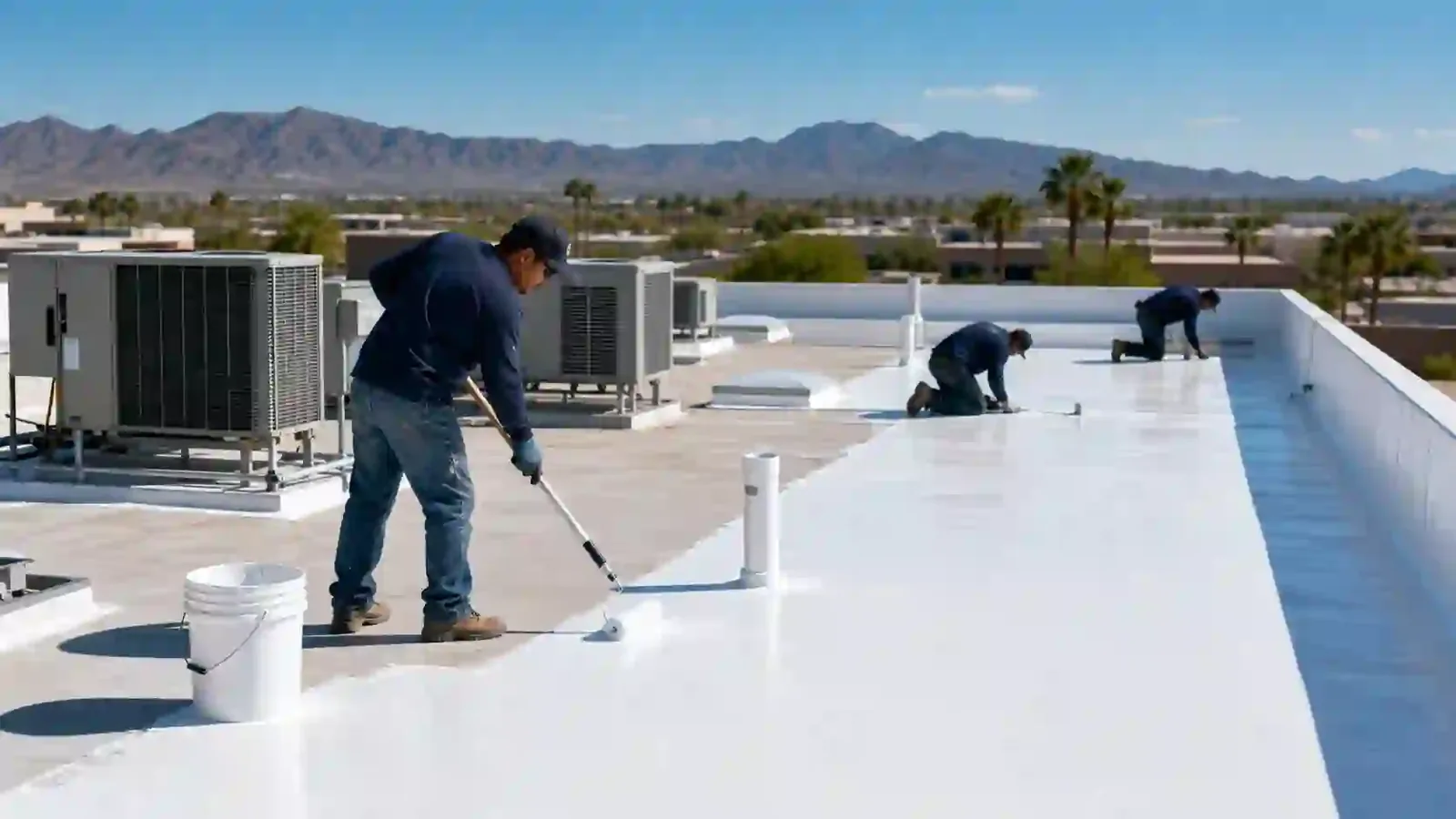
How does the unit list become a roof plan?
We ask the manager for the leak log, with unit numbers, dates and the weather on each date. Then we lay the units over the roof plan and look for patterns. Three units in a row under the same stretch of parapet point to flashing or coping. Two units at opposite corners after a storm point to drains. A single unit that drips on dry days points to plumbing or condensation, and we say so instead of cutting into a sound roof.
On the roof, we check parapet flashing, expansion joints between building sections, hatches, dryer vents, plumbing boots and the transitions where a low-slope roof meets a pitched section. Photographs carry unit numbers so the manager can see which tickets belong to which finding and which can be closed after repair.
Hot, dry weather can fool the log. A stain that shows up after months without rain may be an old one that dried and reappeared with humidity. We mark each stain with a date and a pencil line on the ceiling, so growth between visits is easy to see, and we note whether the stain edge is soft, rusty or clean.
Does the age of the community tell us the roof type?
By the city's own plan, much of its housing and commercial stock dates from 1980 or later. That is a broad date range and not a statement about any one roof. A community may have a pitched roof with a flat section over a breezeway, a low-slope roof over a clubhouse and a different assembly on a later building. Some have been recovered or patched by different trades.
We do not assume. We read the roof, test where a question needs an answer and record what we confirmed and what we did not open. Along Bluff Street and in the Downtown Connected Neighborhood, the city's plan labels the areas, which helps with routing and says nothing about a roof.
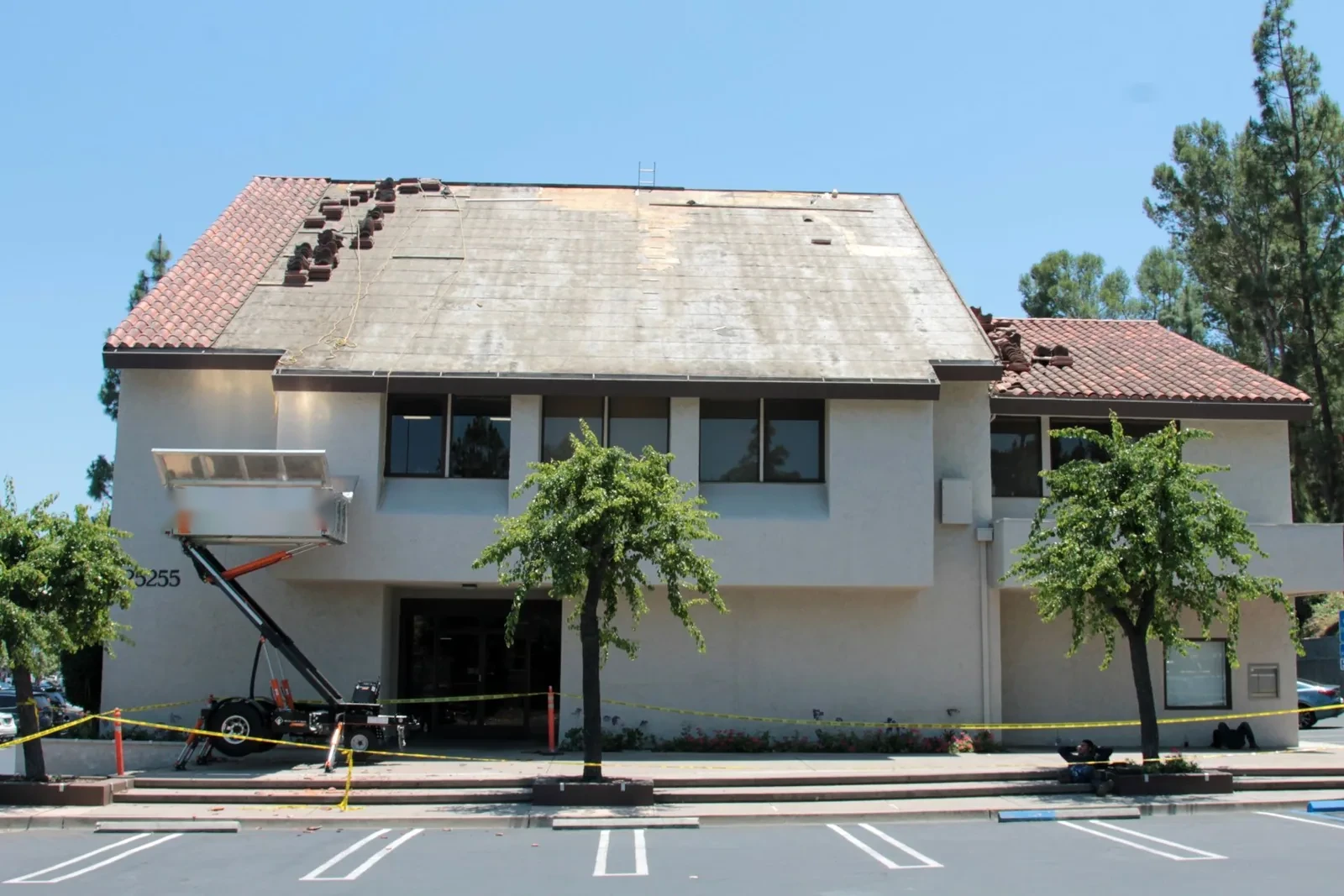
What does extreme heat do to a multifamily roof?
The station's July highs average 101.9 degrees, and August comes in at 99.9. Roof surfaces run hotter. Seams relax, sealants dry out and flashing shrinks from walls. Pitched sections with shingles or tiles heat the attic below, and flat sections carry the rooftop vents, the plumbing boots and the dryer exhausts that crack first.
We start early, because adhesives bond poorly on hot surfaces and crews need shade. We check every boot and vent on the walk and log the result by unit number. A coating restoration can extend a flat section whose base is dry.
Dryer vents deserve a note. Lint and heat bake into the vent hood, and a hood that has split lets water run down the duct. We check each vent cap on the walk and replace the ones that no longer shed water.
How are residents told, and how is access handled?
Residents live under the work, so notice is part of the job. We give the property manager a short written notice for each building that names the days, the noise window and the areas of the site that will be fenced or closed. Parking and walkways near hoists are marked, and the crew keeps fire lanes clear. A manager who knows the building can tell us which units hold night-shift workers, infants or home offices and need extra warning.
Roof access often runs through a locked hatch or an exterior ladder. We note who has the key and arrange the entry so no crew member passes through a resident's unit. Where a hatch is inside a unit, the manager schedules entry in advance and we limit time inside to the minimum.
Student housing and senior communities add their own rules. A college and university roof project on housing follows the academic calendar, and a senior living roof adds quiet hours and care schedules. The same notice format works for each, with the names changed to match the people who live there.
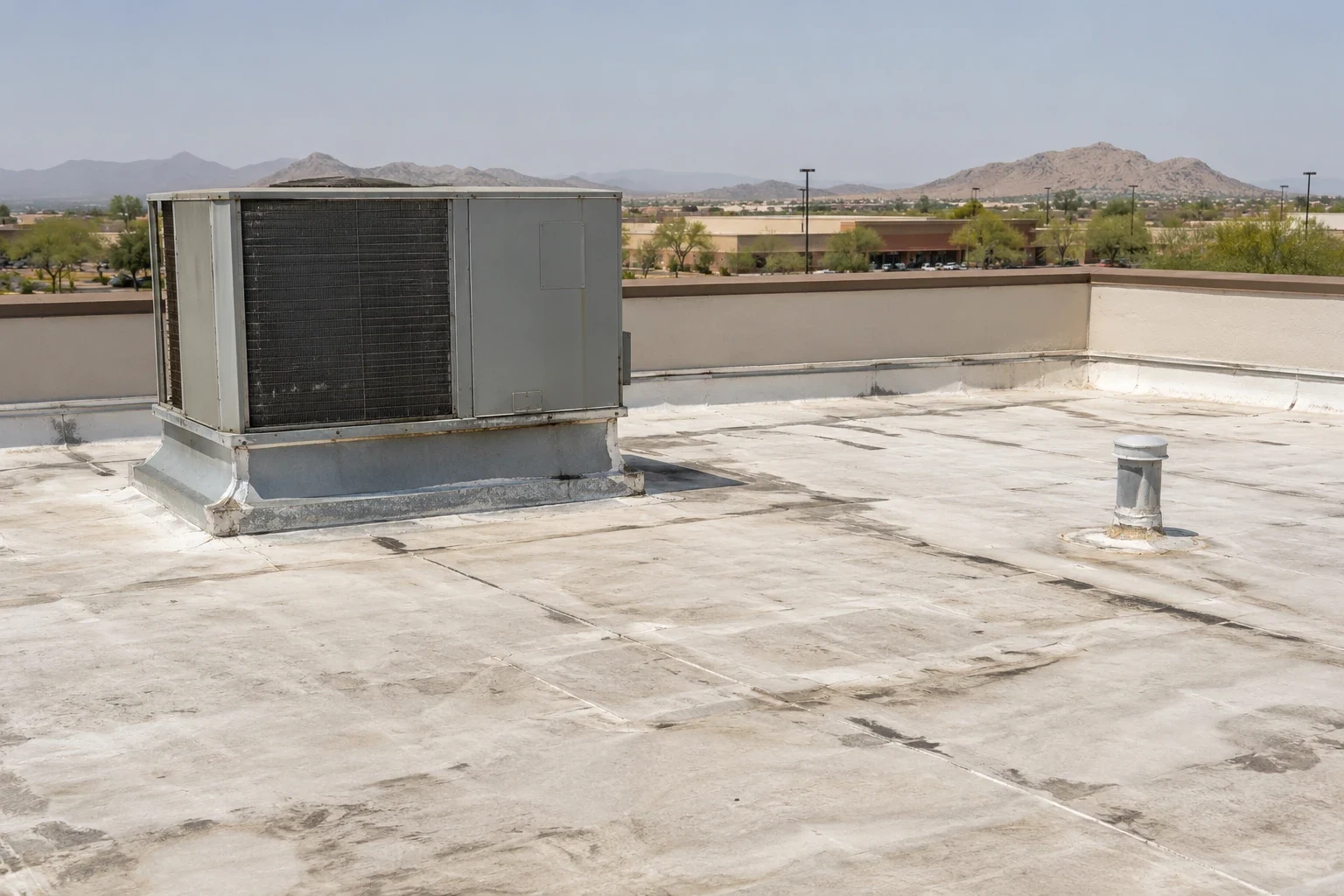
Can one building be done at a time?
Yes, and it is often the best way. A community with several buildings of the same layout allows a phased plan. We replace or repair one building at a time, finishing each before the next begins, so only one set of residents is under construction at once. On a single large building, we phase by stair tower or wing.
Weather holds are part of the plan. An opened section is dried in before the forecast turns, and a standby crew is available for emergency stops. For occupied buildings with low-slope roofs, we choose systems and adhesives that keep odors down and avoid torch-applied methods near operable windows and balcony doors. Balconies and breezeways get a look from above and below, since a deck that drains toward the building can produce a stain that looks like a roof leak.
Material arrives in small loads and is hoisted to the roof at set hours. Debris leaves in a covered chute. A magnet sweep of the parking area closes each day, so residents do not find fasteners under their tires.
Repair, recover or replace, and which rules apply?
A few leaking units may need only targeted repair. Leaks in many units may mean the membrane or insulation has reached the end of its useful life. A moisture survey shows where the insulation has taken on water, which tells the owner which stretches to patch and which to cut out. A replacement plan prices roof area, insulation depth, openings to flash, crew access and phasing.
The edition of the state building code and the energy standard in force on the permit date apply to a multifamily reroof, and the 2024 energy provisions become mandatory statewide in July 2026. Scope decides the pathway, so we confirm it with the city first. A hotel roof follows many of the same occupied-building steps.
Records close the loop. What the manager gets is a report: photos labeled by unit, repair spots placed by distance from a fixed point, moisture readings and the products used. Warranty notice dates are logged where they apply, and deferred items sit on a list with a location and a revisit date, so the next manager works from the file and not from a stack of tickets.
Commercial Roofing Questions
How do you tell a roof leak from a plumbing leak?
By pattern. Roof leaks follow weather. Plumbing leaks continue on dry days. We compare the log to the weather before cutting.
Do residents have to leave during roof work?
No. We give notice, mark off parking and walkways and keep the crew out of units.
Why does a stain appear weeks after a storm?
In a dry climate, water can sit in insulation before it reaches the ceiling. A moisture scan shows where it went.
Can one building be done at a time?
Yes. Finishing each before the next keeps disruption to one group of residents.
What does the manager receive afterward?
Photos labeled by unit, repair locations measured from fixed points, moisture readings and a list of tickets the repairs should close.