
Acrylic Roof Coatings in St. George, UT
Acrylic Roof Coatings Overview
An acrylic coating is a water-based white surface, and it earns its place on roofs that drain well and need a bright, reflective finish at a sensible material cost. It also needs a rain-free stretch to cure, and the station normals leave room for one: they total 9.31 inches a year, and June's normal is only 0.16 inches, the lowest month. The same sun that makes the climate easy on curing, with July and August highs near 100 degrees, also limits when a crew can work a roof safely.
An acrylic coating is not a fix for loose material, wet insulation or a blocked drain. The visit goes under the old finish to the layers that carry it, and the asset manager hears whether the roof qualifies, which repairs come first and what a restoration can realistically deliver over the next several years. A commercial roof inspection starts that record.
What surface can accept an acrylic system?
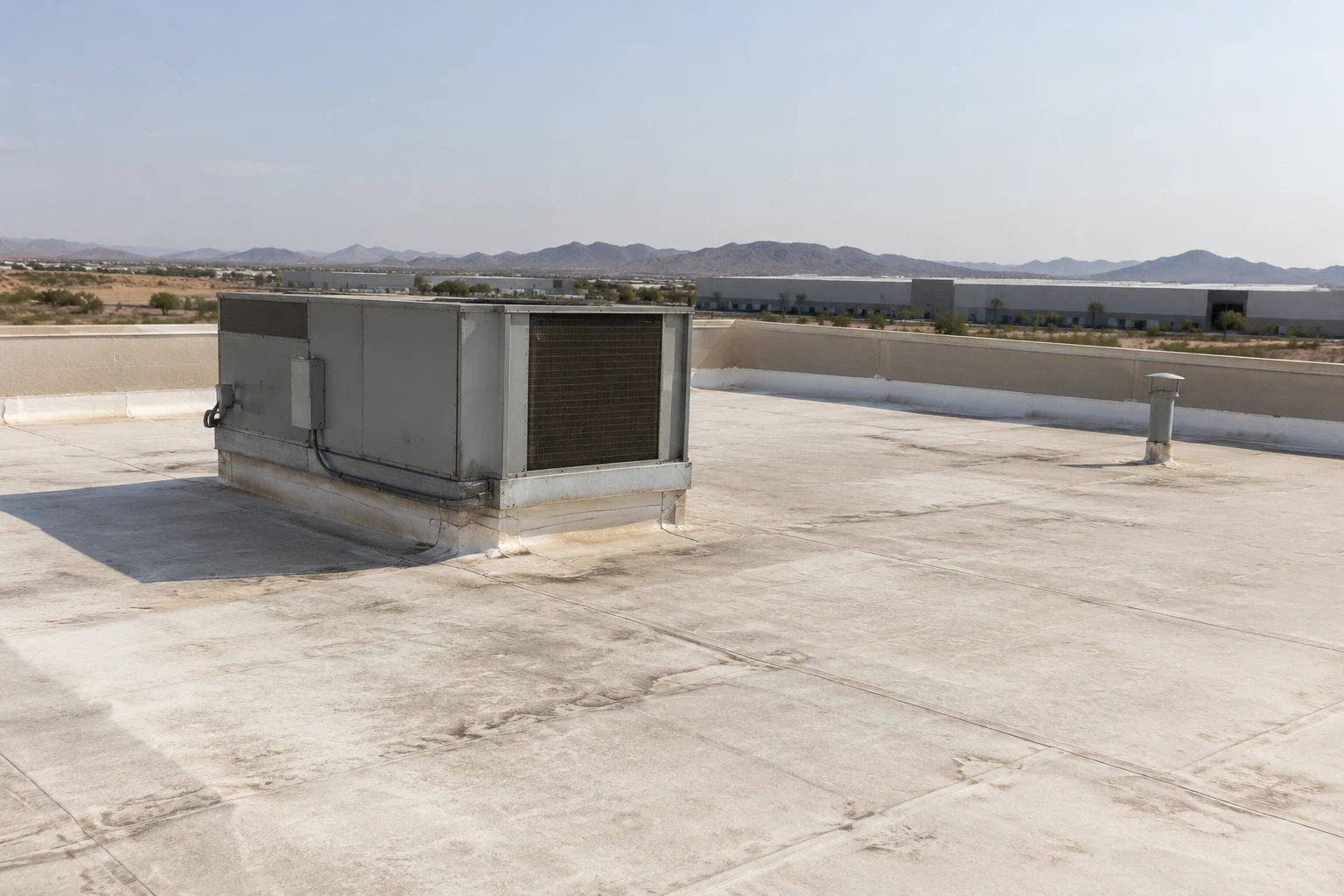
One that is clean, stable and compatible. We check the existing membrane or metal, any earlier coating, adhesion, seams, rust, moisture and repairs before specifying another layer. Loose coating comes off, failed seams are rebuilt and penetrations are redetailed. A clean surface is still unsuitable if water is entering below it or if an earlier product will not accept acrylic.
At each drain and curb we look at where water goes and where the assembly turns up or terminates. Where surface evidence hints at trapped water, an infrared moisture survey picks areas for test openings. The recommendation follows the confirmed substrate, not the color or age of the existing finish.
Why does acrylic need a roof that drains?
Acrylic is water-based, and a coating that stays wet for days can soften, blister or wash out. That is the plain difference from silicone, which tolerates standing water better. If a roof ponds, either the low spots are corrected first with tapered board or a new outlet, or the owner looks at a different system.
We map low areas, scuppers, drains and crickets and note debris or signs of standing water. February is the wettest month in the normals at 1.38 inches, and a roof that looks free of water in a dry June can still hold a pond after a winter storm. The scope states where runoff leaves the building. Where a pond is the problem, a cricket behind a curb or a section of tapered board built up before coating is cheaper than recoating the same low spot every few seasons. Drain and scupper correction handles the outlet, and heat and UV damage on the surface is a separate repair, coordinated but never substituted for the other.
Standing water is photographed and measured after the next rain, so the correction can be judged against a number.
What happens before the first coat?
The crew cleans the surface, removes unsound material, repairs the substrate and prepares the details according to the system. A small test patch shows whether the coating bonds to the existing finish. Primer and reinforcing fabric go where the system calls for them, and seams, penetrations and perimeters get extra care. A thin application, a contaminated surface or a missed repair can show up later as peeling, pinholes or an open leak.
Application limits come from the product instructions: temperature, moisture, coverage rate and cure conditions. Hot weather narrows the daytime window, so we plan early starts, check the forecast and protect cars, glass and air intakes from overspray. Where the roof is sprayed foam, the foam beneath the coating is part of the preparation, because the coating exists to protect it.
When is acrylic the right path?
When the roof is dry, bonded, well drained and in need of a reflective surface. We compare the existing coating, adhesion, drainage, UV exposure, maintenance burden, preparation and product limits. Silicone coating suits a roof that holds water; acrylic often suits one that does not. Neither belongs on a roof that is wet below the sheet or loose on the deck.
The reflective surface is the usual reason to ask about acrylic. A white finish lowers the temperature of the roof surface and can reduce the heat entering the building through it. How much depends on insulation, building use and equipment, and we do not quote a savings figure without data. The coating is also a thin film. It wears with sun, foot traffic and washing, so the plan sets an inspection interval and a recoat point before the film wears to the base.
Cost and duration follow cleaning, removal, repairs, primer, reinforcement, access and how many details interrupt the field. A coating restoration review names the system and the preparation. Where the conditions cannot be met, replacement goes into the comparison with its own price and schedule.
How do we keep application tied to the building's schedule?
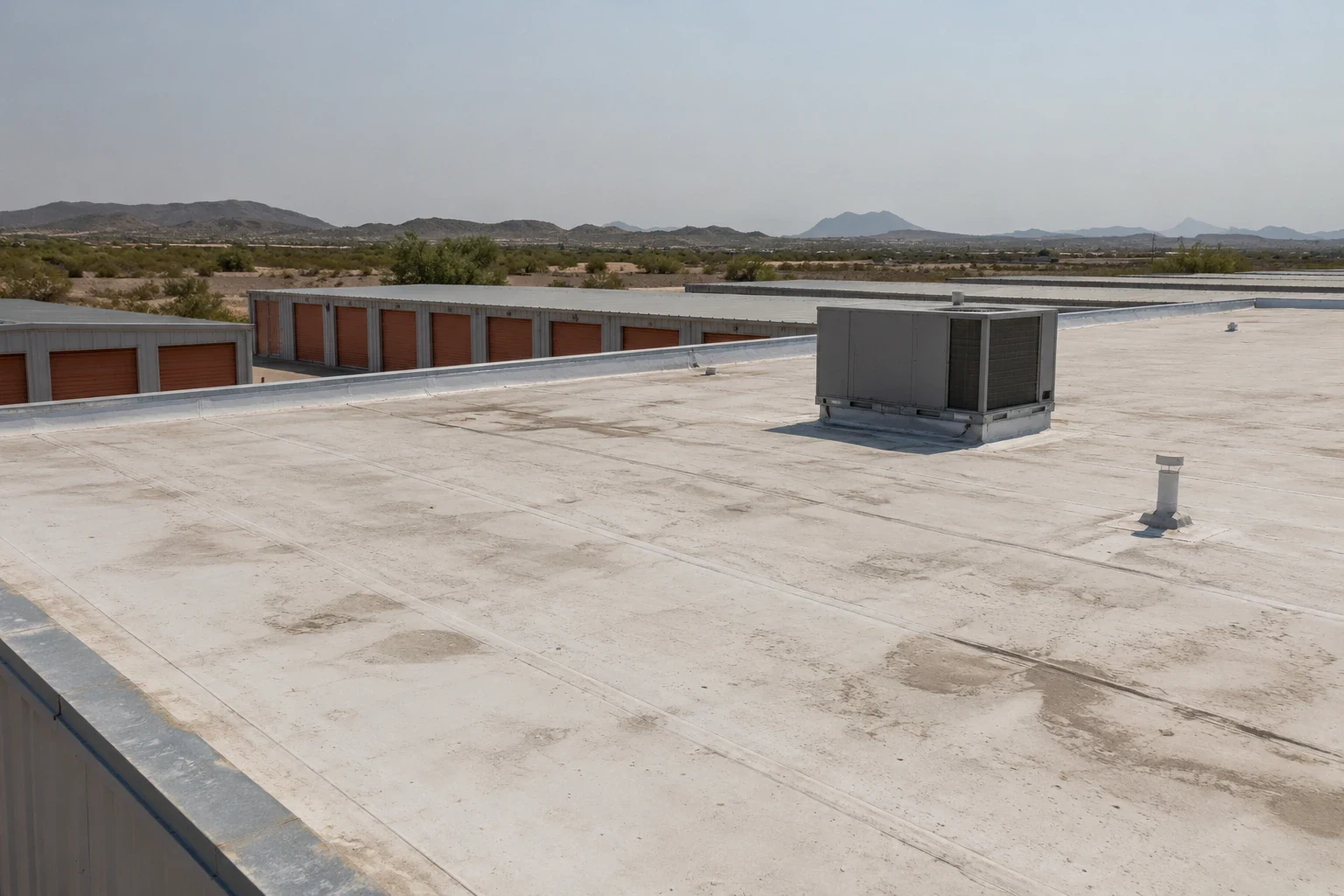
We confirm which zones can close, how the crew moves between them and where material can sit. Entries, rooftop equipment and deliveries restrict the work path, and the facility contact identifies sensitive operations and the hours when access is open. The sequence accounts for preparation, detail work and the cure time before an area returns to service.
A tenant at Tech Ridge, which is planned for offices, shops and homes together, may have customer parking and entrances right beneath the roof, while a tenant in Fort Pierce Industrial Park, largely M-1, may have loading docks and shifts. The roof plan marks each work area, so a large roof is treated as a set of zones, not one uninterrupted field. Cure time goes on the schedule too: foot traffic, equipment service and dock work stay off a fresh area until it has cured, and a late-day shower, rare as it is, can wash out an uncured coat, so we stop in time and watch the forecast.
What should the owner keep afterward?
The preparation record, repaired locations, system information, detail photographs and any follow-up items, all tied to the roof plan. The file shows where coating went on, where the substrate was opened and what remains under observation, so a later manager can tell new damage from an older repair. A preventive maintenance visit revisits drains, penetrations and coating wear before the next capital review.
Send the access rules, roof records and operating hours. We will evaluate the surface, drainage and application window and say whether acrylic restoration, another system or replacement best answers what we find.
A dated photo of the roof before and after coating is kept with the thickness and cure records.
Commercial Roofing Questions
Can acrylic go over an existing membrane?
Yes, when the membrane is stable, dry, compatible and prepared. Unsound material and active leaks get corrected before any coating goes on.
Does acrylic solve water that stays on the roof?
No. The roof needs a working drain path first. Acrylic is water-based and does not like long immersion, so ponds are fixed or a different system is chosen.
What makes acrylic peel?
Poor surface preparation, incompatible material, moisture or application outside the product limits. We examine the failure edge before proposing another layer.
Can coating be applied in a St. George summer?
Early in the day, within the product's temperature and cure limits. We check the surface before each step and stop when it climbs out of range.
How does acrylic differ from silicone?
Different formulation and different tolerance for water. We compare each against your substrate, drainage and maintenance goals; the name alone does not settle the choice.