
Edge Metal, Coping and Gutters in St. George, UT
Edge Metal, Coping and Gutters Overview
Metal expands in the sun, and a roof edge in St. George, UT, gets a lot of sun. The NOAA station's July mean high sits just under 102 degrees and August's near 100, and sheet metal on an exposed edge can run hotter than the air around it. Over a summer, a long run of coping or drip edge grows and shrinks with the day, and every joint, fastener and sealant bead feels the movement. After years of it, joints open, screws back out and sealant cracks.
We start an edge inspection on the roof, at the perimeter, with the cap, the cleat, the joints, the membrane termination and the wall below. The question for the asset manager is whether the edge can be repaired in place or needs to be reset or replaced, and what it will cost to leave it. A commercial roof repair that ignores a failed edge often fails again at the same spot.
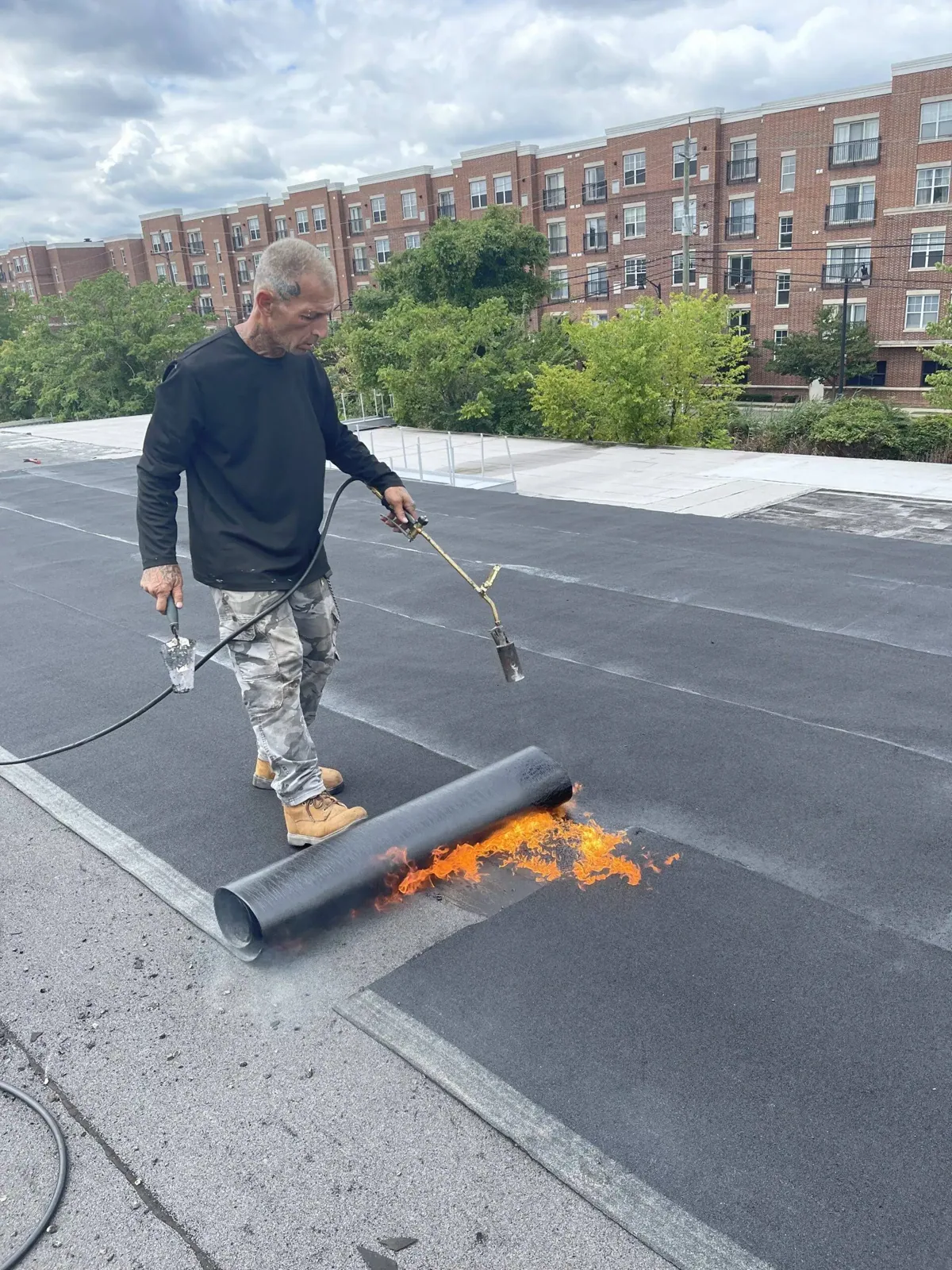
How does an edge fail?
The common patterns are open joints between sections, loose or missing fasteners, a cleat that has pulled away from the wall, a cap that has been bent by wind or a ladder, and sealant that has dried and shrunk. Each lets water in, either onto the membrane termination or behind the wall. A small gap at a coping joint can wet the substrate for months before a stain appears inside.
We look for rust streaks, daylight under the cap, ripples in the metal and staining on the wall face below. We also check the membrane at the edge, since a termination that has lifted or shrunk lets water under the sheet. If the metal is sound and the failure is the sealant or a few fasteners, a local repair may hold. If the cap is warped or the cleat is failed along a run, resetting the whole section is the sounder repair.
What is coping, and why does it matter?
Coping is the cap on top of a parapet wall. It sheds water off the wall top and protects the flashing beneath it. A coping that is pitched toward the roof, joined with sealed or lapped splices and fastened to a cleat will keep water away from the wall core. One with open joints or a flat profile lets water collect and enter.
Coping can be metal, stone or precast, and the right repair depends on the material. On metal coping, we reset sections, replace damaged joints and use continuous cleats where the design calls for them. We also check the flashing under the coping, because water that gets past the cap can run down the back of the membrane turn-up. In the roof plan we mark each coping run by location, so the owner can see which sections were reset and which were left alone.
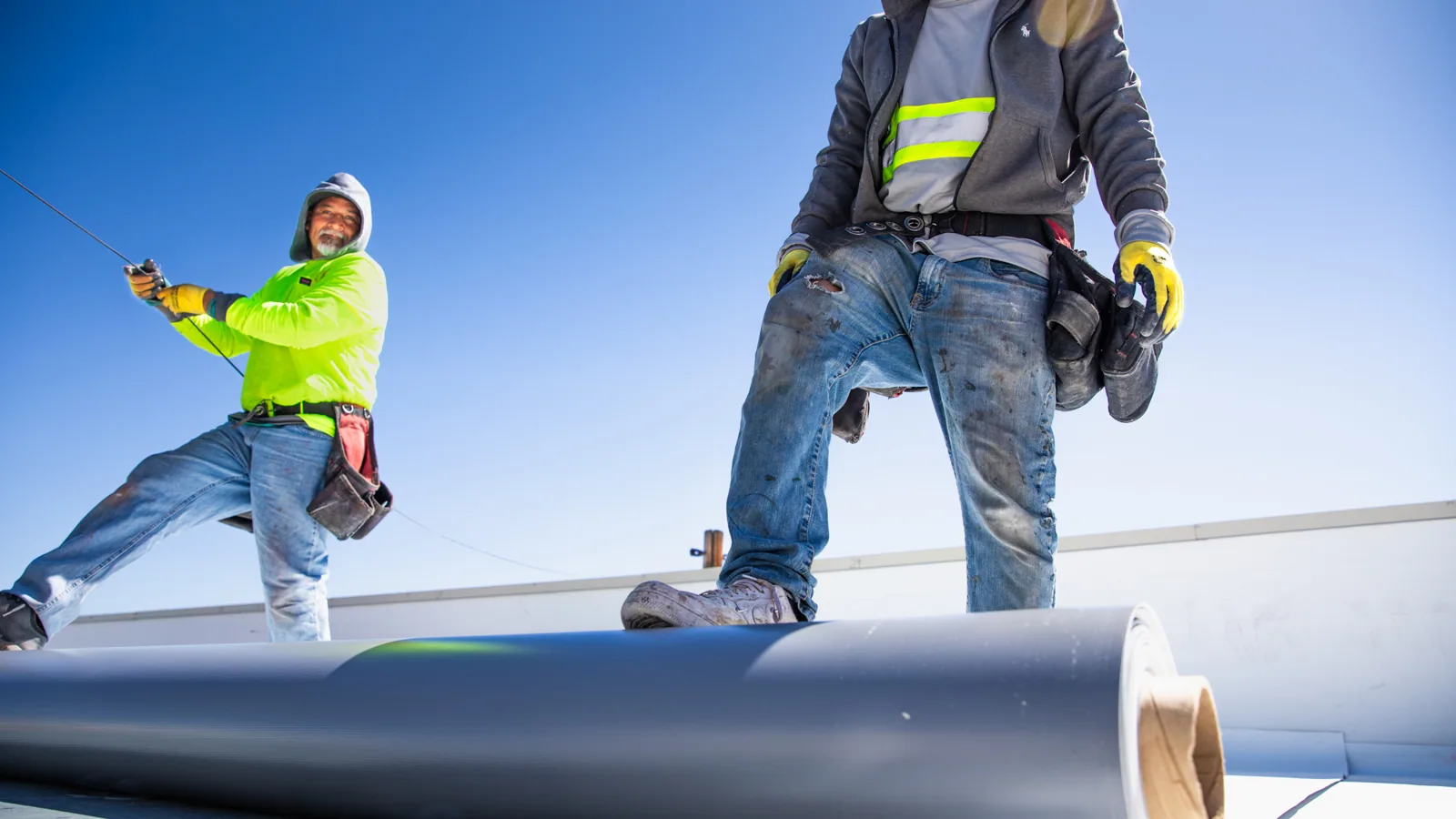
Do gutters and downspouts belong on a commercial roof?
Many commercial buildings use gutters and downspouts, particularly on low-slope roofs with eave drainage or on metal roofs. They carry water off the roof and away from the foundation, entrances and walkways. In a climate with little rain, they can be easy to ignore, but a gutter that sits unused for months collects dust and debris that blocks it when the storm arrives. The station normals show 9.31 inches of precipitation a year, with February the wettest month at 1.38 inches, so a gutter here may sit dry for weeks and then have to carry a storm.
We check hangers, slope, seams, end caps and the downspout connection to the ground or a storm line. Where a downspout discharges onto a walkway or against a wall, we recommend an extension or a splash block. Our drain and scupper service covers interior drains and scuppers, and gutters complete the system on the exterior.
What materials and details should an edge use?
Edge metal comes in galvanized steel, painted steel, aluminum and stainless steel, among others, and the choice depends on exposure, appearance and budget. Joints need either lapped, sealed splices or concealed splice plates with a gap for movement. Fasteners must be compatible with the metal to avoid corrosion, and sealants must tolerate the heat and UV that St. George's summers bring.
The detail at the membrane matters as much as the metal. The membrane should terminate under or behind the metal with a sealed edge, and the metal should shed water over the roof side without allowing it behind the wall. Wind is a design consideration as well, since an edge can be pulled off when its attachment is weak, and a roof that has already seen wind damage often needs the whole perimeter checked, not only the corner that moved. Edge metal design for wind resistance follows the 2024 International Building Code, which Utah adopts with amendments through its State Construction Code. Before ordering metal, we ask the City of St. George which edition the permit date puts in force.
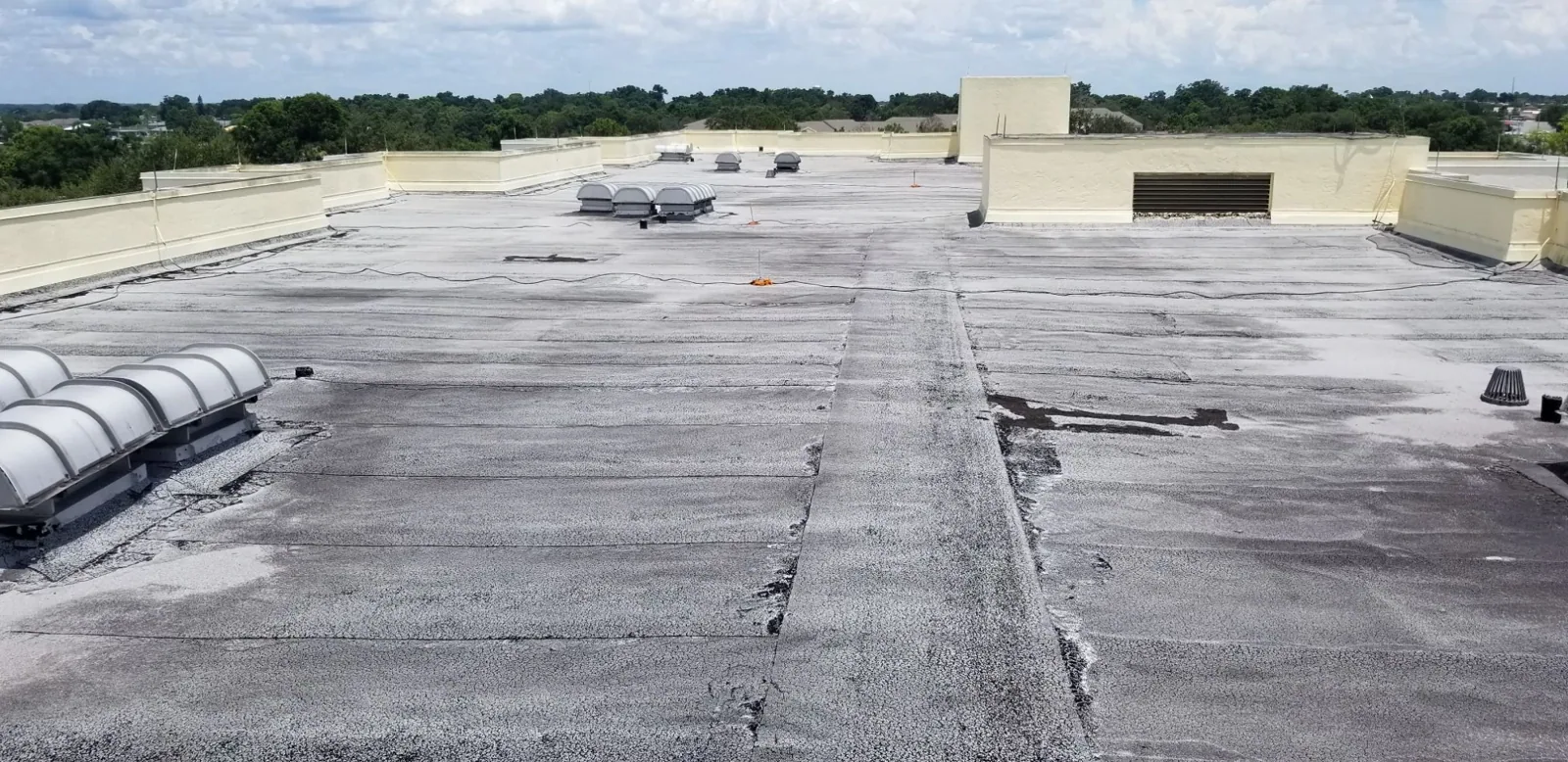
Where does edge work come up across the city?
Edge problems show up wherever a roof has a perimeter, which is every roof. A warehouse in Fort Pierce Industrial Park may have a long run of coping and a loading-dock edge that takes impact. A retail or office building along the Bluff Street corridor may have decorative parapets and a short edge with tight access. We read each roof on its own terms, since the way an edge was built shows only at the edge.
For owners with several buildings, a roof condition report records the edge on each roof, and the repairs can be sequenced by exposure and cost. Doing the edge before it fails costs less than a repair after water has damaged the wall or the interior. When a storm has already lifted a section, storm damage roof repair secures the opening first, and the permanent edge work follows once the roof is dry and the wall has been checked for moisture.
Access and sequence are part of the scope. Edge work is done from the roof, a lift or scaffolding, depending on the height and what sits below. We ask where the public walks, where deliveries arrive and which entrances must stay open, then set the work window to match. The roof plan, the safe access rules and the operating schedule decide whether the perimeter is done in one visit or in stages, and the proposal says.
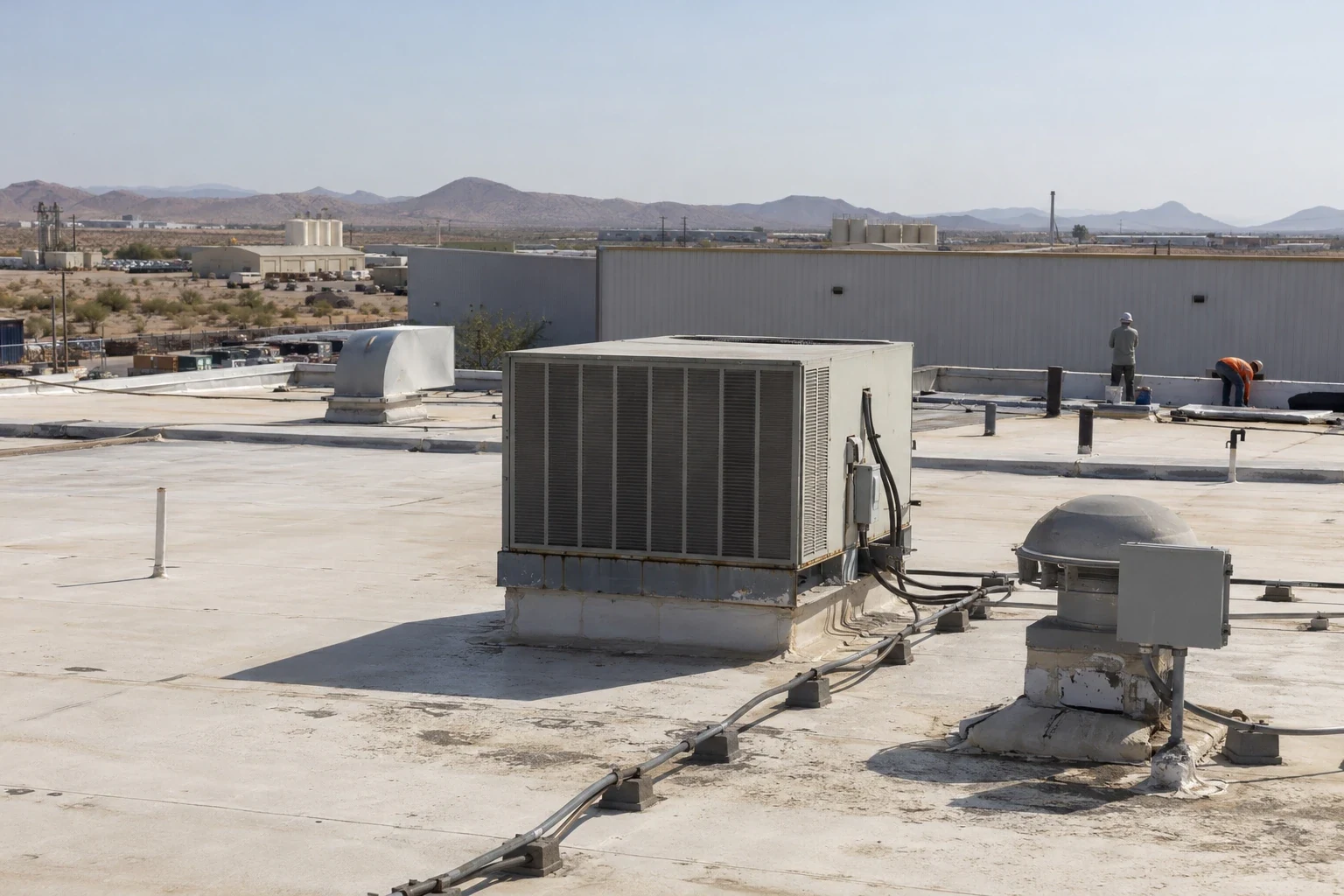
Commercial Roofing Questions
Why do coping joints open?
Heat movement is the main cause, along with wind and aging sealant. Metal grows and shrinks daily, and a joint without room for movement or a good seal will separate over time.
Can sealant alone fix a loose edge?
Only for a small gap in sound metal. Sealant is a short-term repair when the cleat, fasteners or metal itself have failed. We tell you which condition we see before choosing the repair.
Does a gutter need to be replaced if it leaks at a seam?
Not always. A seam can be resealed or riveted and sealed if the metal is sound. A gutter that is sagging, corroded or pitched wrong needs to be reset or replaced, and we explain which case it is.
How do you protect the building during edge work?
We keep the work area small and closed by the end of the shift. Pedestrian areas below are cordoned off, and materials are kept clear of doors and exits. We confirm the access plan with the facility manager before starting.
Will new edge metal match the old?
We can match profile and finish in many cases, or propose a close alternative if the original is no longer made. Send photographs or a sample, and we will show the options before ordering.