
Commercial Roofing in Downtown Traditional Neighborhood, St. George, UT
Downtown Traditional Neighborhood Overview
Hidden layers decide the budget on a roof that has been worked on many times. The city's land-use plan gives the Downtown Traditional Neighborhood its own designation, and for a roofer that name raises a question we answer on site: how many generations of work are stacked on this deck, and what is under the top one. We cannot know that from a map, a permit index or a street view, and we do not guess at it. We find out with a walk, a probe and, where an owner wants a firm answer, a small test cut that shows the layers, the insulation and the deck.
We work from St. George, UT, and we treat each building here as a separate case. Once the layers are known, the choice among repair, recover and replacement becomes a question about evidence rather than about guesswork.
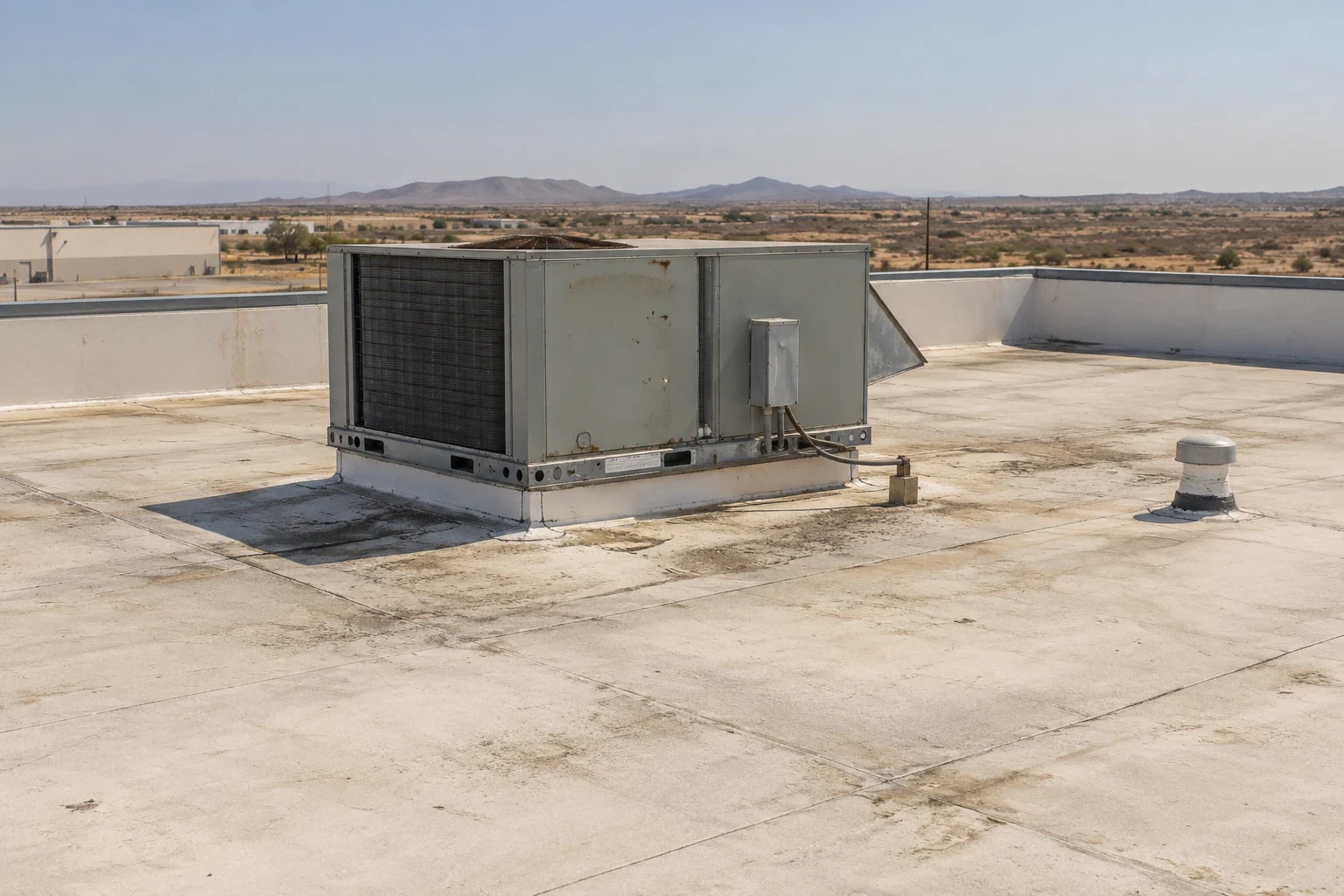
How do we find out what is under the top layer?
A roof that has been patched, recovered or coated more than once can carry several layers, and every layer adds weight and traps moisture in a different place. We start with a visual read of seams, blisters and ridges, then use an infrared scan or a moisture meter to look for wet insulation. A core sample confirms the findings by showing the actual stack of membrane, insulation and deck.
That sample matters for scope. Building codes generally limit the number of layers a deck may carry, so a roof that already has an overlay may need a complete tear-off at the next cycle. Where the layers are dry and bonded, a roof recover may still be legal and sensible. Where they are not, tearing off and starting clean avoids a second round of disruption.
What happens when the deck is worse than it looked?
Tear-off is the moment a deck shows its condition. Rusted metal, soft wood or loose fasteners can turn up under old membrane, and the owner needs a plan for them before they appear. We write a deck allowance into the scope, with unit rates for replacing sections, so a surprise does not stall the job while a price is argued.
The consolidated plan notes that much of St. George's commercial stock dates from 1980 or later, but a plan statement is a screen and not a roof record. A traditional neighborhood can hold buildings of different ages and remodel histories, and each deck still needs a look. Where a tear-off exposes damage, we photograph it, mark it on the sketch and agree on the fix with the owner before covering it. That record also supports an insurance conversation if the damage came from an event.

Which details fail first on an older flat roof?
On roofs that have been through many summers, the first failures show up at the edges and at the drains. Parapet caps open at joints, base flashings pull loose from walls, and drain bowls settle slightly so water lingers. The edge metal and coping is where sun and temperature swing hit hardest, and a loose run can lift in a gust or let water behind the membrane.
Rain totals 9.31 inches in an average year at the St. George station, with June at a mere 0.16 inches and February at 1.38. Long dry stretches let debris collect in drains until the first storm arrives. We clean and test roof drains and scuppers, look for hairline cracks at drain bowls and check that overflow routes are open. These are small items that decide whether the next storm is a nuisance or a claim.
Water that cannot leave a roof does more than leak. Standing water adds weight to the deck, speeds the wear of membrane and sealant, and hides small flaws until they become leaks. Where we find ponding that remains two days after rain, we measure the depth and the area and recommend tapered insulation, a new drain or a re-set sump. The measurement goes into the report, so the owner sees the size of the problem before approving the fix.
What do many summers do to an aging membrane?
Heat is the main aging agent for a membrane that has seen many summers. The St. George July normal is 101.9 degrees and August follows at 99.9. Over years that kind of exposure dries out asphalt, embrittles sealants and shrinks single-ply sheets at their edges.
We look for alligatoring on built-up surfaces, granule loss on modified bitumen, and splits at the corners of single-ply sheets. If the damage is localized, we repair it, and if it is widespread, a modified bitumen or single-ply replacement may be the better path. In some cases a reflective coating buys years, though only over a dry, sound base. Crews work early in the day for both safety and quality, since a membrane laid on a surface that is too hot can pucker, and a hand-welded seam needs a steady surface to cool evenly.
For a building that houses a business with set hours, we also plan the sequence of the roof so the section over the main entry is done first or last, whichever disrupts customers less. That sequencing is a scheduling decision, and it is made with the manager before the first tear-off bundle is lifted.
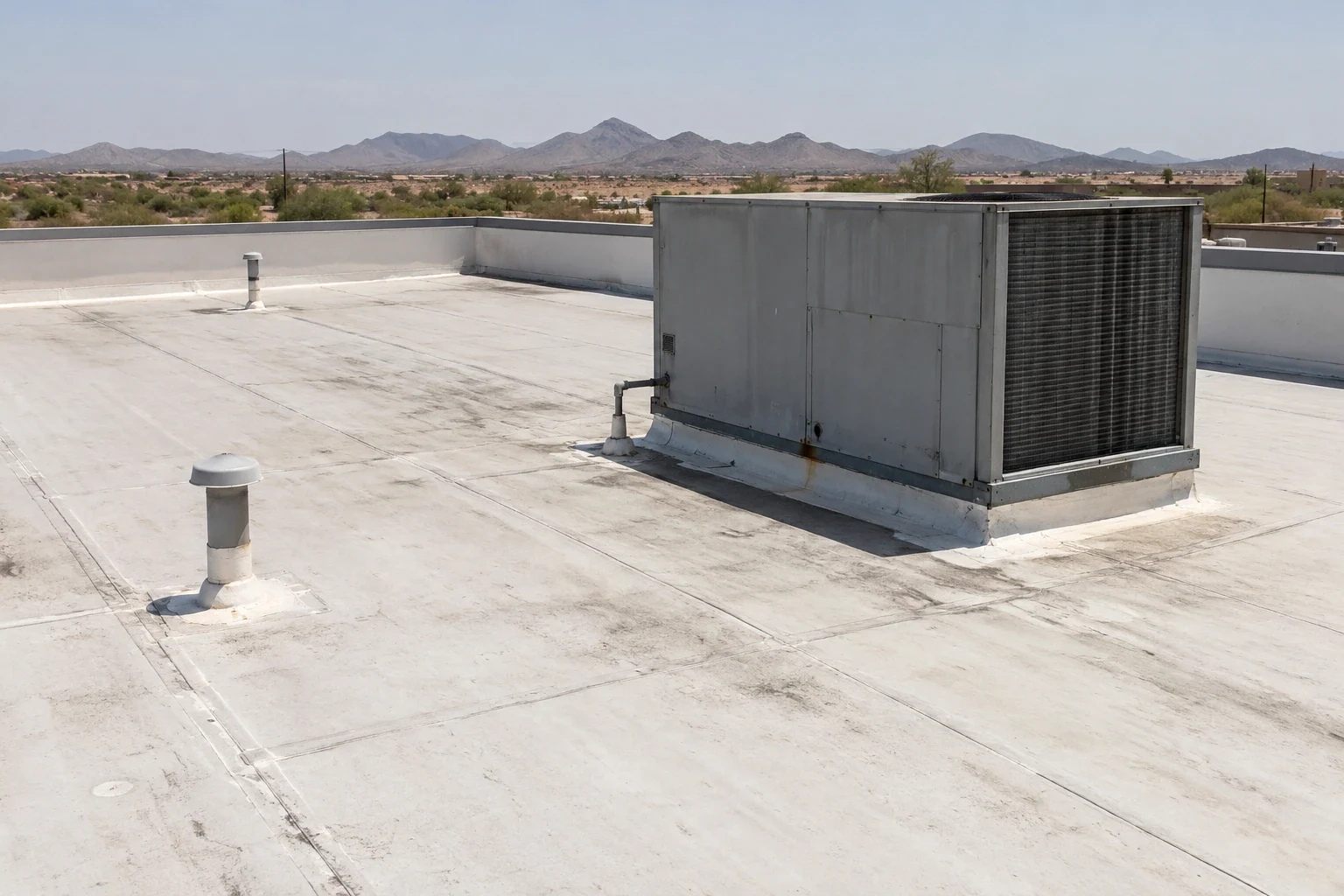
What approvals and records come before a reroof?
Two code layers apply: the 2024 International Building Code as Utah amends it, and the 2024 IECC with ASHRAE 90.1-2022 for energy, enforced statewide from July 1, 2026. A reroof may need added insulation to meet the energy pathway, which can raise the roof edge and change flashing heights. We verify the permit-date edition with the City of St. George before the price is final.
Records help too. Past invoices, warranty documents and drawings show what has already been done and what is protected. Where an owner holds a warranty, roof warranty management keeps the file whole through repairs. Nearby owners can also ask about the Lively Downtown area and the Downtown Connected Neighborhood, which are on the same service route.
Commercial Roofing Questions
Can I tell how many roof layers I have without cutting?
Not reliably. Visible ridges and blisters hint at layers, but a small core cut shows the real stack. The cut is patched the same day, and the result sets the repair scope, the tear-off method and the disposal plan for the old material.
What does a deck allowance protect me from?
It sets a price for replacing damaged deck sections before they are found. Without it, a discovery during tear-off can stall the job. With it, the owner knows the unit rate and the quantity is measured as the work proceeds.
Is a coating right for a roof with several patches?
Possibly, but the patches must be sound and the insulation dry. A moisture scan shows whether coating would trap water, and we test adhesion on a small area before committing.
How is the roof protected if a tear-off is interrupted by weather?
We open only the area that can be closed in the same day, with temporary seals and tarps on hand. Desert storms can be sudden, so the forecast is checked at the start and again at midday.
How soon should an older roof with ponding be fixed?
Soon. Standing water adds weight, speeds membrane wear and finds any flaw. A tapered insulation fix or an added drain is usually priced against the damage waiting would cause, and the report shows both numbers side by side. Owners can then decide with the cost of delay in view.