
Commercial Roofing in Bluff Street Corridor, St. George, UT
Bluff Street Corridor Overview
Drain routes get tested rarely on a St. George roof, and that is exactly why they fail unnoticed. The NOAA station records only 9.31 inches of precipitation in a year, and the June normal is 0.16 inches, so a clogged scupper can sit for months before a wet February reveals it. Washington County's arterial and collector map labels Bluff Street as a named route in the regional network, which makes the Bluff Street Corridor a workable service area for dispatch. For owners of commercial buildings there, our first visit follows the water: where it would run, where it would stop, and what is standing in its way. Pairing that walk with a review of drains and scuppers shows which problems are cosmetic and which are waiting for the next storm.
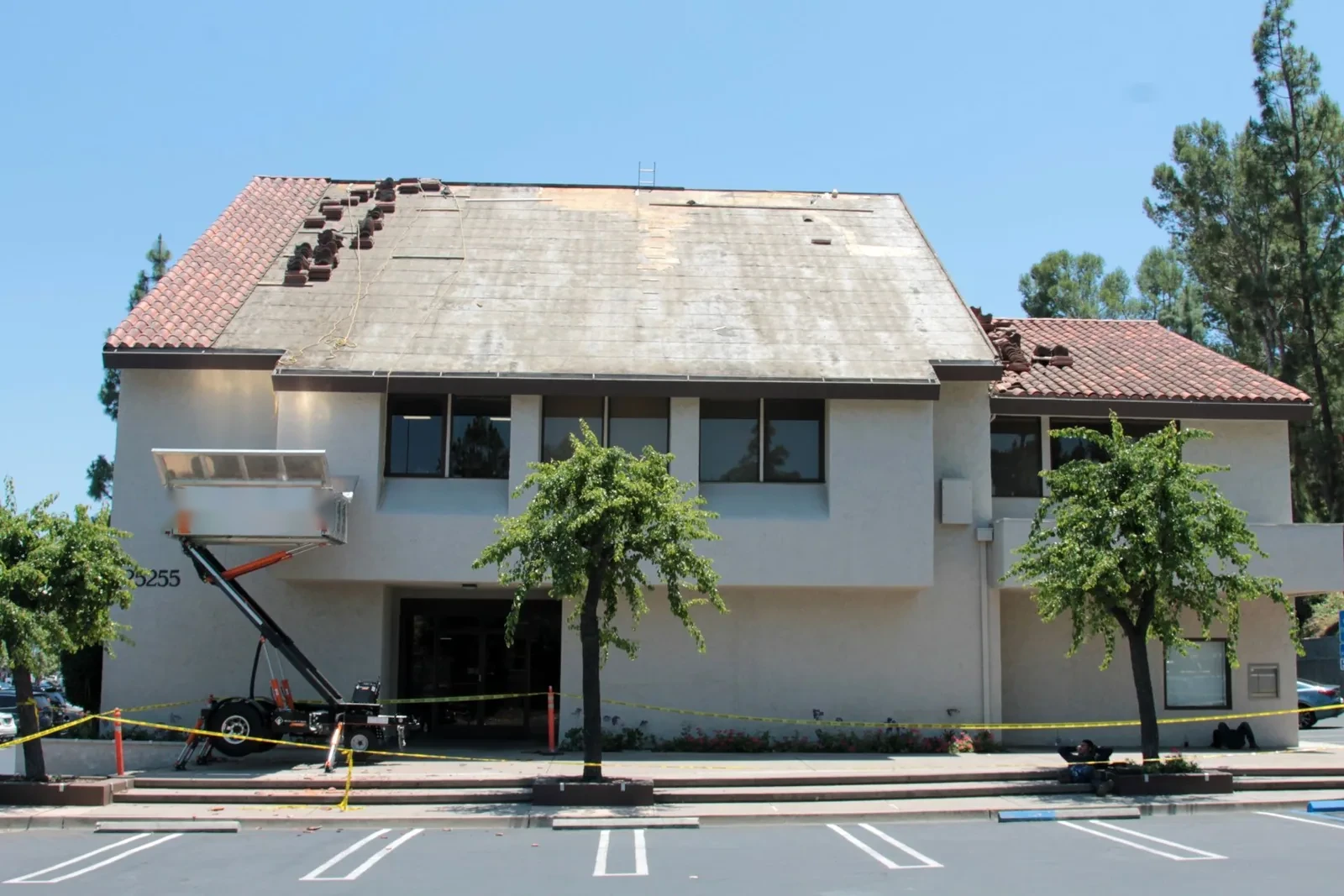
Why does a dry climate hide drainage problems?
A roof that sees little rain develops habits. Wind carries grit and dry leaves into corners, and with no regular rinsing the debris packs around strainers and into low pockets. When the wet month arrives, the roof sheds water slowly, or not at all, and a pond forms over a seam that was never meant to sit submerged. February carries the highest monthly normal at the St. George station, 1.38 inches, so late winter is the season to expect that first real test.
We check for sediment lines, algae or staining patterns that mark where water lingered, and slopes that no longer lead to an outlet. Roof movement, added equipment and old patches change the pitch of a surface over time. The repair may be as small as clearing and resetting a drain bowl, or as large as adding tapered insulation to make a new drain route.
When is standing water a repair and when is it a design problem?
Water that drains within a short time after rain is normal on a low-slope roof, and a thin film around a drain body is rarely a concern. Standing water that remains in the same footprint for days points to a structural or slope issue, not a debris issue. We measure from the deck up where we can, compare what is visible against the roof plan, and look for deflection under mechanical units or at long spans.
If the deck has moved, a membrane patch will not cure the root of it. The ponding water repair options range from added drains to a tapered insulation build-up that restores positive slope across the low zone. Which one fits depends on how much of the roof is affected, whether the structure is sound and how much roof height the parapets and doorways can spare for new layers. A door threshold set close to the roof surface, for instance, rules out thick insulation without raising the door, and we flag that conflict at the walk instead of discovering it on the day of the tear-off.
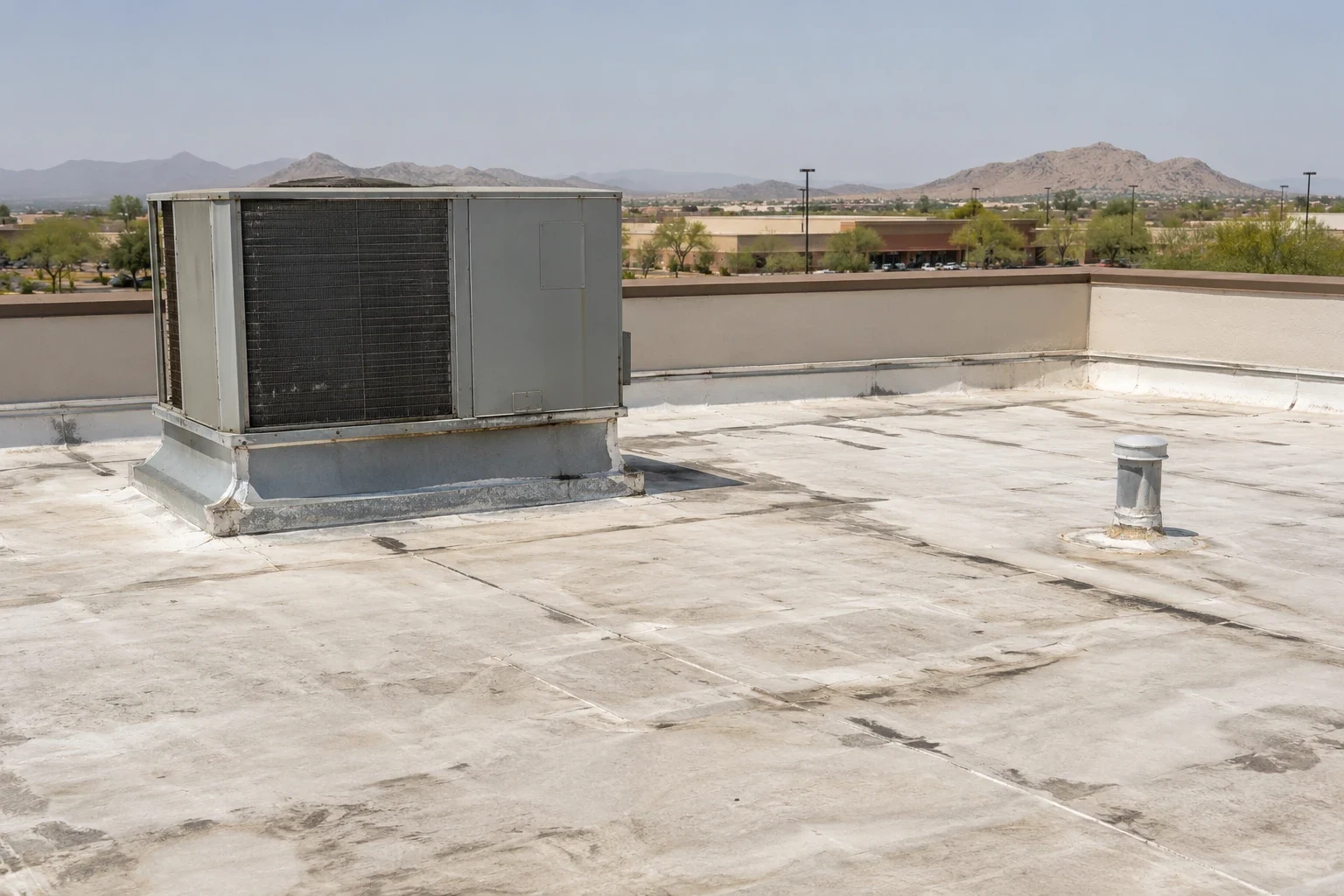
How does surface heat change which system we recommend?
Mean daily highs at the St. George station run 101.9 degrees in July and 99.9 in August, and a dark membrane surface runs hotter than the air. Heat accelerates plasticizer loss in some single-ply sheets, softens asphalt-based surfaces and stresses sealant at every penetration. A reflective surface reduces that load, which is why white single-ply and liquid coatings feature so often in desert-climate discussions.
Where a roof still has a sound, dry assembly, a restoration coating may extend service life at a fraction of the disruption of tear-off. Our silicone roof coating work requires a clean, repaired substrate and positive drainage, since silicone tolerates ponding better than most coatings but still needs the seams and flashings sound beneath it. Where the roof is past coating, a new reflective membrane is the cleaner path.
What do parapets, edges and curbs reveal?
On many commercial buildings the drain is not the first thing to fail. Coping joints open, counterflashing separates from a wall, and curbs around rooftop units lose their sealant. Because roof access is usually via one hatch or ladder, we walk the perimeter first and then work inward. We press on termination bars, check the height of flashing above the finished roof and look for fasteners backing out of edge metal.
Details like these are cheap to repair compared with the interior damage they let in. Our preventive maintenance visits follow that list: clear the drains, reseal the suspect details, photograph the seams and record what changed since the last visit. Over a few seasons, those visit records show whether a roof is holding or slowly losing ground. A flashing that was resealed twice at the same corner is telling us something, and the second entry in the file is what tells us to replace it, not patch it again.

What drives timing and cost on a corridor job?
Four things move a job on Bluff Street the same way they move one anywhere: how much of the assembly has to be removed, how much of the work is detail and flashing, whether tenants can be moved off a roof zone and how long materials take to arrive. In a hot summer there is a fifth, the work window. Adhesives, primers and coatings have temperature and surface limits, so some scopes start before sunrise and finish by midday.
The county map is a dispatch reference, and exact property access still has to be confirmed onsite, including gates, dock hours and where a lift can stand. Owners who also hold property on the River Road Corridor or along St. George Boulevard can package the walks together, which keeps mobilization simple and lets one roof plan cover the set.

Commercial Roofing Questions
How can a roof leak in a place that gets so little rain?
A little water finds a lot of weaknesses. Rain that arrives after months of baking hits sealants and seams that have shrunk and cracked, and it enters at penetrations, flashing laps and open edges. Water that has no route to a drain sits against those spots longer. The leak is often small and recurring, which is why we look at moisture evidence after the first one.
Does silicone coating fix a ponding roof?
It helps with ponding tolerance, but it does not fix slope. A coating can protect a roof that holds a shallow pond, provided the substrate is sound and the seams are repaired first. If the pond comes from a deck that has deflected, the structure needs attention too. The report names which of the two conditions we found, and the owner decides with that in hand instead of paying for a coat that covers a deeper problem.
What do you clear from drains during maintenance?
Grit, leaves, windblown trash and the hardened sediment that collects in strainers and sumps. We also check the drain body seal, the clamping ring and the pipe connection where it is visible. Overflow scuppers get the same treatment, since they are the backup path when a primary drain clogs and are often forgotten.
Are the St. George rainfall numbers true for every building on the corridor?
The numbers come from one NOAA station and describe St. George in general. Wind exposure, roof height and neighboring structures change how water and debris move on a particular roof. We use the station record to plan the season and the roof walk to describe the building.
Do you handle emergency tarping on weekends?
Yes. Crews respond day or night, including weekends and holidays. The first goal is to keep water out of the building and protect inventory or equipment. We document the damage with photos and moisture readings, then return to scope the permanent repair once the roof is dry enough to work on.