
Fire Damage Roof Repair in St. George, UT
Fire Damage Roof Repair Overview
After a fire is out, the roof is often the part of the building that decides how fast everything else can restart. Firefighting water, melted membrane, charred insulation and a deck that may no longer carry load are all waiting on the same set of answers, and the building cannot be dried or rebuilt until the roof is closed. In St. George, UT, a July daily-high normal near 102 degrees adds urgency to any temporary cover, because tarps and sheeting that sit on a hot surface for weeks do not last. We begin with safe access and a decision on what can be walked on.
The first visit does not guess at the cause or the coverage. Temporary protection is chosen for the weeks ahead, not the night: a heavy sheeting fastened to the sound deck, edges battened against uplift, and drains kept clear so a rain does not pond on a damaged area. Rooftop units that lost power or piping are tagged so no one restarts them before the electrician and the mechanical contractor have cleared them. The same visit records the roof as found, protects what is still protected and tells the owner what must be reviewed by an engineer, the carrier or the fire marshal before repair can proceed.
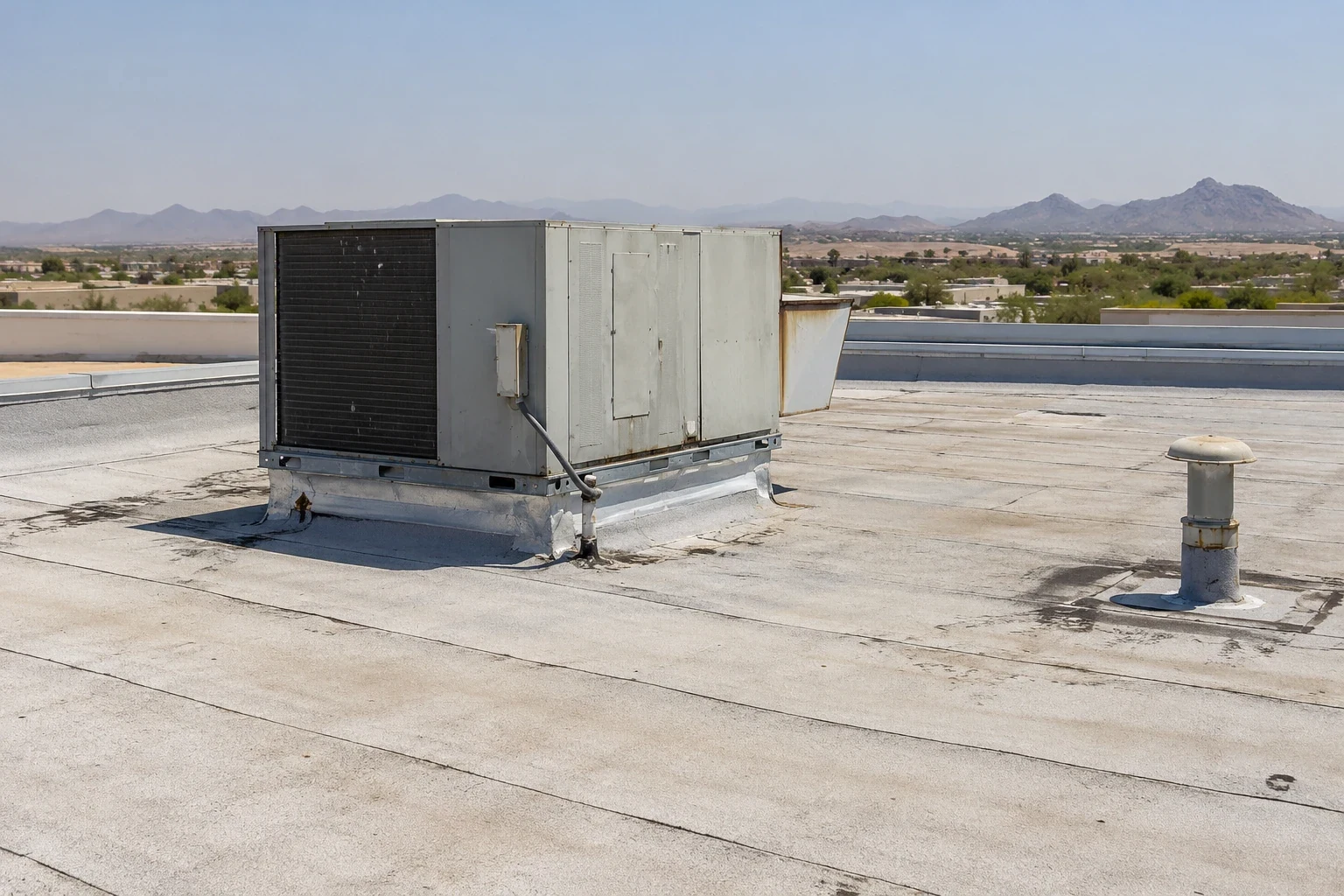
Who decides when the roof is safe to enter?
The authority on site decides. A fire scene may be released in stages, and a roof over the burn area may not be released at all until the structure has been checked. We do not go onto a roof that has not been cleared, and we work with the owner and the responsible agency to learn which areas are open. Where a section is cleared, we observe from the edge first, with a spotter, and probe the deck gently before moving across it.
If the roof cannot be entered, a drone roof inspection can capture the surface from above without anyone stepping on a compromised deck. The images show burned areas, collapsed sections and open penetrations, and they give the engineer and the adjuster a record taken before anything is disturbed. Emergency roof repair follows the same sequence: safety first, protection next.
What does fire do to each layer of the roof?
Heat travels downward and sideways. A membrane may melt, blister or shrink back from its edges; insulation can char, melt or soften; a steel deck can warp or lose coatings; a wood deck can char below the surface while appearing intact on top. Smoke and soot coat surfaces beyond the burned area, and the water used to extinguish the fire soaks insulation across a wider area than the flames reached.
Flashing, curbs and rooftop equipment usually need to be inspected as units. Electrical conduit with heat-damaged insulation, burned gaskets at pipe boots and cracked sealant at roof drains are easy to miss. We record each layer separately: surface, insulation, deck and penetrations. The result is a map of what is burned, what is wet and what is only coated with soot, so the repair can be sized to the real damage.
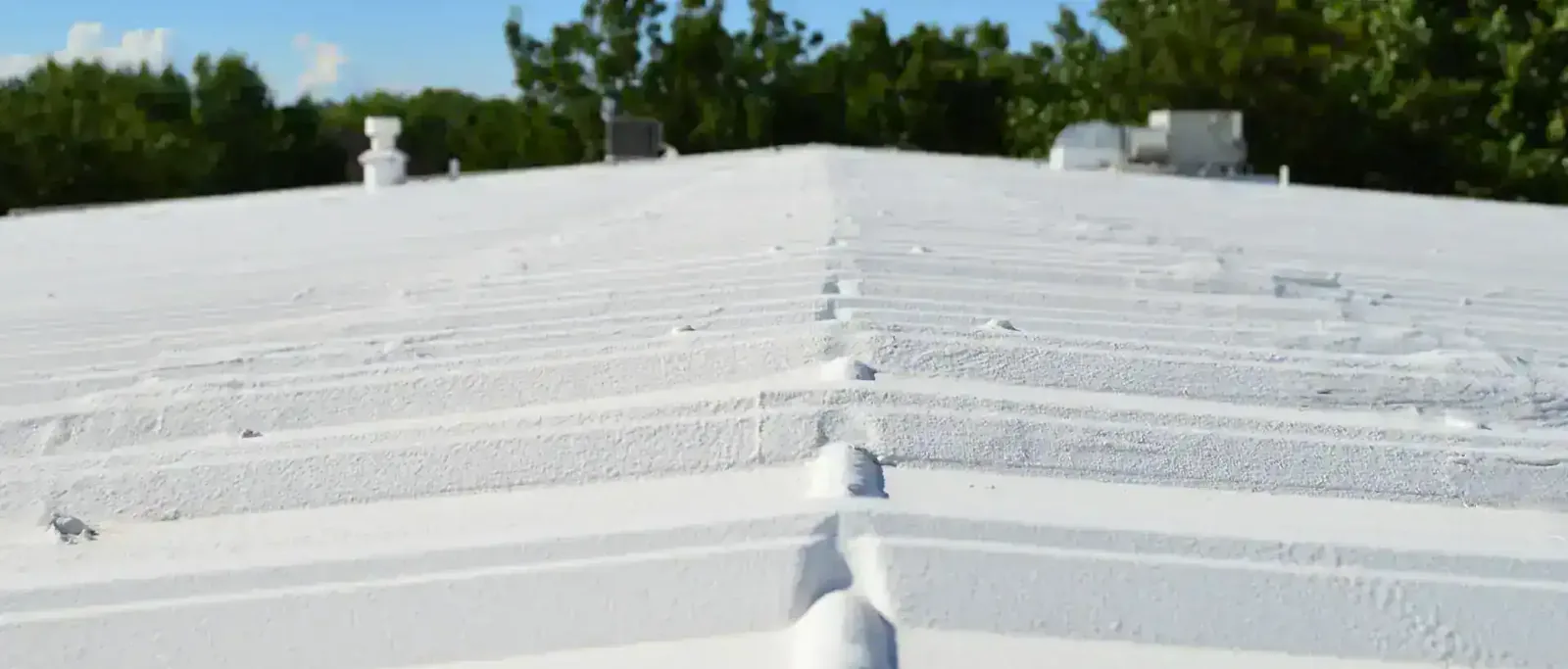
How do you separate fire damage from water damage?
Both matter, and they call for different repairs. Burned material is removed and replaced. Wet insulation may be dried or replaced depending on the type and the length of exposure, and some insulation cannot be dried in place. An infrared moisture survey can map wet areas once the building is stable and the roof is accessible, and cores or test openings can confirm.
We record burn patterns, wet areas and soot-only areas in photographs and sketches, and we label what we measured and what we inferred. We do not decide structural adequacy: that determination belongs to a licensed engineer, and we provide the roof information the engineer asks for. When the owner works with an adjuster, the file supports roof insurance claim assistance with dated images and a scope separated by cause.
Can part of the roof be saved?
Sometimes. If the fire was confined, the membrane outside the burn area is sound and the insulation there is dry, the repair can be limited to the damaged area with new deck, insulation and membrane tied into the existing roof. The tie-in has to be made carefully: heat-welded membranes, adhered systems and metal panels each join differently, and an old sheet near the burn may have lost the surface needed for a new weld.
If the heat reached the structure, or if wet insulation extends under a large area, replacement of that roof section is more reliable than patching. The decision also considers the system. A built-up roof is repaired in plies, while a metal panel roof may need new panels and clips. Wear from heat and UV exposure that predates the fire is judged on its own condition and recorded apart from the burn. We describe the options in plain terms, with what each requires, and the owner or the adjuster chooses the path.
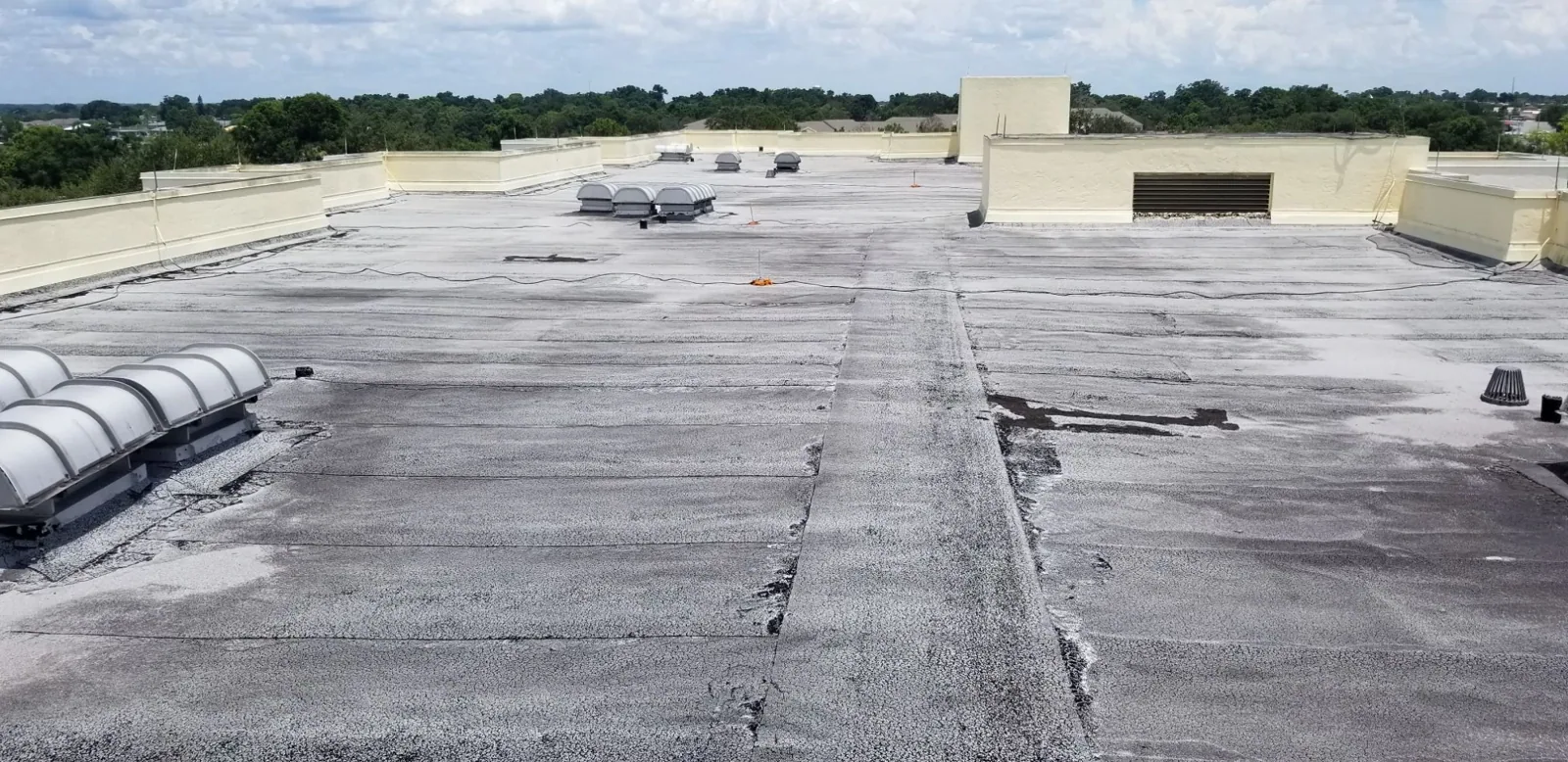
What changes when the roof is rebuilt after a fire?
A rebuild is permitted under current requirements for the permit date. The rebuilt roof answers to the 2024 International Building Code as Utah applies it, and the statewide energy-code start date of July 1, 2026 may add insulation or edge requirements the burned roof never had. Roof assemblies are also classified for fire exposure, and the design team selects an assembly that meets the building's requirement.
We price the replacement with its cost drivers: removal of burned material, deck repair, new insulation, membrane, flashing and the rooftop equipment that must be disconnected and reset. For restaurant roofing and other kitchen exhaust roofs, grease-related details get special attention, since the roof is part of the fire path. Phasing may let the unaffected part of the building reopen while the burned section is rebuilt.
What should the owner send first?
Send the address, the date of the fire, any release letter from the responding agency, photographs already taken, roof plans and warranties, and the name of the adjuster and engineer if they are engaged. If the building has tenants, send the list of suites affected and the contact for each, so interior and roof work can be sequenced without duplicate site visits or a crew arriving at a locked suite.
For a property in the Riverside Business Park, in Washington City or Hurricane, local licensing and permit steps differ by town, and we confirm them early. A property manager coordinating several vendors can use our roof record as the one place where the dates, photographs and open questions are kept.
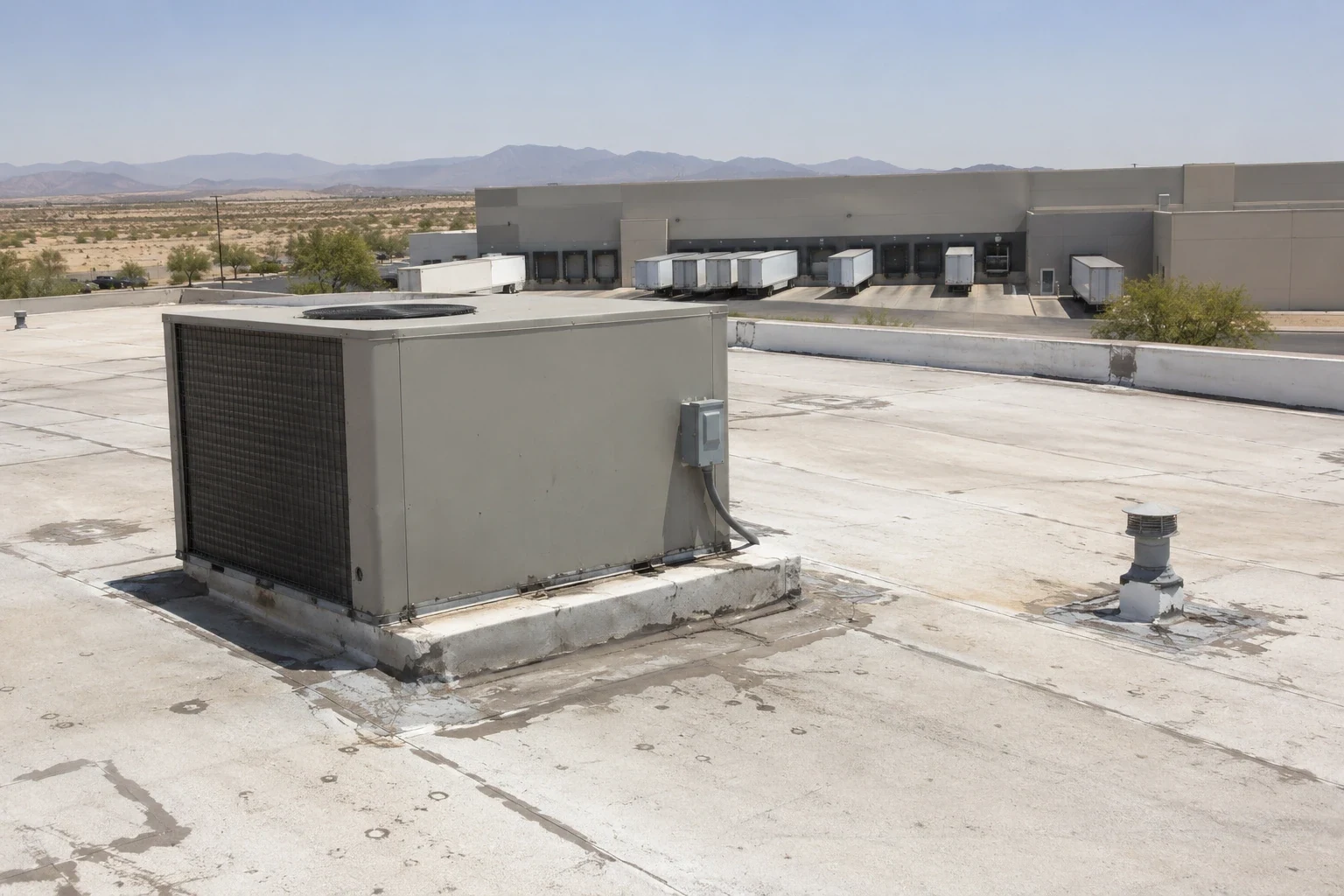
Commercial Roofing Questions
Can you start before the adjuster visits?
We can protect the building and document the damage. Permanent repairs usually wait for the adjuster's inspection unless the owner decides delay is riskier.
Is a roof that looks fine above a fire safe?
Not necessarily. Heat can weaken a deck or wet insulation without a visible mark on top, so the surface alone does not clear the roof.
Who decides whether the deck must be replaced?
A licensed engineer assesses structural capacity. We provide the roof records and carry out the replacement the engineer specifies.
Does smoke damage need roof work?
Soot on a membrane is often cleaned and not replaced, though odor and contamination can affect air intakes. The mechanical engineer and the owner decide what cleaning is needed.
How long does temporary protection last?
It depends on the product and the surface. In summer heat, sheeting and tape wear faster, so we inspect temporary covers on a schedule and renew them as needed.