
Commercial Roofing in Downtown Connected Corridor, St. George, UT
Downtown Connected Corridor Overview
St. George's land-use plan sets the Downtown Connected Corridor apart as its own planning designation, and for a roofer the word corridor is the useful part. A corridor is a strip where buildings face a through street, where trucks, lifts and dumpsters have to share a curb with the public, and where roof access often runs through a front lot or a narrow rear alley. Before we price a roof here, we ask how the crew gets material up, where the lift stands and which hours the street can tolerate.
The county road map lists St. George Boulevard, Bluff Street, River Road and Sunset Boulevard among the main arterials, which gives us a dispatch frame from our base in St. George, UT. The frame is not a description of any one roof. For that we walk the building, find the drain route and write down what is confirmed.
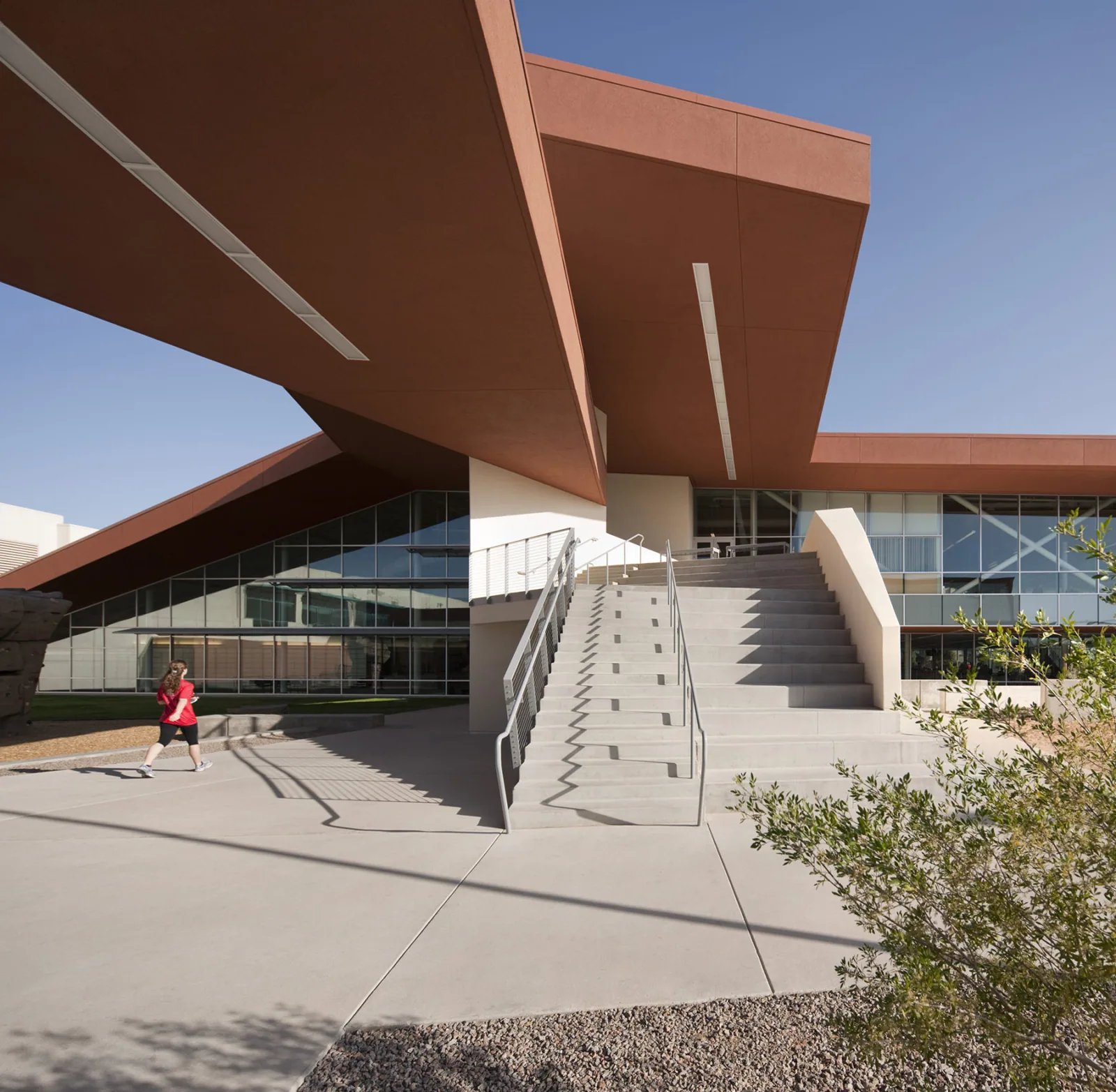
How do we get material onto a roof beside a busy street?
A corridor job is mostly logistics, and the logistics decide the price. Rolls of membrane, insulation boards and tear-off debris all have to move through a space where parking, loading and sidewalks are in use. We study the frontage, the alley and the roof hatch or ladder before choosing between a crane lift, a hoist, a conveyor or hand carry. Each one needs a different permit conversation and a different clear zone.
When the building has no rear access, early-morning lifts often work best, because deliveries to neighboring businesses have not started and traffic is light. We mark off a protected walkway under any overhead pick, set a spotter and keep the lift away from awnings and signs. Owners who share a wall with a neighbor should tell that neighbor the dates, since a short notice in advance prevents calls to the property manager at the worst moment.
Signs and utility lines add another layer. Banners, rooftop signs and conduit runs are mounted into the roof deck or curbs, and the flashing around each one is a leak path if it was not done well. During the walk we count every sign mount, conduit and antenna, check the sealant at each and ask who owns it, so the repair has a name attached.
What do heat and sun do to street-facing roof edges?
Edge treatments take the full force of the sun. St. George's July daily-high normal is 101.9 degrees and August's is 99.9, and that range frames the plan for coping, caps and sealant lines facing the street. Metal and sealant here swing through the widest daily temperature range of any part of the roof. Sealants shrink, metal moves, and fasteners work loose at the ends of long runs. We press along the coping, look for open joints and check the membrane termination behind it.
For repair, edge metal, coping and gutters are often a contained job: re-fasten, re-seal, replace damaged sections and re-flash the termination. If heat damage extends across the field, with chalking, shrinkage or splits near corners, then the heat and UV damage repair scope widens to seams and flashings, and replacement may be the better value.
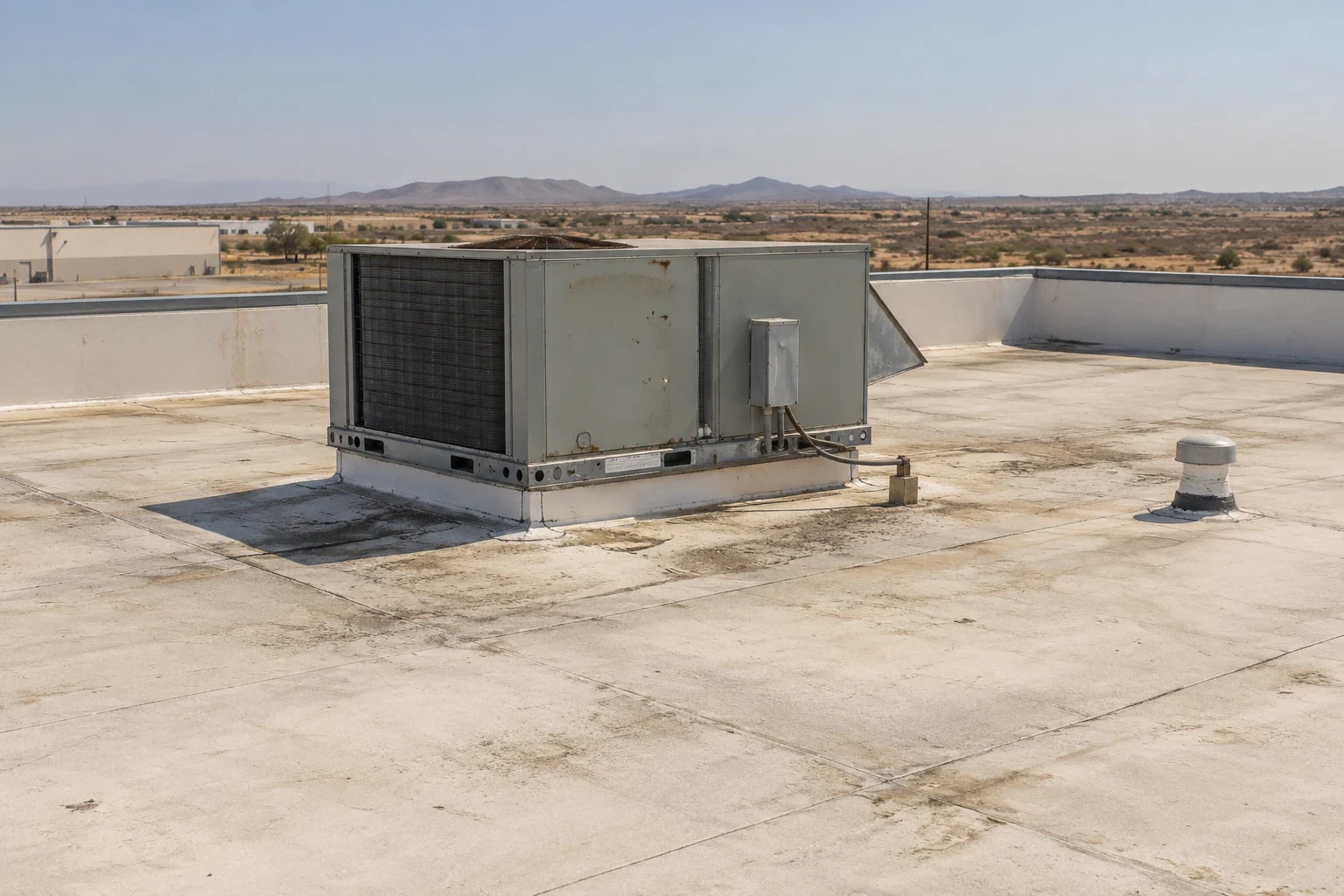
Can we assume the roofs here are from one era?
No. The city's consolidated plan says much of St. George's building stock has gone up since 1980, which is a long span, and a corridor is where original buildings, additions and tenant changes pile up. A roof on one lot can be an original system, a recover over it, or a coated surface that has been maintained. Roof age and overlay history have to be read building by building, and we do that with a test cut or core when the owner wants a firm answer.
Layers matter for scope. Building codes generally limit how many layers of roofing may sit on a deck, and a roof that already carries an overlay may need a full tear-off at the next cycle. Where the existing layers are dry and fastened well, a roof recover is possible, and where they are not, a replacement saves the repeat disruption to the street frontage and tenants.
Where does water collect on a flat roof along the corridor?
A year of weather at the St. George station totals 9.31 inches of precipitation, and June is the driest month at 0.16 inches. A long dry spell hides a clogged drain, and the first storm of a season then shows every ponding spot. On a street-facing building a common culprit is a roof drain at a low point beside a parapet or a scupper whose outlet has been boxed in by an added sign or gutter.
We trace each roof area to its drain and note any place where water stands after rain. Roof drains and scuppers are cleared, tested and, where needed, re-set. Persistent ponding calls for tapered insulation or an added drain. A roof that sheds water cleanly is the first protection against the slow staining and membrane wear that standing water causes, especially under the summer sun.
After a drain is cleared we pour water on the roof area to confirm flow, and we photograph the result. That photo goes into the report with the date, so a later change in drainage can be compared with a known good day. Owners can then tell whether a new stain came from a fresh problem or from an old one.
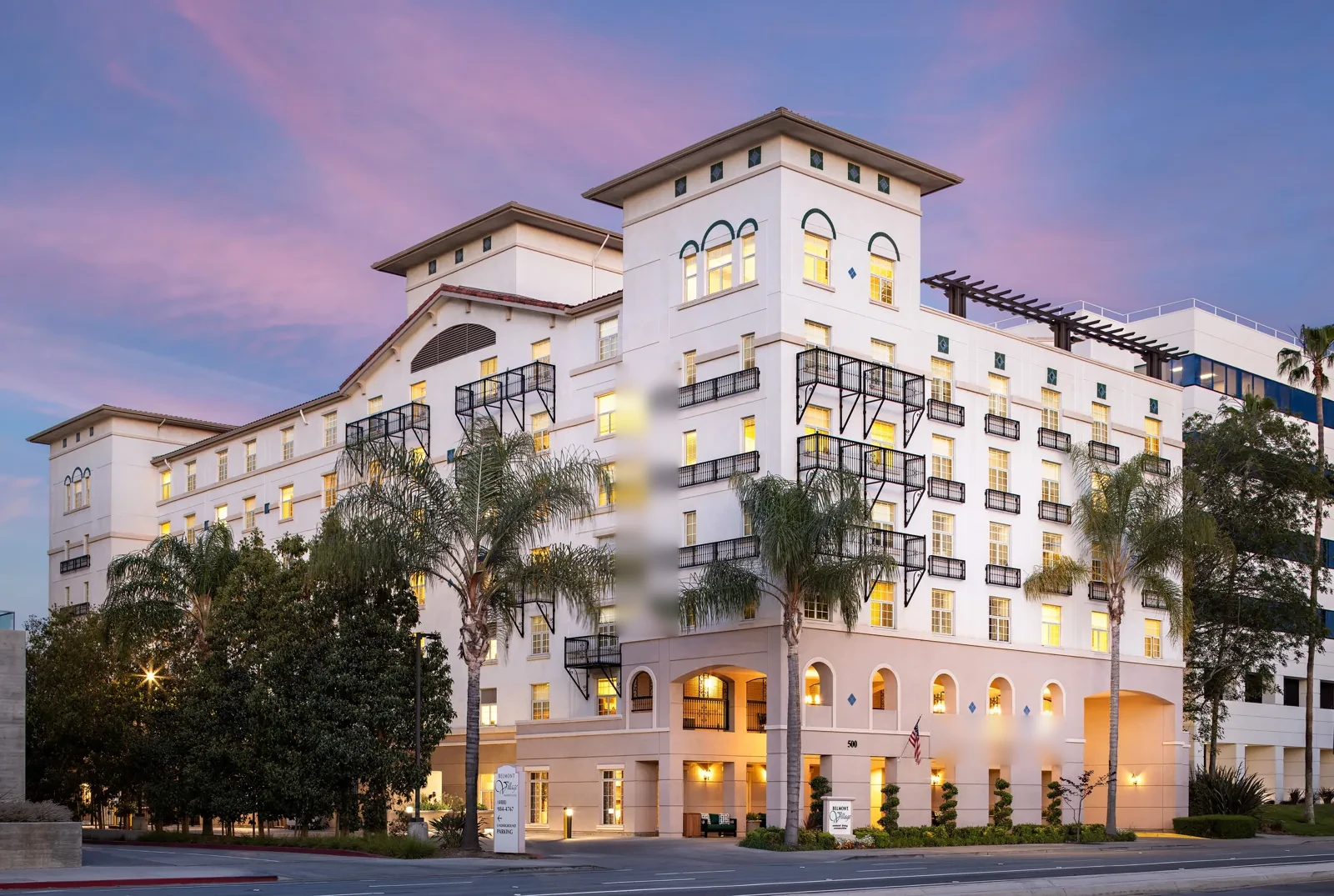
What does a steady program look like for a corridor owner?
Owners with several buildings along the same strip can fold their roofs into one schedule. A seasonal visit before the hot months checks edges and drains, a visit after the wettest weeks checks seams and flashings, and a written report keeps the history. That is the logic of preventive roof maintenance, and it keeps small items small.
Where buildings sit near each other in the downtown planning area, the neighboring Downtown Connected Neighborhood and the St. George Boulevard corridor help us route crews efficiently, and the same inspection template makes results comparable. Under Utah's 2024 International Building Code adoption, any reroof in the corridor should start with a permit-date check. When water is already inside, our emergency line runs at all hours, holidays included, and the first visit is a dry-in.
Commercial Roofing Questions
Do you need to close a lane to reroof a building on the corridor?
Sometimes, and only when a lift or hoist must stand in the travel way. We plan the pick for the quietest hours, set a protected walk zone and speak with the city about any lane or sidewalk closure before the date is fixed.
How do you handle a roof that can only be reached by a ladder?
We list the climb as a safety question first. Fixed access, a ladder tie-off or a lift position is settled before the visit, and the plan for carrying material shapes the quote.
Will a recover work if the street side parapet is low?
A recover adds thickness, and a low parapet may not clear the new height. We measure the flashing height and the edge detail first, and if there is no room, tear-off or a raised edge is the answer.
How soon should we repair a failing coping joint?
Soon. An open joint lets rain behind the membrane at the highest-exposure edge. A small re-seal costs little, while waiting until the substrate is wet can turn a quick fix into a larger repair scope.
What records help the most?
The last roof invoices, any warranty paper, drawings with drain locations, and a list of leak spots. With those, the first visit can answer a defined question and mark the next decision.