
Commercial Roofing in Pioneer Parkway Corridor, UT
Pioneer Parkway Corridor Overview
A corridor is a dispatch label, and a roof is a particular object with its own drains and its own history. Washington County's road map marks Pioneer Parkway as a regional route, which is why we use the name to plan travel time and crew staging from St. George, UT. What the name cannot tell us is what any one building carries overhead. Along a regional route, the practical question for an owner is when the crew can get on the roof, which entrance the lift will use, and whether the business below can stay open while the membrane is opened.
We begin with a walk. The first pass covers drain routes, curb details, the edge metal along the street side and the condition of the field seams, and it ends with a short written list of what is confirmed and what is still an open question. From there an owner can choose a patch, a recover or a replacement with the evidence in hand.
What does summer surface heat change on the job?
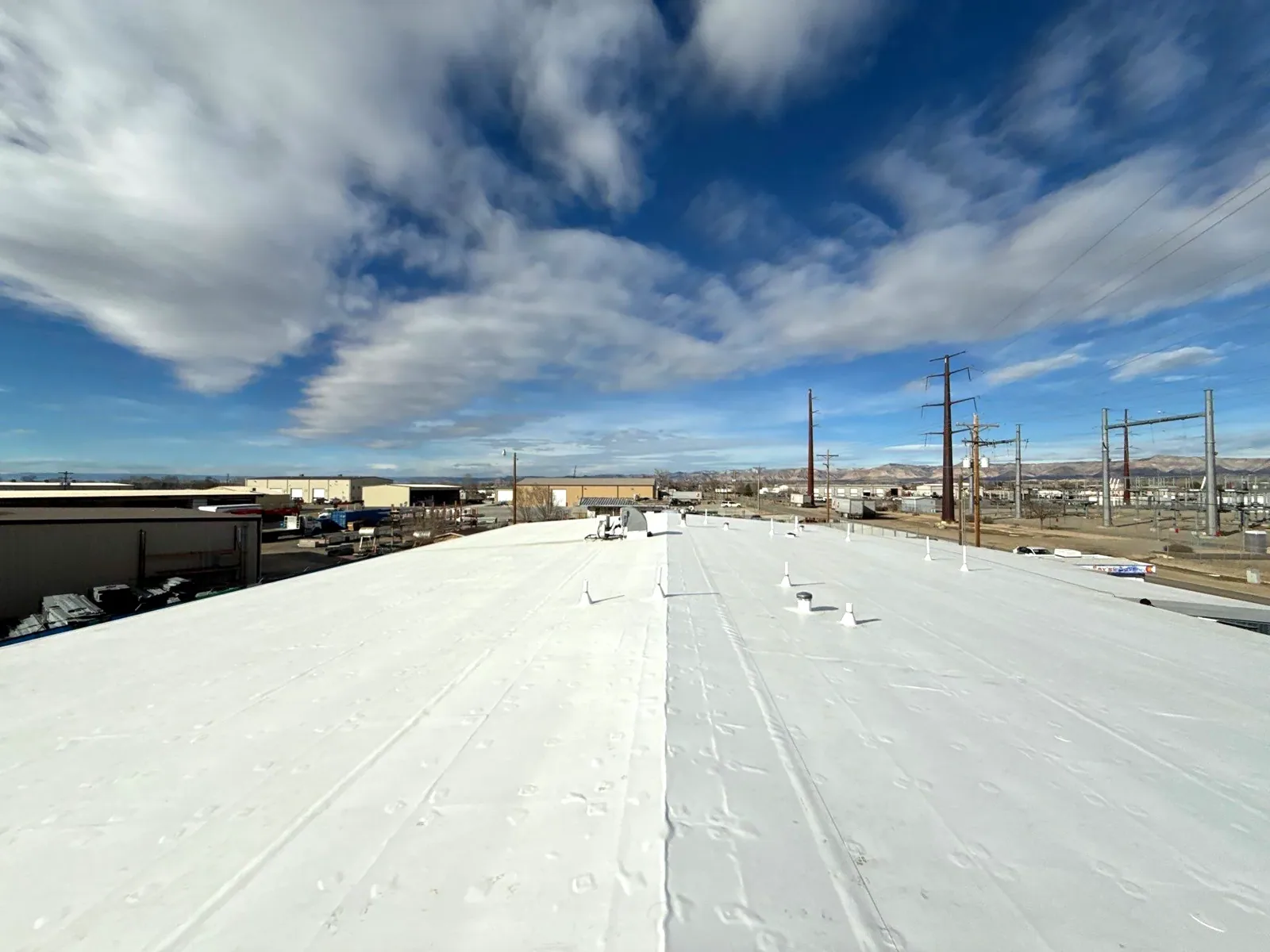
Two months set the summer calendar: St. George's July and August daily-high normals land near 102 and 100 degrees. A roof surface in direct sun is hotter than the air, so a crew working a membrane at midday is working on a hot, soft and sometimes slippery layer. We move first-light starts into the plan and keep afternoon hours for ground work, material checks and walk-throughs with the property manager.
Heat also changes what we recommend. Thermoplastic membranes expand and contract through a long daily swing, which loads seams and the fasteners at penetrations. Sealants at skylights and penetrations dry out and crack when they are left exposed to the same cycle, so flashing terminations get checked first. Where a roof shows chalking, brittle edges or splits at corners, the repair scope usually starts with those details rather than with the open field.
Street-side edges deserve their own look. Metal coping and drip edge take the full sun, and a loose section can lift in a gust and let water behind the membrane. We press along the run, count missing fasteners and look for open joints between pieces. A short run of failed edge metal is a modest repair when it is found early, and a costly one when the membrane under it has already soaked through.
Where does the little rain we get go?
On average the St. George station collects 9.31 inches over a year. Its heaviest monthly normal is 1.38 inches in February, and June sinks to 0.16. Because rain is scarce and uneven, an owner can go many months without a sign that a drain is blocked, and then one winter storm tests every detail at once. Dust, wind-blown debris and the first heavy rain after a long dry stretch can pack a scupper or a drain basket, and water then stands on the membrane against a parapet.
We check the drain route as a system: the basket, the pipe, the overflow and the slope between them. Ponding that remains two days after rain is flagged, and ponding water repair may call for tapered insulation, a new sump or a re-set drain body. The aim is for every roof area to shed water to a drain that is clear before the storm arrives, not after.
Can customers keep coming in during roof work?
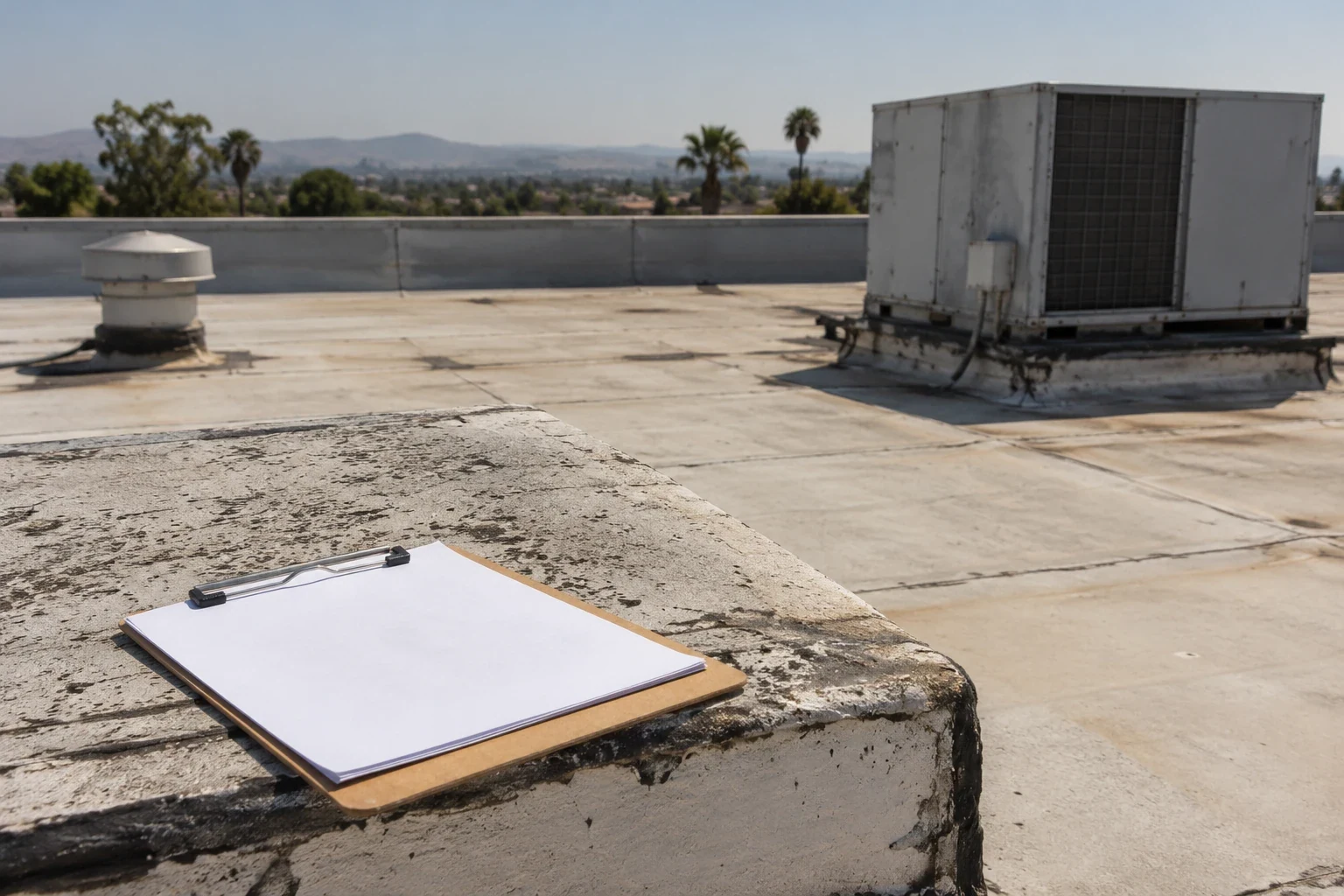
A building on a regional route usually has a front door that matters to the business. We stage the roof so that overhead hoisting, dumpster placement and loud work stay away from the entry, and we schedule tear-off in sections that can be dried in the same day. Planning an occupied building reroof means asking which tenants have the tightest hours, which ones are most sensitive to noise and dust, and where deliveries arrive.
The city's own economic baseline lists retail, health care and education, and food service among the largest employment sectors in St. George, and each one wants something different from the roof schedule. A clinic may want quiet at set hours, a restaurant needs its kitchen exhaust handled with care, and a shop needs parking left open. We write those limits into the roof plan before the first delivery of material.
How old is the roof, and does it matter?
St. George's consolidated plan says much of its commercial building stock was put up in 1980 or later. That is a broad screen, and it does not tell us the age or type of any roof along Pioneer Parkway. A reroof, an overlay or a coating may have changed the surface since. We ask for any record of past work, then confirm what we can by cutting a test sample.
Where the existing membrane is sound and the insulation is dry, a silicone coating can extend service without a tear-off, provided the substrate takes it. If moisture evidence shows wet insulation or the seams have failed across large areas, replacement is the straight answer. Permit requirements should be checked with the City before bid day, since Utah's 2024 International Building Code adoption means a reroof can carry insulation and fastening rules that a repair does not.
What should be in hand before the first visit?
The most useful items are the building address, any roof drawings, the warranty file if there is one, the last invoices for roof work and a list of known leak spots. Add the operating hours, roof access rules and who holds the key. With those, the visit can answer a defined question instead of wandering. A property manager who also has a rooftop unit swap or a solar array planned should say so early, because curb heights and equipment supports are easier to set during a reroof than to retrofit after it.
We write up findings with photos and a plain repair scope. Owners who manage several properties often pair that with preventive roof maintenance, so drains and seams are looked at before the busy summer. For emergency leaks after a storm, emergency roof repair is available at any hour. Owners with buildings on the St. George Boulevard corridor or in Santa Clara can have those roofs walked on the same visit schedule.
Commercial Roofing Questions
Is Pioneer Parkway one roof type?
No single roof type goes with a street name. Each building has its own deck, insulation and membrane, and we identify them on the visit from the cut edge, the seams and the drawings. A written condition report then states what we saw.
How fast can a crew reach a leaking roof along this route?
Emergency calls are taken around the clock, and the crew heads out as soon as access is confirmed. First work is a temporary dry-in to stop water, followed by a proper repair scope once the roof is dry enough to inspect.
Will a recover work on my building?
Sometimes. A recover needs dry insulation, a deck that holds fasteners and enough curb and edge height for added thickness. We test for moisture first, because covering a wet roof traps the problem under a new layer.
Do hot afternoons ever stop a roofing job?
Extreme surface heat can pause adhesive work or seam welding. We shift the start earlier, rest crews and hold certain tasks for a cooler day, since a rushed seam in July becomes the leak of January.
What does the written report include?
Photos of the problem areas, a roof sketch with drains and curbs marked, moisture findings if we scanned, and a repair scope sorted into fix now, fix soon and watch. The owner gets a clear next decision, along with the open questions that still need testing, so budget conversations start from evidence.