
Commercial Roofing in Santa Clara Gateway, Santa Clara, UT
Santa Clara Gateway Overview
A site with the heaviest traffic in town is a site where a lift truck across a driveway costs money, so the access plan matters as much as the repair plan. Santa Clara's 2025 General Plan names the Gateway as the easternmost of four distinct business sites, at Santa Clara Drive and Canyon View Drive. The plan reports that it has the highest traffic level of the four and is the most accessible to surrounding communities, with regional highway access at a major intersection and complementary commercial areas just outside Santa Clara City.
For an asset manager with a building at the node, those facts set the first questions: how does a crew reach the roof without disturbing entrances, and when are the quiet hours? We start there, then check where the roof sends water. At the NOAA station July runs 101.9 degrees on average, which puts the roof work at dawn.
How does a high-traffic site change the work plan?
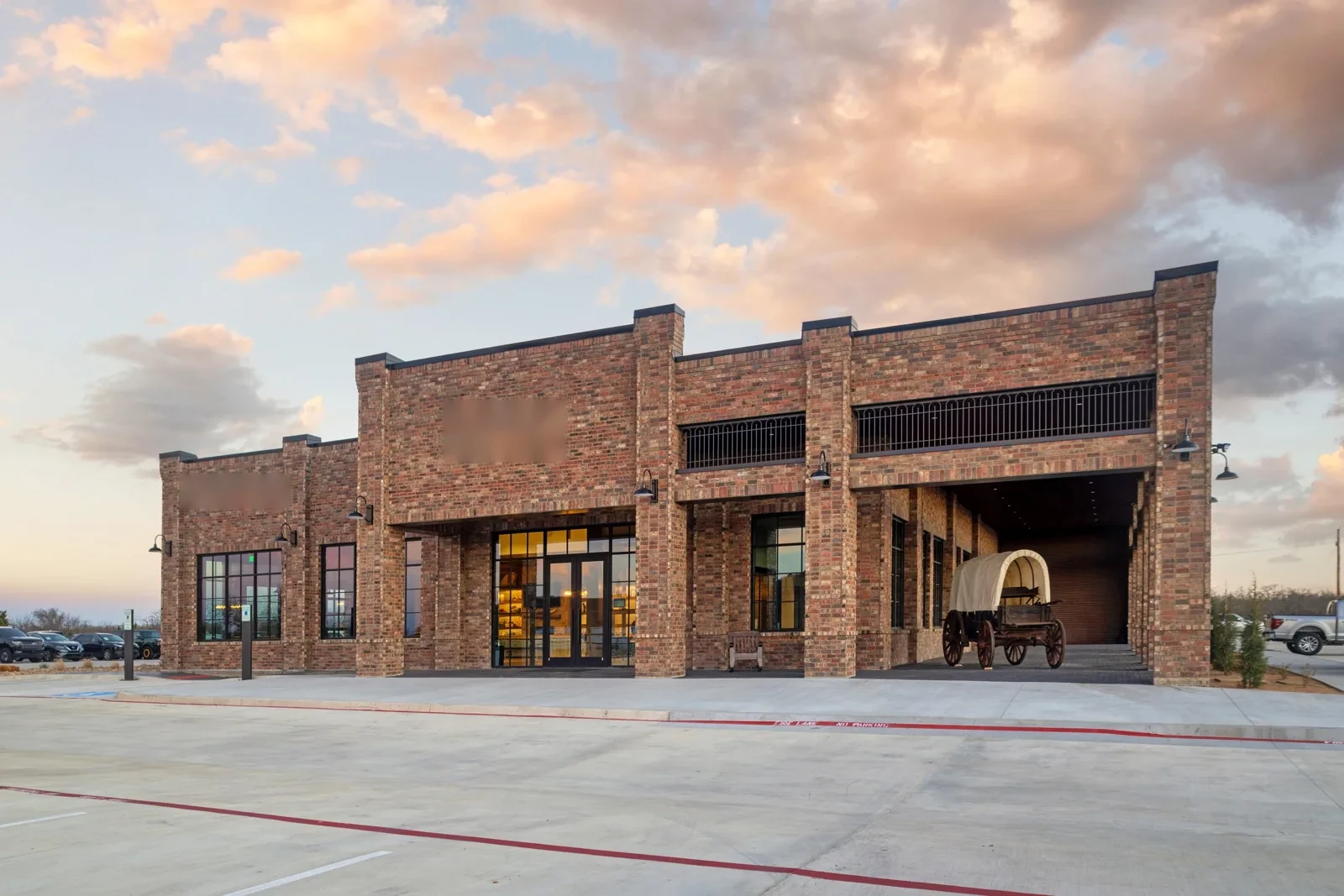
Traffic means customers, deliveries and neighbors, and the crew has to fit around all three. We ask the property manager about peak hours, delivery windows and the entrances that must stay clear. Lifts, staging areas and dumpsters go where they do not block customer routes, fire lanes or accessible parking, and materials come in small loads at quiet times.
The same early hours that suit a hot roof tend to be quiet at a commercial site, so the two constraints line up. Noisy and delicate work finishes before the lot fills, and the afternoon is kept for cleanup and inspection. The manager's decision is which days to authorize, and we offer a short list with the tradeoffs spelled out. Frontage signs get a look on the same visit, because a mount that sways in the wind opens its own flashing. The lift stands where no pick swings over an entrance or a parked car.
What can we say about the buildings at a planning node?
Less than the label suggests. A planning node is a place the city expects business to concentrate, with access and visibility. The plan is silent on what each building holds, how old it is and what covers it, and a node label gives no right to assume a retail strip, an office or a service shop. On site we confirm each building's system, layers, equipment and drains.
What the plan does supply is context for access. Regional highway access at a major intersection helps with delivery routes, and the nearby commercial areas outside the city may mean owners and tenants from more than one jurisdiction, so permits follow the parcel. A node with the highest traffic of its group also carries the highest cost of interruption. A leak over a counter or a waiting room costs more than one over storage, so the roof record ranks zones by what sits below as well as by condition, and the first repairs go where customers are. When a leak reaches a counter, the dry-in comes first and the cause is traced afterward, with photographs and moisture readings taken at the first visit so the permanent scope rests on evidence, not on the stain alone. The record also notes which bays are leased to whom, so a landlord and a tenant read the same facts when responsibility is discussed.
Which roof details do we check at a business site?
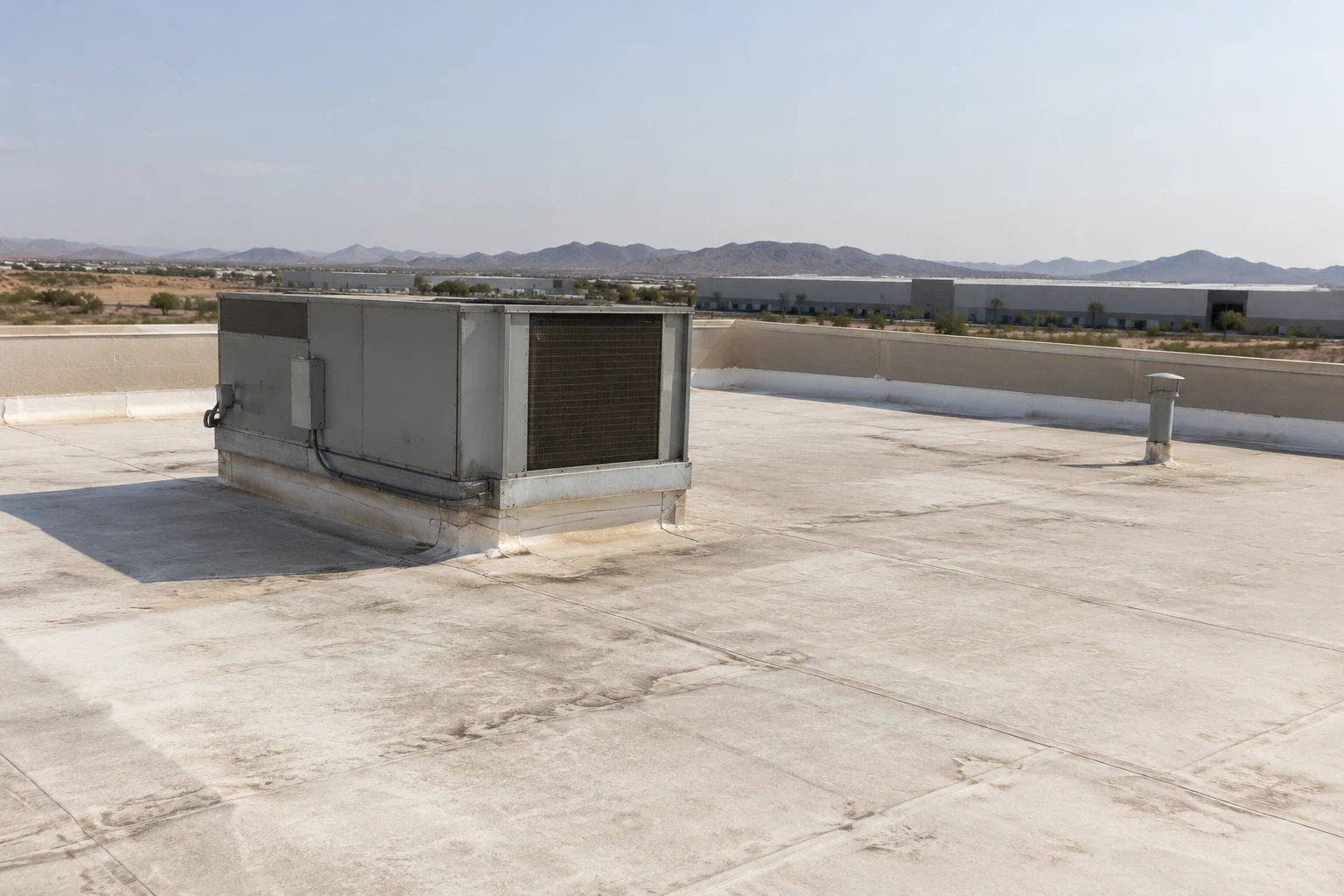
Those that follow the water and the traffic. Drain bowls and scuppers lead, since a blocked outlet turns any rain into ponding. Curbs, vent boots and exhaust come next, then canopy and sign attachments, parapet flashings and edge metal. Service paths across the membrane are checked for wear.
- Drain bowls, scuppers and overflow paths
- Curbs, vent boots and conduit supports
- Canopy, sign and parapet attachments
- Seams, laps and earlier patches
- Walk paths and the membrane near access points
In a dry climate debris builds up in drains between storms, and the first heavy rain finds each blockage together. A drain and scupper visit ahead of the wet months is a small cost, and a failed curb flashing is rebuilt under penetration flashing repair.
Equipment is the other thing a busy site accumulates. Each tenant change can bring a new unit, a vent or a conduit run, and a roof that took one hole in the first year can have a dozen by the fifth. We count them on the walk, test each seal and mark the ones that belong to a lease that has ended, so the dead curbs are removed and the openings patched instead of left to leak.
What moisture evidence do we rely on?
Evidence from the roof, since a weather calendar proves nothing about one building. The station normals total 9.31 inches in a year, so a roof can stay dry a long time and show a leak only after a storm. We trace stains upslope, test doubtful areas with a meter and, on large roofs, run an infrared moisture survey to map wet insulation.
A commercial roof inspection at a busy site is done in sections, so the manager sees each zone and its findings. Observed and tested conditions stay apart in the record, and open questions are named. Snow is minor at the station, 1.2 inches a year, and that low-elevation figure is never applied to higher ground unchecked.
How far should a repair extend?
To sound, dry material. A puncture is closed inside a patch, a failed seam ends at the good bond and a leaking curb ends where the flashing holds, with wet insulation extending the boundary to its edge. A hot membrane may refuse a clean bond, so adhesion is tested before a big repair is committed.
If repairs keep returning, a coating restoration and a replacement go on the table side by side. The City or the jurisdiction for the parcel is asked which code edition applies on the permit date, since the statewide energy path starting July 1, 2026 can change insulation and cost.
What should the owner decide next?
Whether to hold, restore or replace, and when. That choice is easier made before a tenant's lease event than during it: a replacement scheduled around a renewal is simpler to explain than an emergency repair in the middle of one. A building at a high-traffic node tends to have a long hold, which favors durable work. The record lists condition, moisture findings, open questions and the cost drivers for each path.
Properties at the Santa Clara Neighborhood Center or in the I-15 and Buena Vista corridor can join the same record. Give us the address, the roof papers and the slow hours at the site, and the first visit takes up one defined question.
Dates for permits and leases go on one page, so the roof decision is made once and made early.
Commercial Roofing Questions
Can roof work happen at a busy site?
Yes, with early starts, lifts away from entrances and notice to tenants. Each opening is closed before the lot fills.
Does a node label tell you the roof type?
No. We confirm each building's system, age and equipment on site.
Who issues the permit?
The jurisdiction for the parcel. We confirm it by address before pricing.
Why start early in summer?
Surface heat builds all morning. Cooler hours allow careful seam and flashing work and match the quiet hours at the site.
Who sets the code edition for a gateway reroof?
The permit date and the jurisdiction. The City or town names the edition before we price.