
Roofing for Insurance Adjusters and Restoration Contractors in St. George, UT
Insurance Adjusters and Restoration Contractors Overview
After a loss, the first roof visit has to do two jobs at once: stop the water and record the damage before the evidence is covered. In St. George, UT, a visit during the hottest months means starting early, since July daily highs average just under 102 degrees at the station, and a crew has less margin for slow work on a hot surface. We secure the opening, photograph the roof before and after temporary protection, and write down what we can confirm from the roof and what still needs the adjuster, the engineer or an opening to settle.
Adjusters and restoration contractors both need a roof record they can rely on. We supply measurements, photographs, material descriptions and a repair scope separate from any question of coverage, which stays with the carrier. For an owner in the middle of a claim, roof insurance claim assistance means that the roof file is organized when the adjuster asks for it.
What happens in the first hours after a roof loss?
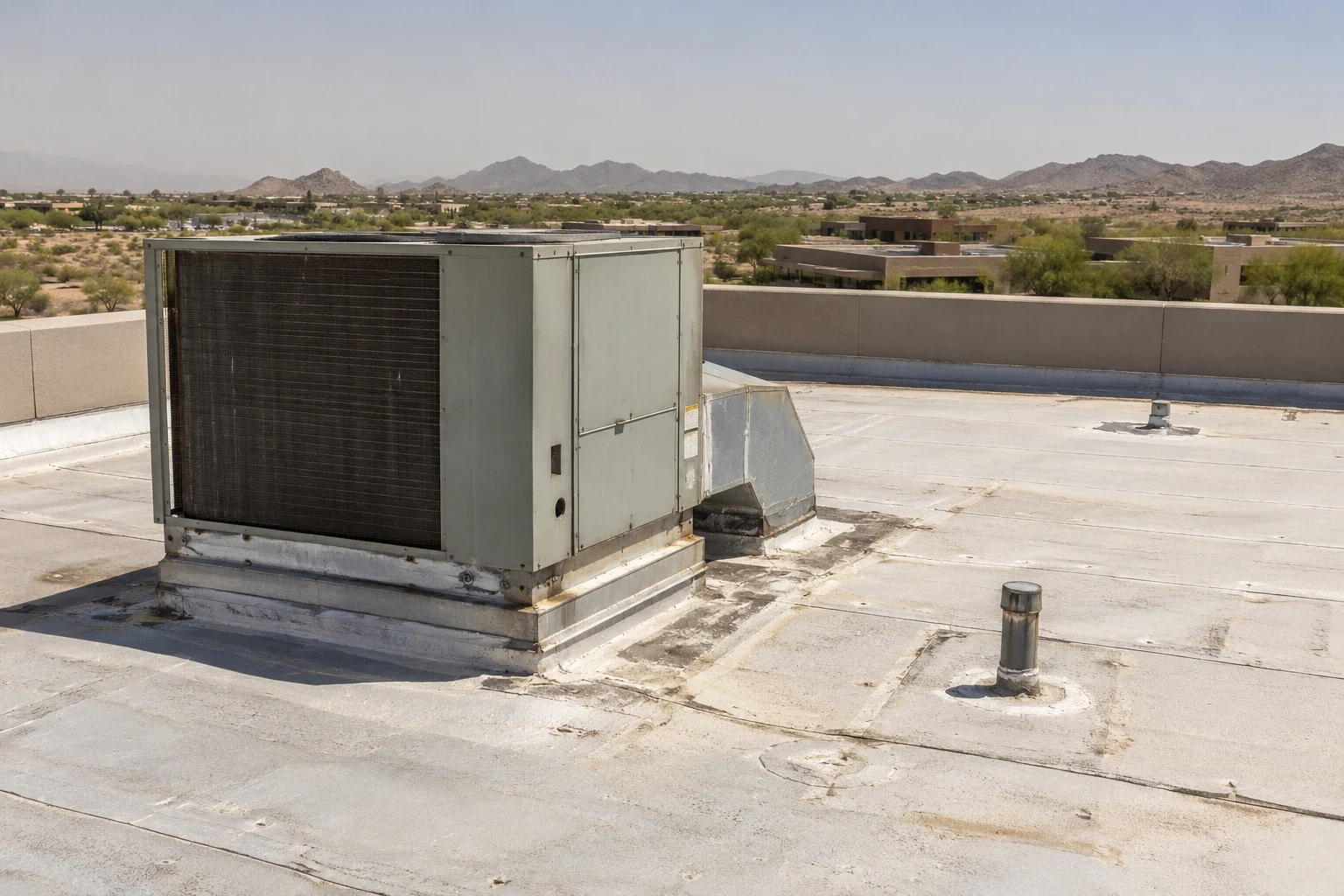
The goal is to stop further damage. We locate the opening, protect the interior as far as the roof allows and install temporary protection such as sheeting or a temporary patch, secured so wind does not lift it. We photograph the damage before covering it, tag the location on a roof sketch and give the owner and the adjuster a plain account of what was done. Emergency roof repair runs through the night and on holidays, because a loss does not wait for the next business day.
Temporary work is labeled as temporary. The permanent scope follows the carrier's inspection and the owner's approval, and the temporary measure is removed or integrated into the repair. We avoid making permanent repairs before the adjuster has seen the damage unless the owner decides the risk of waiting is greater, and then we document the condition carefully first.
What evidence does a roof damage record contain?
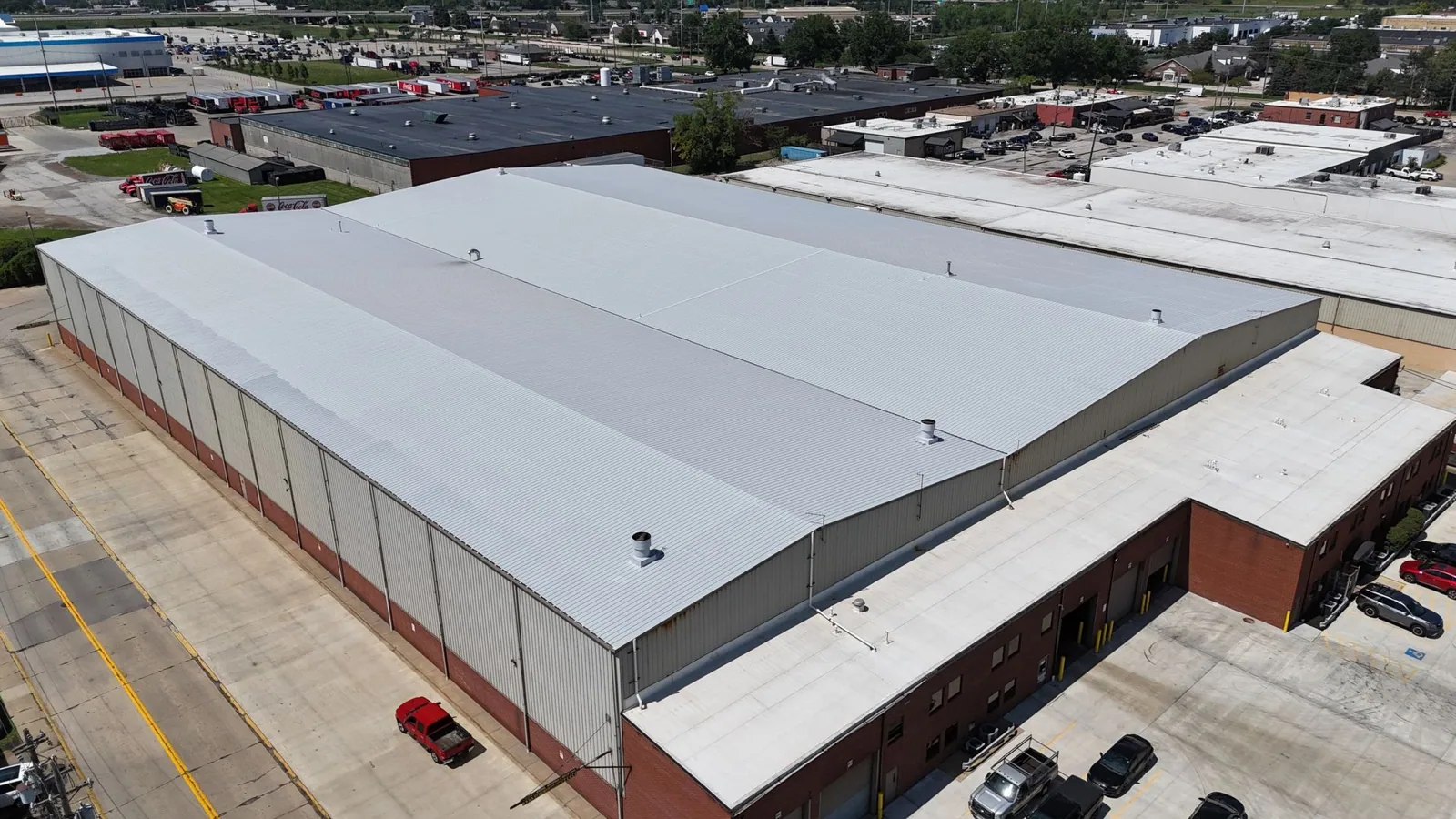
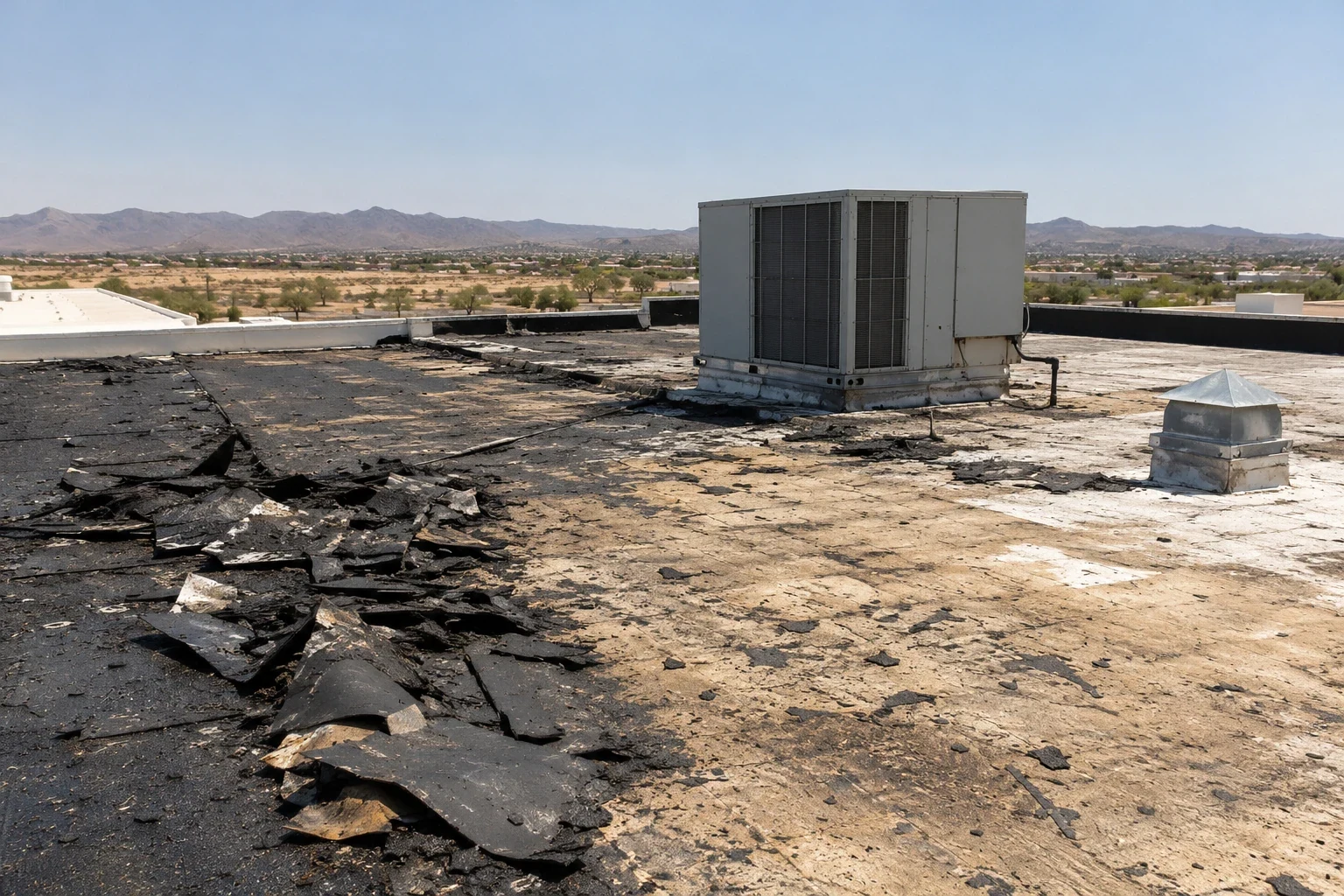
Evidence starts with the roof as found: overview photographs, close photographs of each affected area, measurements and the location of each defect on a plan. We record the roof system, the apparent age indicators we can read on the surface and any prior repair. For a wind-damaged roof, we record displaced membrane, lifted edge metal and torn flashing separately from wear that predates the event. For fire and smoke, the record covers the heat-affected area, membrane damage and any structural question that must go to an engineer.
A drone roof inspection can capture a large or unsafe roof quickly, and an infrared moisture survey can map wet insulation that the surface does not show. We state clearly which findings come from the surface and which from instruments. Dates matter too: the time of the visit, the weather at the time and the sequence of any temporary work are written on the record, so a reviewer weeks later can see what the roof looked like before anyone touched it and what changed afterward.
How do you separate storm damage from wear?
The line is rarely obvious. A torn seam may be wind damage, a seam that opened from age or a combination. We read the pattern: the direction of the damage, whether it begins at an edge or a penetration, the condition of nearby material and signs of earlier repair. Where the evidence is mixed, the record says it is mixed, and the carrier or its engineer decides.
We do not decide coverage, and we do not tell an owner that a claim will be approved. What we can supply is a repair scope for the damage found, with a statement of what is event-related on its face and what appears to be existing wear. Storm damage roof repair then proceeds on the scope the owner and the carrier have agreed, and any hidden damage found on opening is recorded and reported before the work goes further.
Which local conditions show up in claims here?
The climate record for St. George shows a hot, dry pattern: annual precipitation of 9.31 inches, a February high near 1.4 inches, a June figure near zero and about 1.2 inches of snowfall at the station. Water events therefore tend to arrive after long dry spells, when drains are clogged and seams have been baking for months. A storm after a dry spell tests drains and seams that have not carried water in months, so the inspection checks outlets and lap seams as carefully as the visible impact.
That is a general pattern, not a finding about any one roof. A claim in Washington City, Hurricane or La Verkin may involve a different municipality's permit rules, and the county lists each of those towns as having its own licensing division. For restoration contractors working along the St. George Boulevard corridor or elsewhere in the area, we confirm local licensing before scheduling the roof crew.
When does a loss turn into a replacement?
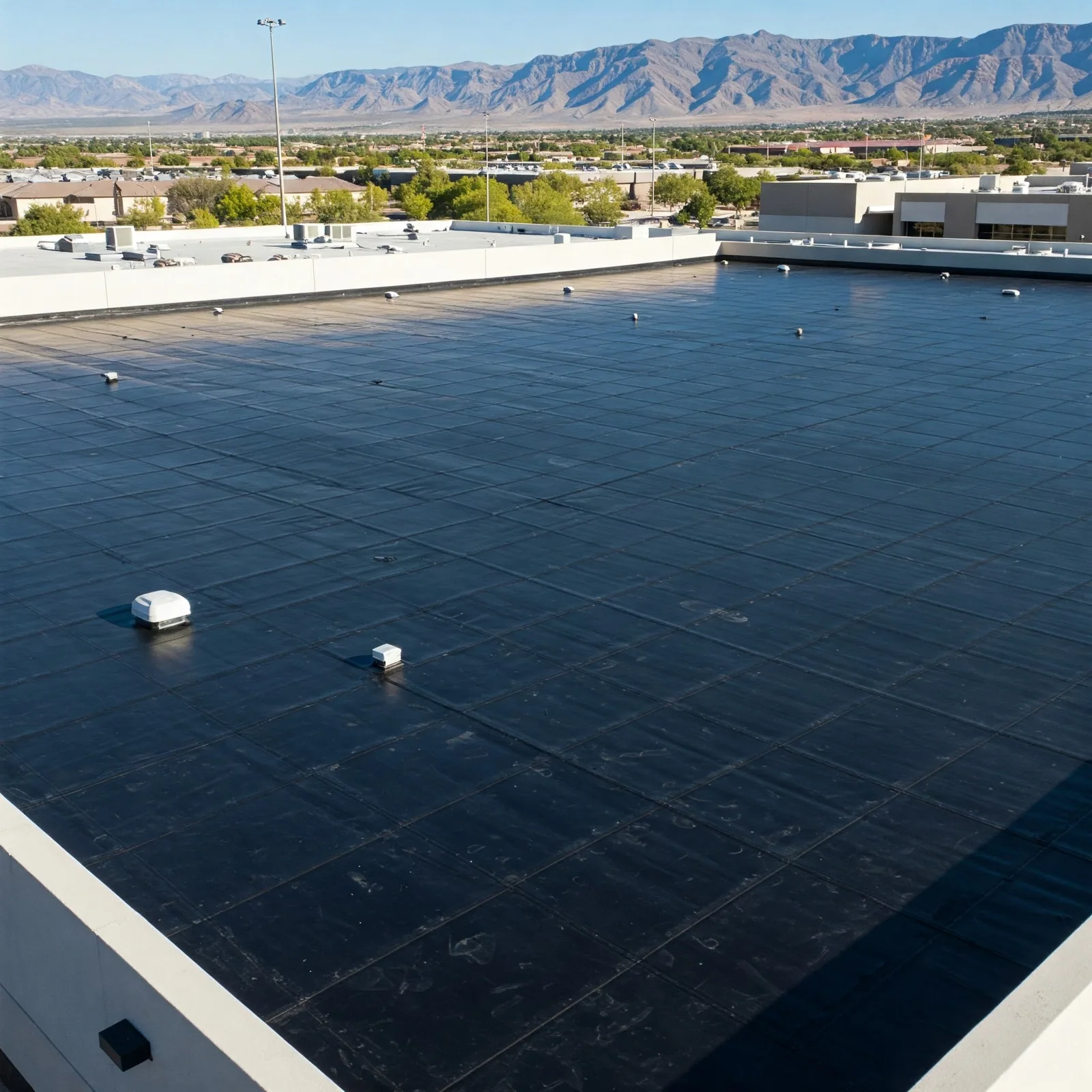
A limited repair fits when damage is confined, the surrounding membrane is sound and insulation is dry. A broad loss, such as wet insulation across a large section, structural damage or fire, may point toward replacement of the affected area or the whole roof. The scope also depends on code. Utah builds on the 2024 International Building Code, and mandatory energy-code enforcement begins on July 1, 2026, so a reroof after a loss may need insulation or edge upgrades that a repair would not.
We describe those cost drivers to the owner and the adjuster so the estimate reflects them. A recover over damaged material is generally not suitable, and we say so in the scope. Fire damage roof repair typically begins with the engineer's review of the deck and structure before any membrane is selected.
What should the adjuster or contractor send first?
Send the property address and contact, the date and nature of the loss, any policy requirements for temporary repairs, existing roof records and the photographs already taken. If a restoration contractor is on site, tell us the schedule for interior work so the roof and interior crews are not working against each other.
We coordinate with a general contractor who is rebuilding the interior or with a property manager who is handling tenants, and we keep the roof record in a form that either can pass to the carrier. The first visit produces a photographed record and a list of open questions, not a promise about the claim. If the building has a manufacturer warranty, we read its terms before repair, because the wrong repair material or the wrong repairer can complicate coverage under the warranty, and the owner should know that before authorizing work.
Commercial Roofing Questions
Do you speak with the adjuster directly?
Yes, with the owner's permission. We share the photographs, measurements and repair scope, and we answer the adjuster's questions about the roof.
Can you make temporary repairs before the claim is approved?
Yes. Emergency protection is the owner's decision, and policies often require owners to protect the property from further damage. We document everything before covering it.
What if the damage is mixed with older wear?
We record both and describe the pattern of each. The determination of what the policy covers belongs to the carrier or its engineer.
How long should photographs be kept?
Keep them with the claim file until the claim and any warranty or repair question is closed. We keep copies of our own records for the same purpose.
Can a claim include roof coating or a recover?
That depends on the policy and the condition of the roof. We state which options the roof supports, and the carrier decides what the policy pays.