
Auto Dealership Roofing in St. George, UT
Auto Dealership Roofing Overview
A dealership roof has a customer on one side and a service technician on the other, and a drip lands on a hood or a quote sheet either way. The showroom is where a stain costs the most, because buyers walk under it. The service drive is where a leak costs the most in repairs, because open bays hold vehicles, lifts and electrical panels. In St. George, UT, where rainfall at the NOAA station totals only 9.31 inches a year, a roof can look fine until the first storm of the season tests every seam.
The roof plan, the sales and service schedule and the leak history are our starting point. A walk through each roof section follows, and the general manager gets a written repair scope with the open questions marked.
How many different roofs does one dealership have?
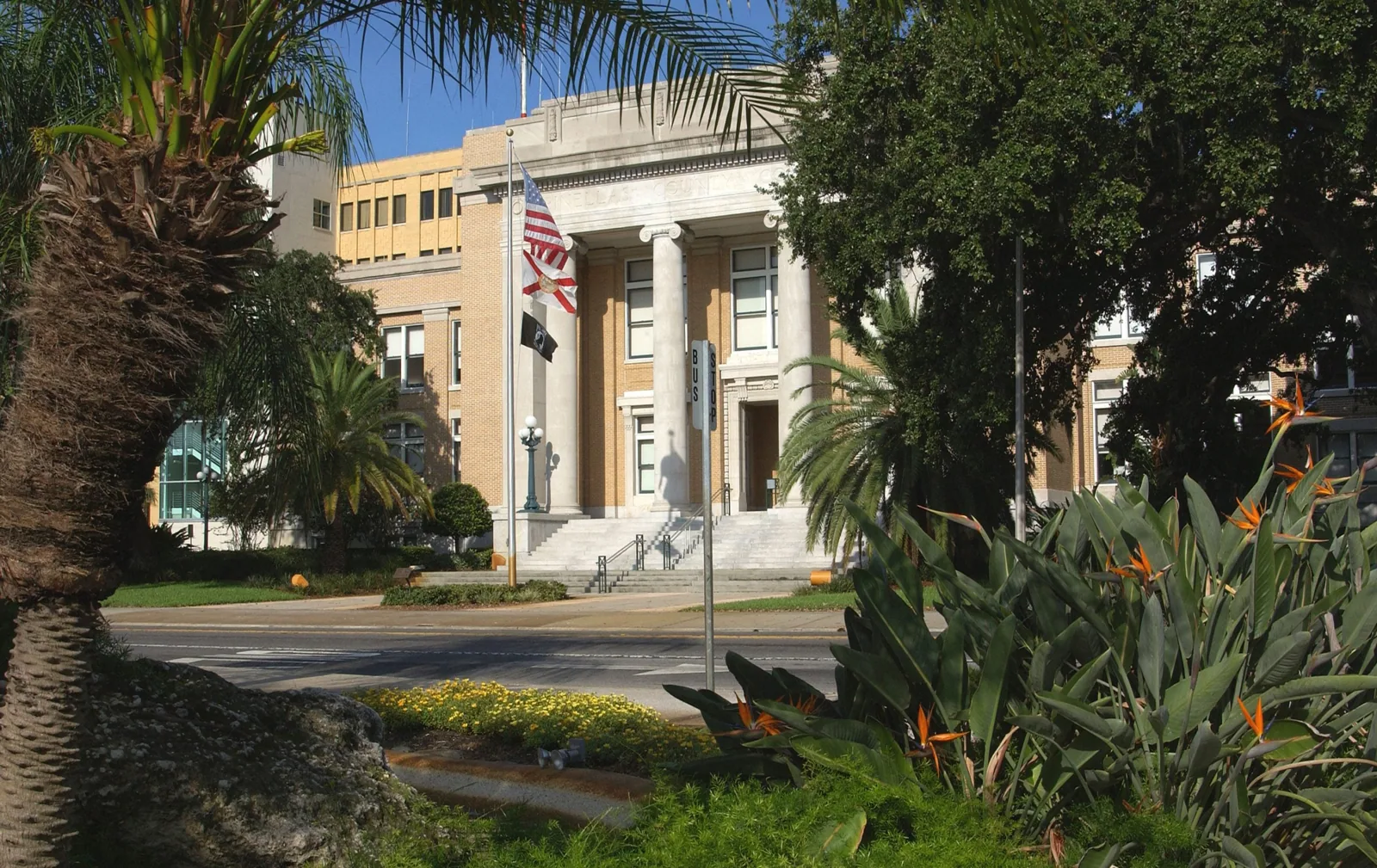
A dealership often combines a glass-fronted showroom, a sales office, a service wing with tall bays, a parts room, a body shop and a canopy over the delivery area. Each can have a different roof. A showroom commonly has a low-slope membrane behind a parapet, with storefront glass below and a coping line at the edge. A service wing may have a metal roof with skylights or heater penetrations. Canopies carry runoff toward a few drains.
Much of the city's commercial stock dates from 1980 onward, according to its plan, and brands that update their facilities often add to older buildings. We read the plans, make test openings where they are missing and note each junction between sections. Those junctions, where a low roof meets a tall wall, are where water enters first.
Canopies and drive-through delivery areas are easy to overlook. Their roofs are low, collect leaves and debris, and often drain to a single point. A blocked outlet there pours water over the edge onto a customer walkway. We include them in the walk and note any drain that discharges where people stand.
When can the roof be worked without losing sales days?
Sales traffic is heaviest on weekends and at month end, and service traffic peaks in the morning. We agree on the busiest windows and plan the loudest tear-off and the heaviest lifting for the quiet ones. Showroom sections are scheduled before or after hours when possible, with interior protection over vehicles and displays. Service bays can be worked in sequence, one bay line at a time, so technicians keep most of the floor.
Lifts and cranes need room on the lot, which is also the inventory. We mark a staging zone on a lot sketch, keep customer parking and test-drive routes open and move equipment out of sight on weekends. A reroof on an occupied building is a schedule problem as much as a roofing problem.
What does desert heat do to showroom and shop roofs?
In the 1991 to 2020 NOAA normals for St. George, the average July maximum is 101.9 degrees and August's is 99.9. Dark roofs and large glass fronts take on a lot of that heat, and the cooling load follows. A reflective cool roof surface can reduce roof temperature over a showroom, and it deserves a place in the comparison of options.
The sun wears on the roof as well, drying sealants, opening seams and loosening flashing at heater stacks and exhaust fans. We inspect these details early in the day, when the surface is cooler and the crew can work safely. Notes record the time of each photograph so that an owner can see the roof under the same light the next time.
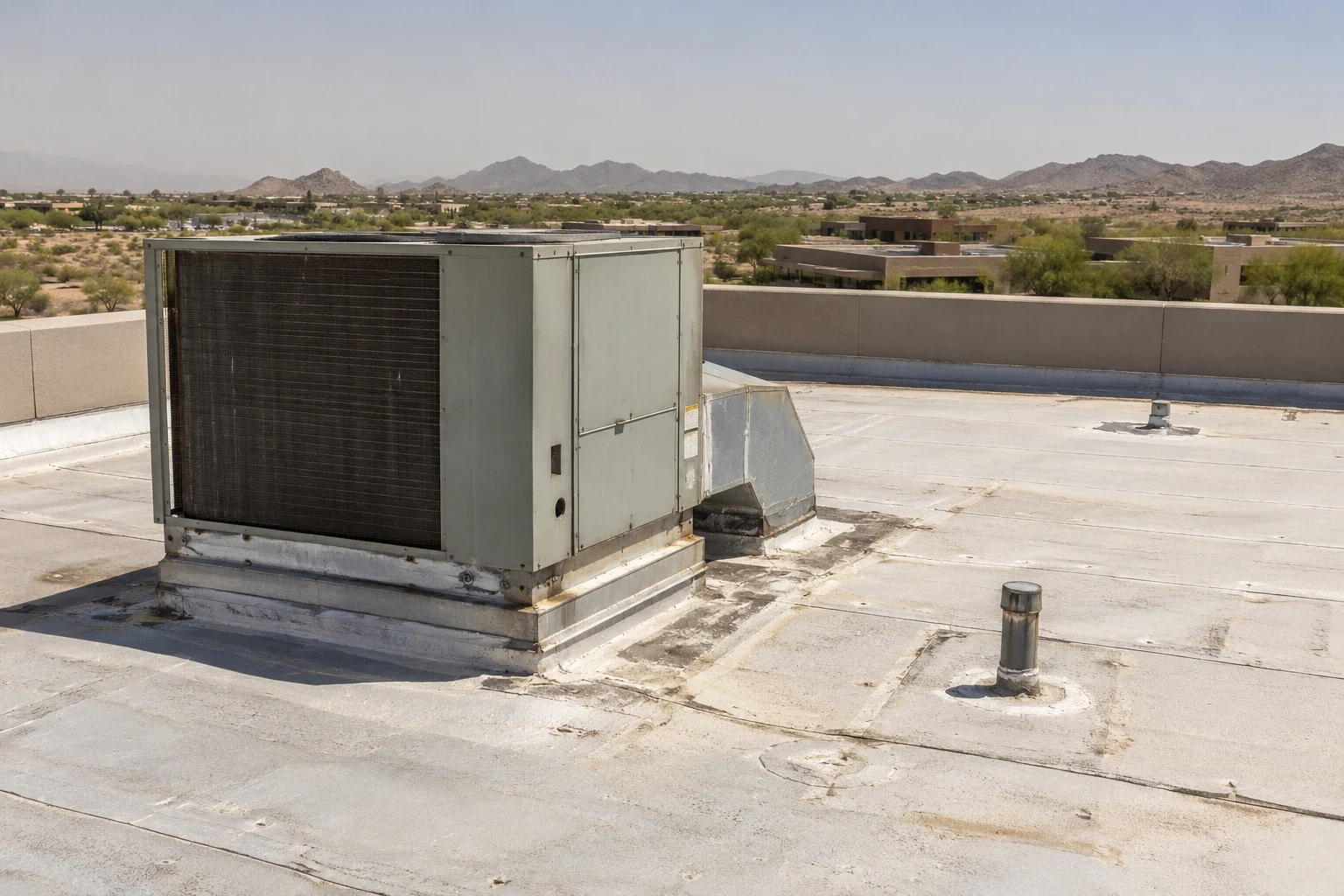
For service bays, the roof is also where large doors, heaters and ventilation hang. We check that rooftop units are properly curbed and that condensate does not drain across the membrane, where it stains and softens the surface.
Which service-bay details leak first?
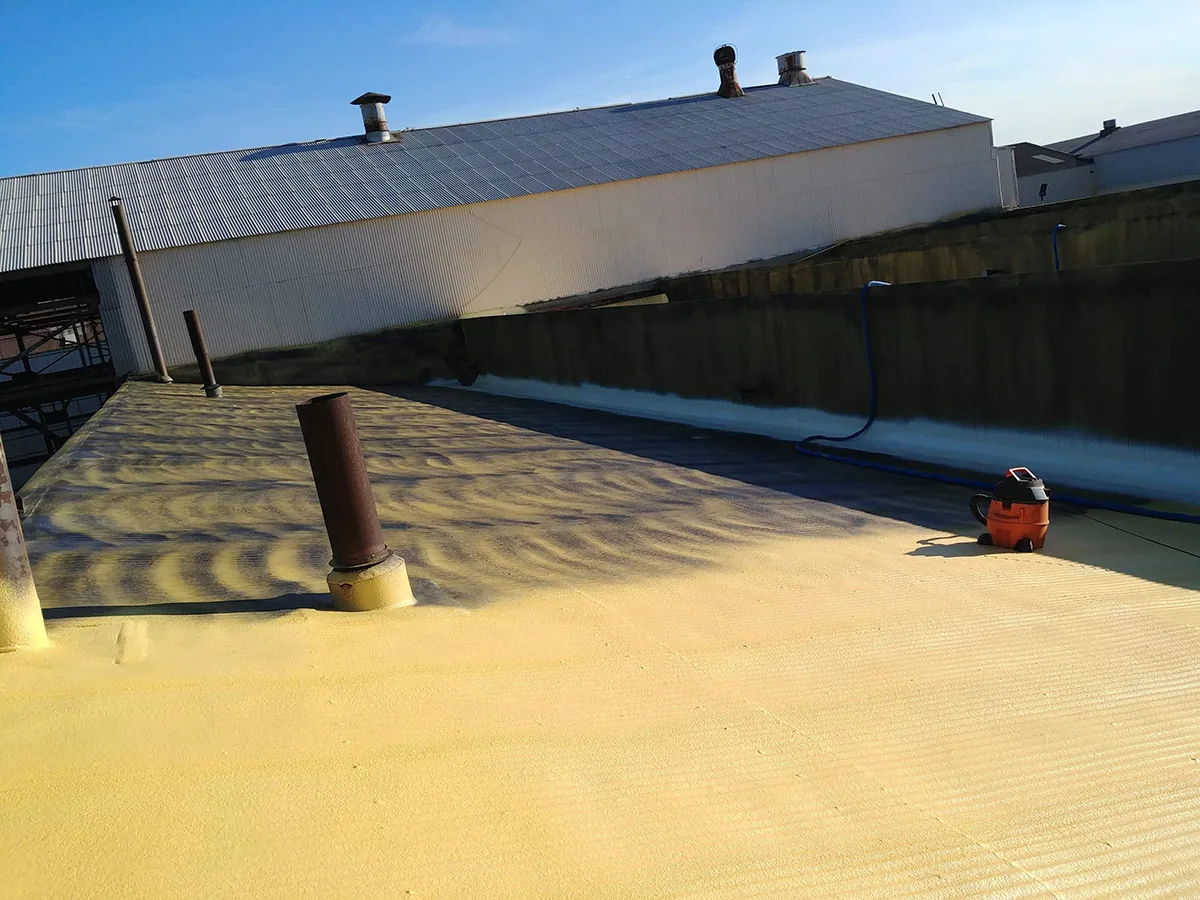
Service wings carry more penetrations than showrooms: exhaust fans, vent stacks, heater flues, make-up air units and sometimes skylights or roof hatches. Each penetration has flashing that sealant and heat wear down. We look at the curb details and the base flashing, probe the sealant and check fasteners. We also look for rust staining that shows water running along a metal deck.
Inside a bay, stains often follow a purlin before dropping, so the drip and the entry point can be many feet apart. A penetration flashing repair at the right spot costs little compared with a damaged vehicle or a lift motor. We record the entry points with photographs and mark them on the plan so the shop foreman can see them.
Fluid and fuel vapors matter too. Hot work on a roof above a service bay needs a clear plan for fire watch, and flame-free methods are the default over open bays. The foreman and our supervisor agree on this before any heat source is brought up.
Where does a repair stop and a replacement start?
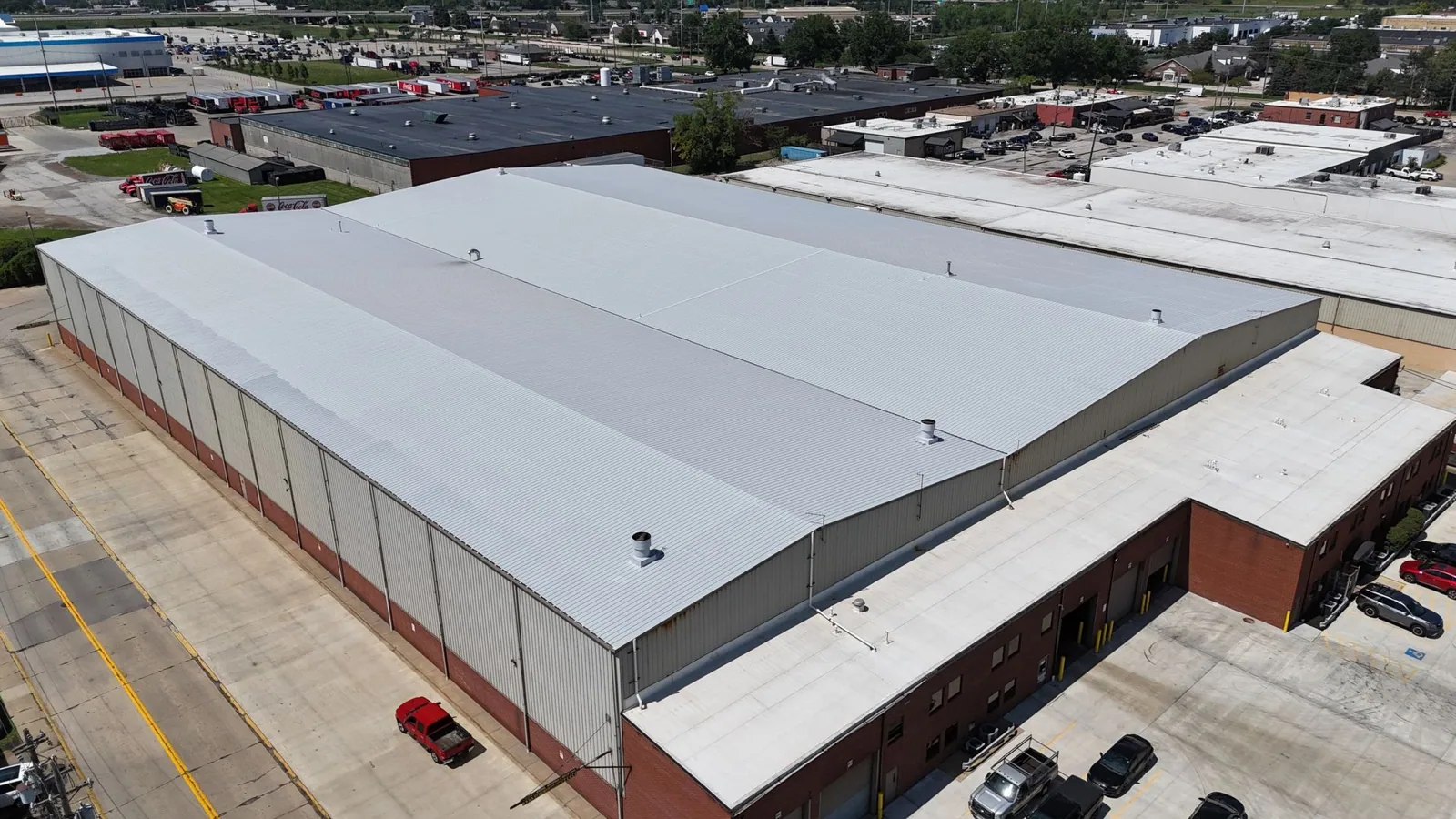
If the membrane is sound and the failure is local, repair is the economical choice. If moisture scans show wet insulation across a large share of the showroom or the shop, a replacement of that section is better than repeated patching. Where a facility is being remodeled to meet a brand standard, the roof should be settled first, since new ceilings and finishes deserve a dry deck above them.
Code questions go to the city. Utah has adopted the 2024 International Building Code, and a state energy listing (2024 IECC with ASHRAE 90.1-2022, enforced statewide from July 2026) may shape insulation, so every dealership proposal records the pathway it assumed before the price is final. Our TPO roofing notes describe a common choice for reflective low-slope sections.
The written findings give the manager two numbers for each section: the cost to repair and keep the roof running, and the cost to replace and reset the clock. That comparison is what an ownership group needs when a roof question reaches a budget meeting.
How do dealerships along a corridor plan together?
Dealers who own more than one building, or who sit along the same stretch of road, can put their roofs on one calendar. Dispatch references such as Bluff Street, St. George Boulevard and I-15 help us group visits, and exact access is confirmed onsite.
A capital plan ranks each roof by condition and cost, so the owner can plan replacement ahead of a remodel instead of in the middle of one. Neighbors on the same road often have big box retail or shopping center roofs of a similar age and type, and one visit can cover them.
Commercial Roofing Questions
Can you protect vehicles in the showroom during roof work?
Yes. We plan interior protection, schedule noisy work outside sales hours and dry in every open section at day's end. The general manager signs off the plan first.
Why does a bay leak drip far from the roof opening?
Water runs along purlins and deck flutes before it falls. We trace the stain upward, probe the nearest penetration and confirm the entry point with moisture readings.
Does a reflective roof help a glass showroom?
It lowers roof surface temperature, which can ease the cooling load. Glass, orientation and insulation matter as well, so we state what we can measure.
What should be fixed before a brand remodel?
Active leaks, wet insulation and failed flashing at the sections being remodeled. New ceilings go in under a dry deck, with the roof record handed to the contractor.
Who confirms code requirements on a dealership reroof?
The City of St. George does, based on the permit-date edition. We write our assumptions into the scope so the owner and the city start from the same page.