
Gym and Fitness Center Roofing in St. George, UT
Gym and Fitness Center Roofing Overview
A fitness center opens before most roofing crews have had coffee and closes after they have gone home. Members arrive at five in the morning, classes run through the evening, and the building hums with fans, treadmills and a cooling plant that works hard all summer. In St. George, UT, where the July daily maximum averages 101.9 degrees at the NOAA station, that cooling load runs through the roof's equipment, and the roof has to carry it without leaking onto a rubber floor.
The roof plan, the hours of operation and the leak history are the starting file, and the roof is walked from the edges to the equipment. The manager receives a written repair scope with open questions marked by zone.
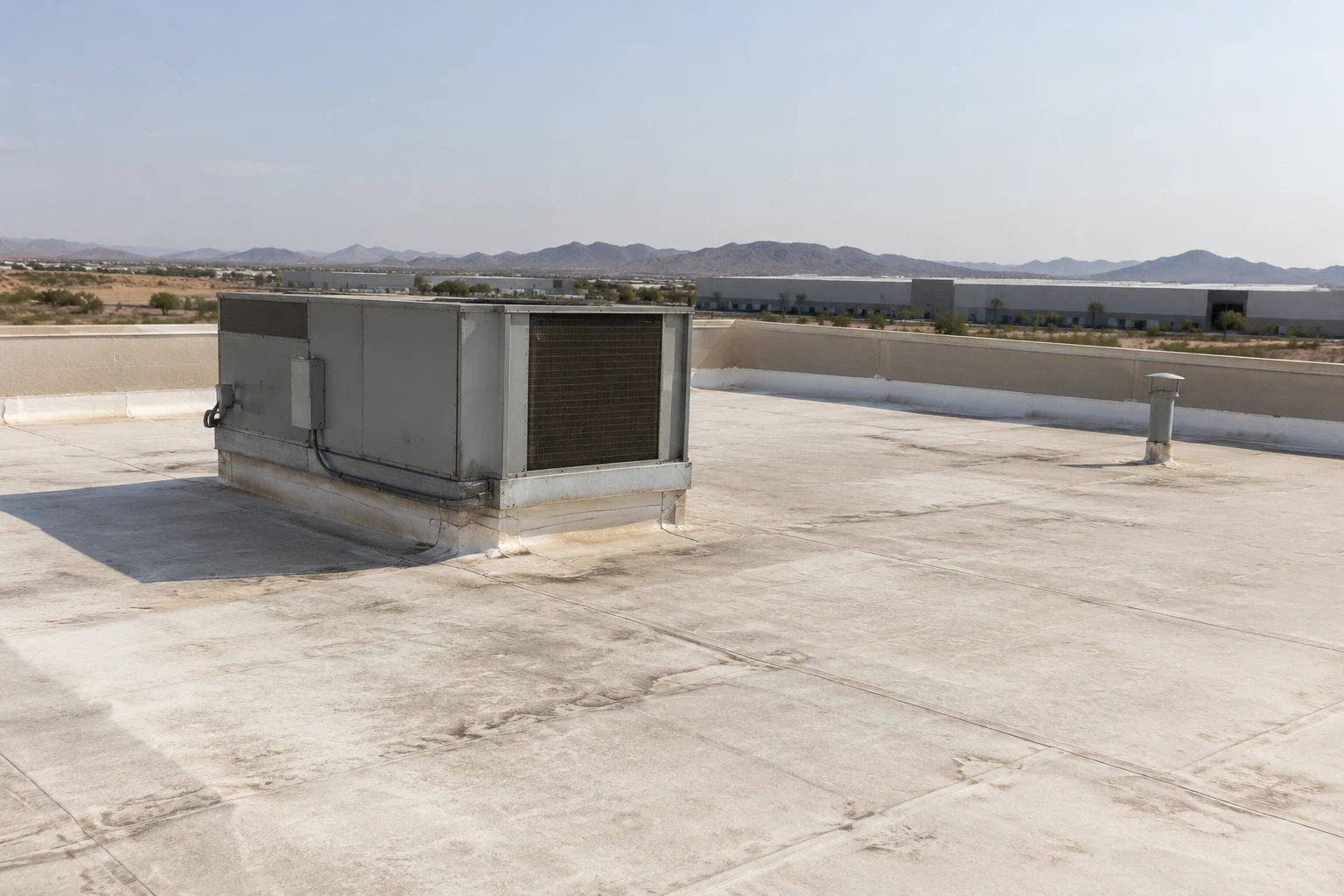
What is on top of a gym or rec center?
A fitness building has a tall main floor, often with high ceilings and exposed structure, plus lower wings for locker rooms, studios, offices and child care. The roof over the main floor commonly carries large rooftop units, exhaust for locker rooms and sometimes skylights or clerestory glazing. Lower wings add their own vents. We do not assume what any one building has, and a plan review with a roof walk shows the system and the layers.
The St. George consolidated plan lists arts, entertainment, recreation, accommodation and food services among the city's largest employment sectors, in a dated analysis, so recreation is a real employer here. Gyms in a retail strip share a roof with their neighbors, and a leak in the next suite can reach the gym floor. A shopping center roof carries the same shared risk, with one flashing line serving several tenants.
Public and school recreation centers add a different mix. A rec center with a pool, gym and classrooms under one roof looks a lot like a school from above, with heavy ventilation and a long list of penetrations. The pool hall in particular needs vapor control, since humid air rising into the deck is a quiet cause of rot.
When can a roof be worked above an open gym?
The quiet hours are short, and the crowded hours are long. We ask for the class schedule, the early-morning peak and the late-evening rush, then place noisy work in the stretch between them. Mid-morning and early afternoon are often the best windows. A named supervisor stays in touch with the front desk, and a lift or hoist is positioned away from the entrance and the member parking.
Member safety shapes the plan. Barricades, signs and a spotter keep walkers away from the lift. Interior protection goes over equipment under any opened section, and each section is dried in at day's end. For a facility that cannot close, an occupied-building reroof is divided into small steps so the gym keeps most of its floor.
Child care and youth programs need extra thought. Noise during nap time, dust near play areas and any smell from adhesives must be handled with the program director. We locate fresh-air intakes before the roof is opened and cover or avoid them.

How does heat load shape the roof and the rooftop units?
The St. George normals put an average July daily maximum at 101.9 degrees and August at 99.9. The averages say little about one roof, yet they point to the stress on rooftop cooling equipment and the membrane around it. Units run for long hours, vibrate and shed condensate. Curbs shift, flashings pull away and sealant bakes. We examine each equipment curb and support for movement, staining and open seams.
A light-colored cool roof surface can reduce the heat the building absorbs, easing the load on the cooling plant. We describe what can be measured and do not promise a figure. Early starts remain the rule for crew safety, with water breaks and shaded staging on the roof.
On the roof, walkway pads protect the membrane where technicians reach equipment. We check that pads are in place and not holding water, and we add them where foot traffic has worn the surface.
Where does moisture show up above a wet or humid space?
Locker rooms, saunas and some pool areas generate humid air that rises toward the roof, and vents carry it out. Where a vent or exhaust duct is poorly sealed, moist air condenses in the deck and insulation, which stains ceilings in a way that looks like a leak. We check ducts, boots and caps, and we compare readings on dry and wet days to tell condensation from rain.
Annual precipitation is 9.31 inches, and even February, the wettest month, averages only 1.38, so rain arrives in short, sharp events. A clogged drain or scupper turns one storm into a pond on a flat roof. We trace drain routes before the wet season and photograph them with a date, so the manager has a record.
High ceilings make interior leak tracing harder, because a stain on the underside of a tall deck can be fifty feet from the entry. We use lifts for the interior check when needed and photograph the underside of the deck, then tie each mark to a point on the roof plan.
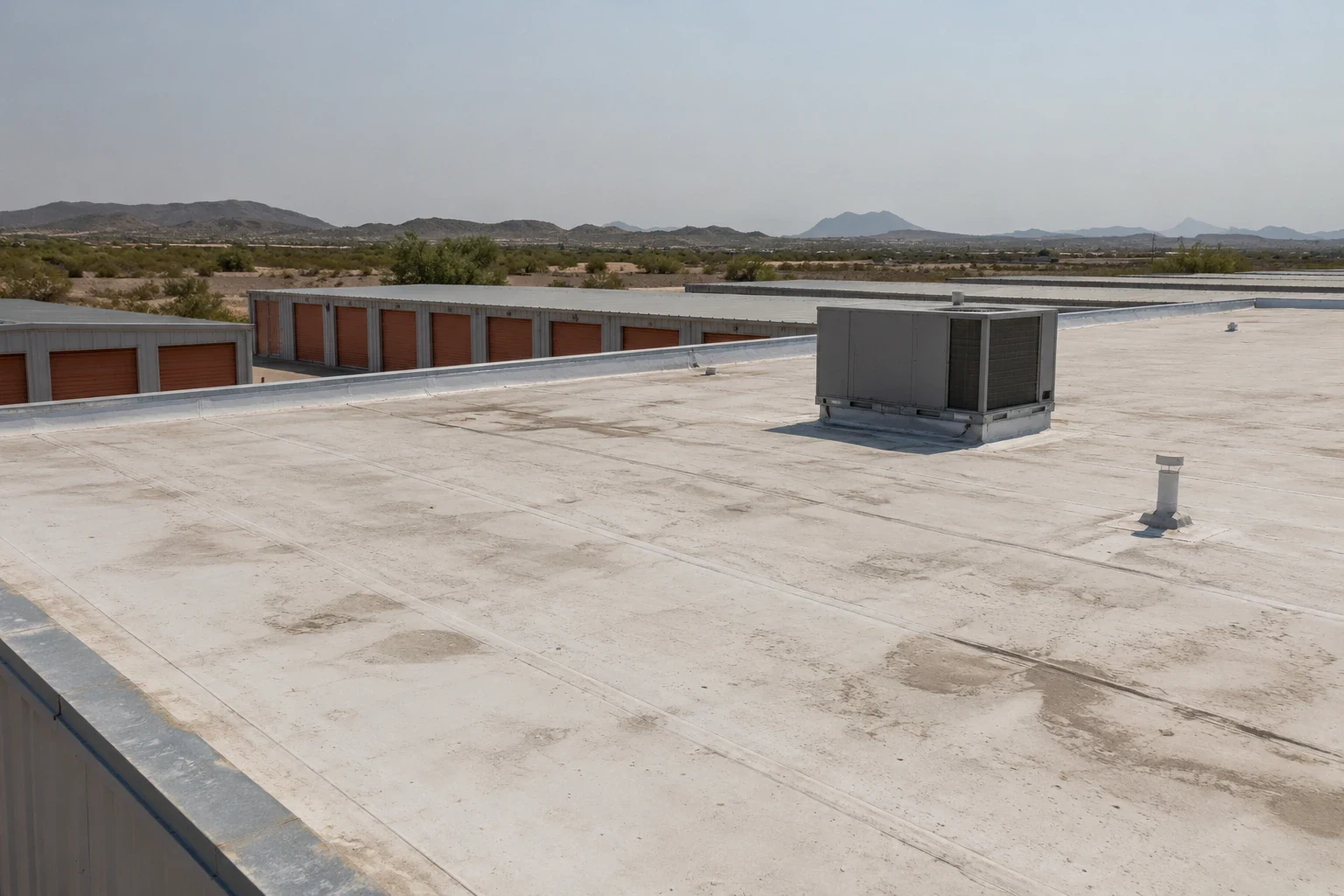
What does the manager do about a stained ceiling?
First, document it: the date, the room, the weather. Then call us. We trace the stain up along the deck to the likely entry, using moisture readings and a visual walk of the roof. A single split boot or loose seam is a repair. Wet insulation over a wide area calls for a bigger decision. The written scope places a boundary around each item, with a photograph, a price range and a note on what happens if the work waits.
Code review is part of any replacement. Utah adopts the 2024 International Building Code, and its energy listing (2024 IECC, ASHRAE 90.1-2022, statewide from July 2026) can affect insulation, so the scope names the assumed pathway and the City of St. George confirms it.
Equipment replacement is a trigger for roof work. When a rooftop unit is due for replacement, the curb and the membrane around it should be inspected first, since a new unit on a bad curb carries the old leak forward. We coordinate with the mechanical contractor so the roof and the unit are done in the same visit.
How do multi-location operators plan roofs?
An operator with several clubs can put every roof on one condition report and one calendar. Locations near Tech Ridge, in Santa Clara or along the River Road corridor may share a dispatch route, and exact access is confirmed onsite.
A multi-site roof program ranks each club by condition, remaining service life and the cost of repair or replacement. The operator sees which roof needs work first and can budget before a leak forces the schedule.
Commercial Roofing Questions
Can the roof be fixed without closing the gym?
Usually. We work in sections, protect equipment below, dry in daily and place noisy tasks between class peaks.
Is a ceiling stain a leak or condensation?
We compare moisture readings on dry and rainy days and inspect vents and ducts. Humid air from locker rooms can condense in the deck.
What does heat do to rooftop units and curbs?
Long run hours and sun expand and shift curbs, bake sealants and open flashing. We check each curb for movement and staining.
How early can the crew start?
As early as the building and local noise rules allow, since summer heat limits afternoon work. We agree on hours with the manager.
Do rubber floors and equipment need protection?
Yes. We cover them under any open section and sweep debris at day's end. The manager approves the plan first.